
Category: Essay

  • The Soul of the Narrative: Finding the Muse Within the AI

    The Soul of the Narrative: Finding the Muse Within the AI

    I try to tell stories in my hike videos. Afterward, I write even more to add context, perspective, and behind-the-scenes glimpses. In writing, as in algebra, my goal is simplification: I distill my sentences until they can be simplified no further. I also take care that a word or phrase I find perfect hasn’t been corrupted or given new meaning in today’s social media. For example, if I were to write romance, I would probably not name my characters Brad and Karen.

    Granted, generative AI can write both short and long stories. I could easily let a machine write for me. But as Pam Baker reiterates in her book, Generative AI For Dummies (2024), what AI will always lack is voice. Specifically, my voice.

    On more than one occasion, I have struggled with a narrative because my thoughts sounded authoritative, preachy, and unfunny on the page—traits that AI naturally tends to exhibit. This frustration often holds me back from uploading a video for days. When I finally realize what is happening, I sleep on it. Frequently, I wake up in the middle of the night having found my true voice. I immediately get up and type away before the inspiration vanishes, using the language that common folk regularly use.

    I suppose every artist has a muse. To paraphrase the late Michael Jackson, he believed he was merely the messenger for the songs he wrote. This is not to say I should dismiss AI altogether and rely solely on an elusive muse. Who am I to think that my muse cannot manipulate AI? I like to think instead that my muse, for all I know, could be speaking to me through AI.

    Yes, on other occasions I would find nothing to write at all. Or at least nothing that will add something new to what the reader already knows. With just a rehash of events, it would be a real struggle. So, I would spruce it up with word acrobatics hoping to impress and entertain but instead later realize I made things worse. In which case (if I wake to my senses) I would revert to a subtler, sober, and voice-less narrative. With flamboyance gone, only truth remains. And that, I think, is what the reader ultimately wants.

    Because I cannot pin my methods down, every piece I write remains a struggle. In fact, even though initial thoughts start forming along the trail, I rarely know what I am actually going to write about until after the video is finished. This unpredictable process has helped me understand something fundamental about myself. The creative reflection that comes after the journey is just as vital to me as the physical hike and the video itself. Ultimately, it is the mystery of the next story—and the surprise of discovering what I will write—that truly inspires me to lace up my boots and plan for future trails.
  • James Taylor at Bethelwoods

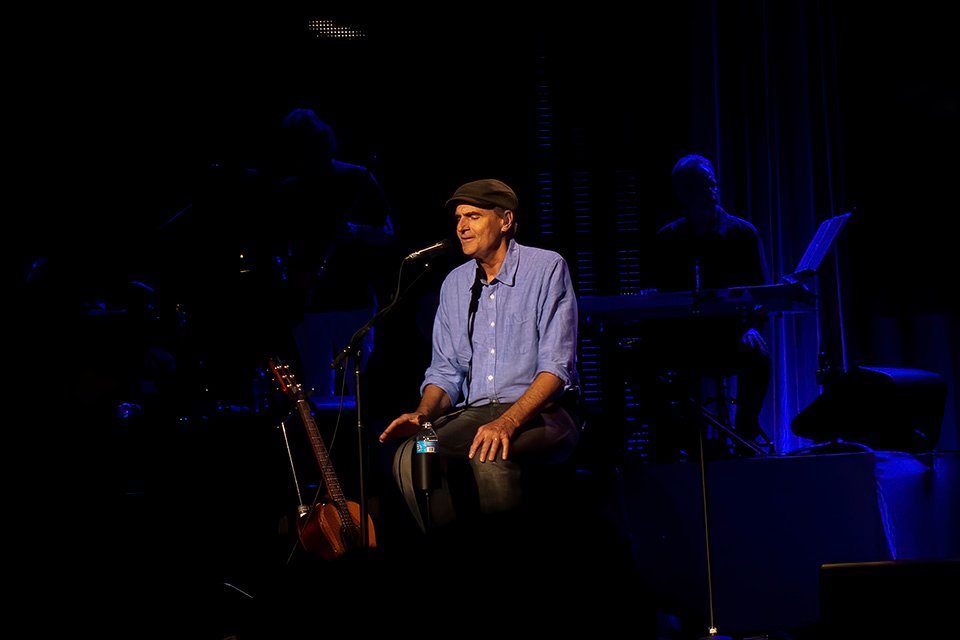
    James Taylor at Bethelwoods

    A night that I wished went on forever.

    We all know that rock concerts end in an encore. It has to happen. It all comes down to how the artist will handle it in a way that will be unique and appear spontaneous and a spur-of-the-moment thing.

    When the program was over and James waved goodbye and he and the band members walked offstage, the audience stayed put and continued clapping. A few moments later James and the band walked back onstage and played more songs.

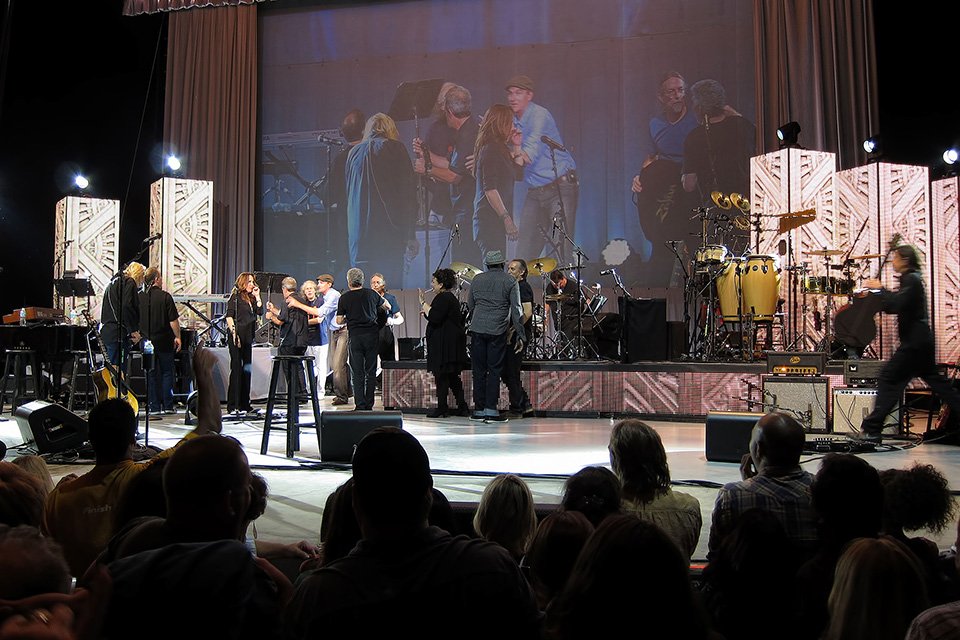
    After that, James and the band made their formal bows and the stage lights came on. Below you can see some band members starting to pack while James walked to each one making hand signals and gestures as if begging them to stay a bit longer to grant the audience’s wish.

    So, we had two encores.

    I was sure the whole encores-thing was rehearsed. After all, they just came to Bethelwoods from another tour location the night before and dozens of others before that, and each, I was sure, ended in an encore. One could say the encore was, as with all concerts and not just James’, um, a farce.

    But with James it all seemed genuine. In his 1985 song, “That’s Why I’m Here”, he wonders aloud about “fortune and fame” being “a curious game” where “perfect strangers call you by name” paying “good money to hear Fire and Rain again and again and again.” Then in the same stanza he comes to an epiphany: “I break into a grin from ear to ear and suddenly it’s perfectly clear–that’s why I\’m here.” Be the farce as it may his encore represented a genuine desire to deliver and please an adoring crowd.

    When I bought our tickets months before the concert, I was only thinking I should. He was, after all, in my county’s backyard. I thought no more of it than, say, buying tickets for an amusement park. But when the concert came and then it was over and days passed—and James became more and more a distant memory—he seemed to come ever closer to this poor fan’s heart.

    Jamestaylor.2jpg
  • The Piano Player

    The Piano Player

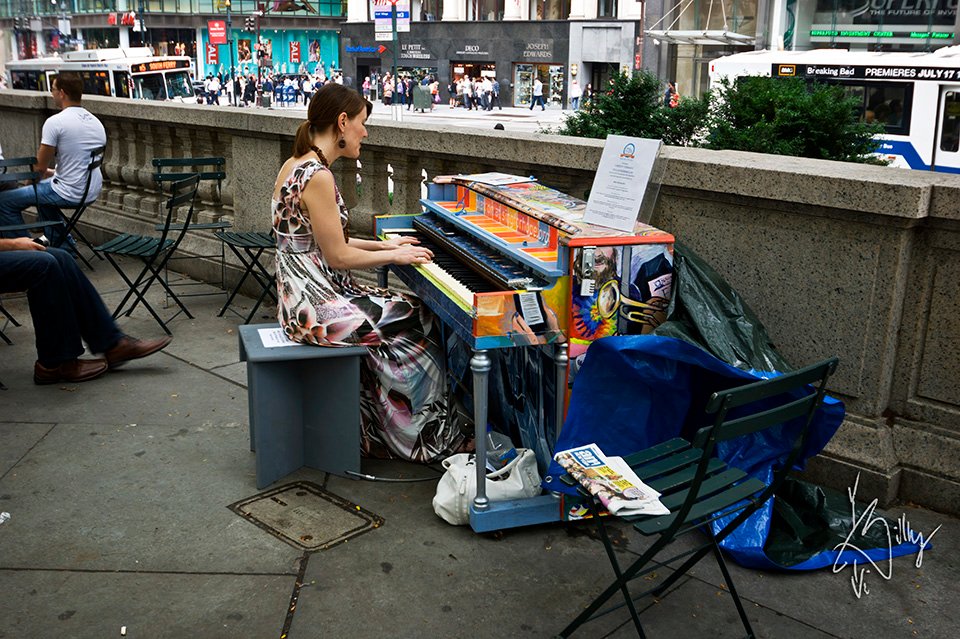
    Amazing Grace at Bryant Park.

    I thought there was something sad about a woman sitting at a piano alone playing for an inattentive crowd. I also thought, what could be sadder still than when the woman starts singing to herself?

    Such was the state I saw her in when I ambled into Bryant Park where I supposed in the summer an entertainer was hired to bring music.

    An opportuning photographer that I was, who as far as she was concerned, had only regard for capturing images and none for comprehending music, I approached slowly from behind knowing that my camera’s noise would surely rouse her from her melancholy.

    Whether or not she heard me snapping photos, she kept on playing. She sang “Amazing Grace” listlessly I’d say as if in resignation to the fact that an audience of one however disinterested was better than none.

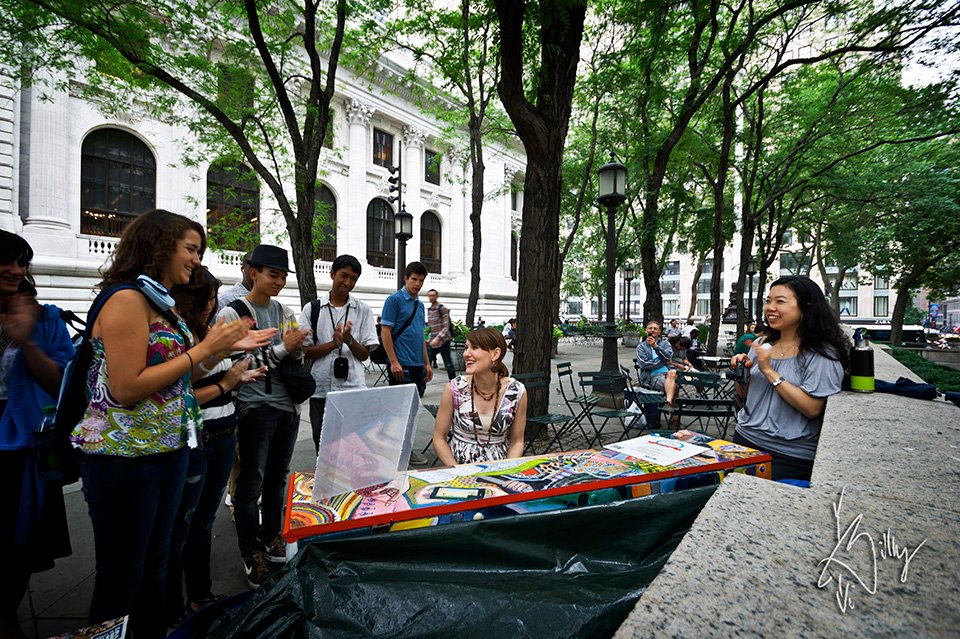
    Soon, however, I heard footsteps and a small crowd formed behind me. I stepped to the side and then to the back of the piano to give the crowd room. I raised my camera and took more pictures at my new location, this time facing her.

    As I did, she looked up at me and smiled. She held her smile for some time while she continued singing until perhaps she was sure that I had taken my shot. She then lowered her eyes again at the keyboard.

    While I had my camera pressed to my face, I realized I was in the prime spot for hearing her music — in front of her and in the back of the piano — and thought it a shame that her back was turned to the crowd because I alone could hear the fullness of her voice and how relaxing and gratifying it sounded as she sang with growing passion and emotion.

    When it was over, the crowd gave applause and she bowed in return. She talked to them about music — a young crowd of what appeared to be college students.

    In the past, I have on occasion been to places where I was asked to not take pictures and to leave the premises. So always in the back of my mind I was prepared to leave promptly and politely however picture-perfect the scene may be and however dour and downcast I might feel.

    This time however, I walked away feeling valiant and lofty. As the smile on the woman’s face seemed to attest perhaps thanking me from the bottom of her heart for bringing to her the crowd, photography was welcome. I’m no knight in shining armor but I like to think that my actions however perfunctory and my thoughts however delusionary bring justice to the world and peace to humankind, and even then when circumstances arise, find occasion to respond and dispense aid to a damsel in distress.

    The piano player’s name is Christy Tennant. Her website is everythingchristy.wordpress.com.

    Banner