Category: Travel

  • The Best Short Hike to Shaupeneak Ridge Waterfall

    The Best Short Hike to Shaupeneak Ridge Waterfall

    Yes, many waterfalls, as I suspected long before I started chasing them, require a hike. Indeed, beside the fact that construction of a paved pathway such that entire families even along with their wheelchair-bound members can leisurely stroll on may be outside of any town’s budget, the engineering feats required I imagine can be insurmountable as the topography leading to the falls can be challenging. Some waterfalls to this day remain unreachable because of the gorges, ravines, and other impossible obstacles one has to cross to get to them.

    But there is a bright side to all this. A hike, like the price of admission, can be a deterrent for the casual interlopers who really have no interest in Nature other than it being there and easily accessible. So, they ask, why not? They then crowd the place and I’m hoping against hope here they don’t leave trash behind them. This, I find, is fact. The easier it is to get to a waterfall, the more trash you will find.

    Then there is the walk in the woods. The peace and quiet broken only by the sound of your boots hitting rock, grass, or earth as you take it step-by-step on miles of untarnished land is a pleasurable experience like no other. Out alone with Nature, one gets to live in one’s mind such that one becomes convinced this is perhaps how Nature intended things to be. Then, you hear the rush of water and not long after that you see the waterfall. All exhaustion gone as you are transported to a wholly different and pristine realm continually refreshed by Nature even when there are no humans around to witness it.

    So, take the waterfalls for how they are. They may be roadside but disturbed. Or you may instead hope for the reward of a waterfall spectacular enough to offset the miles of trek needed to get there.

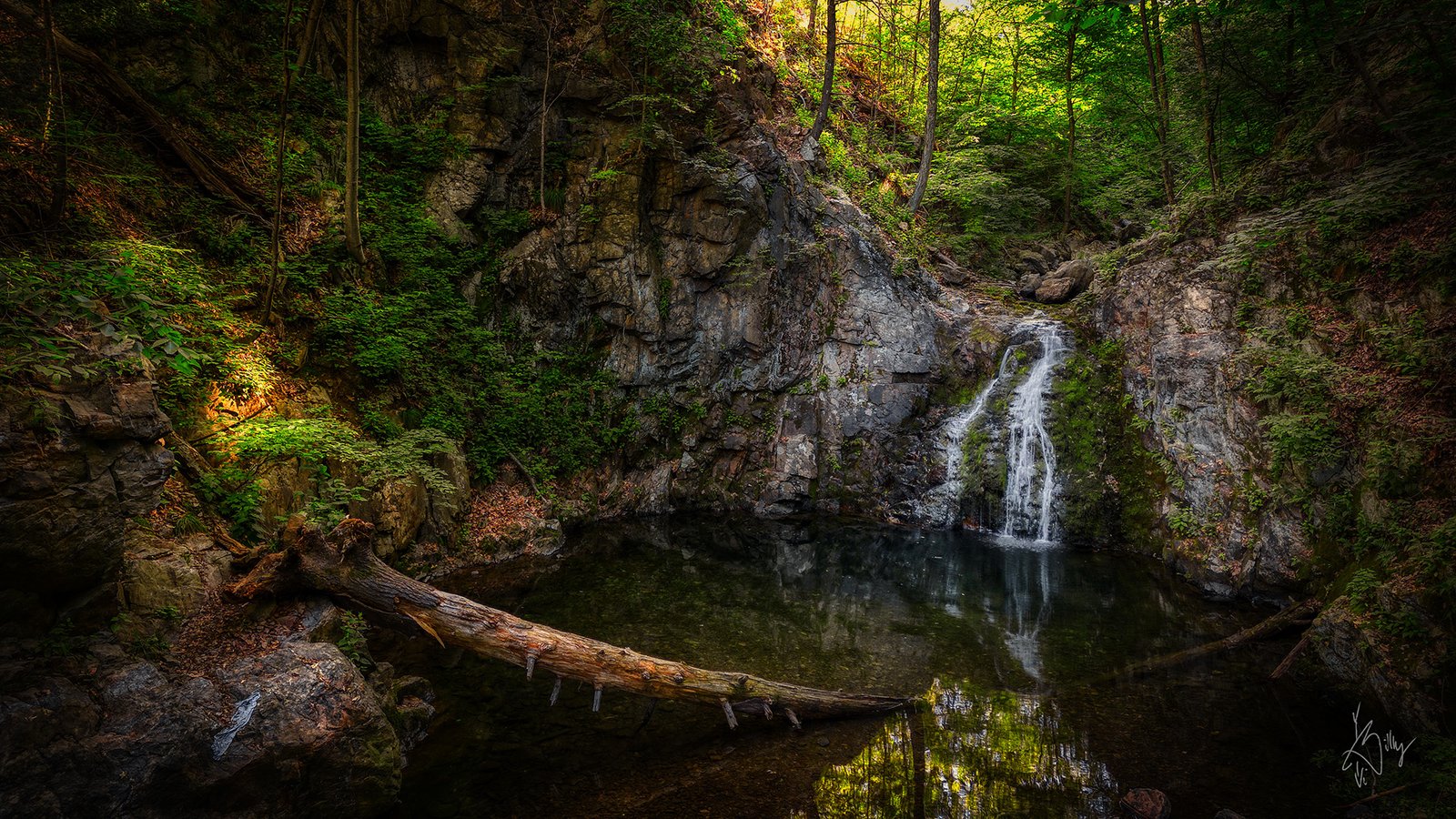
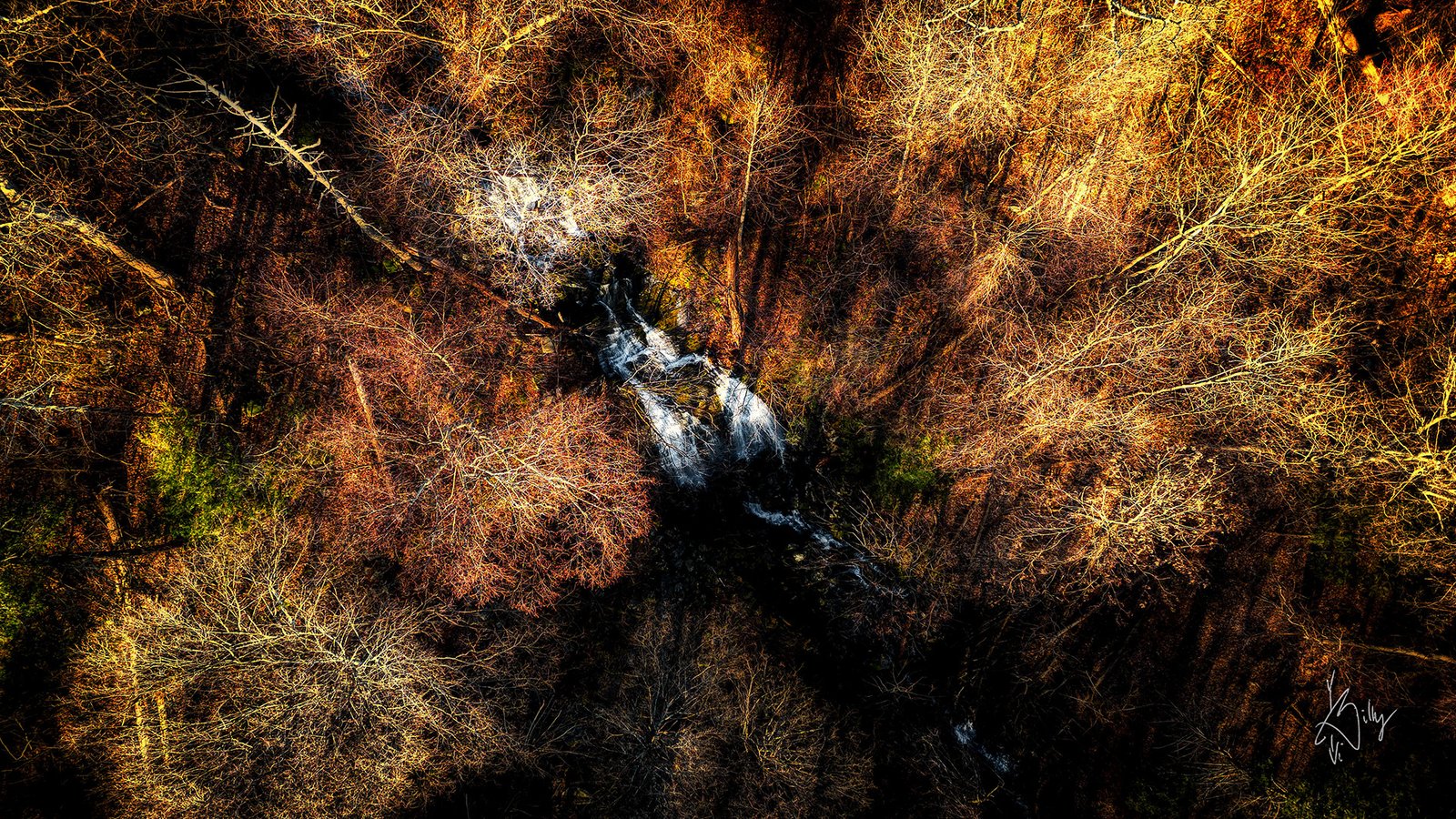
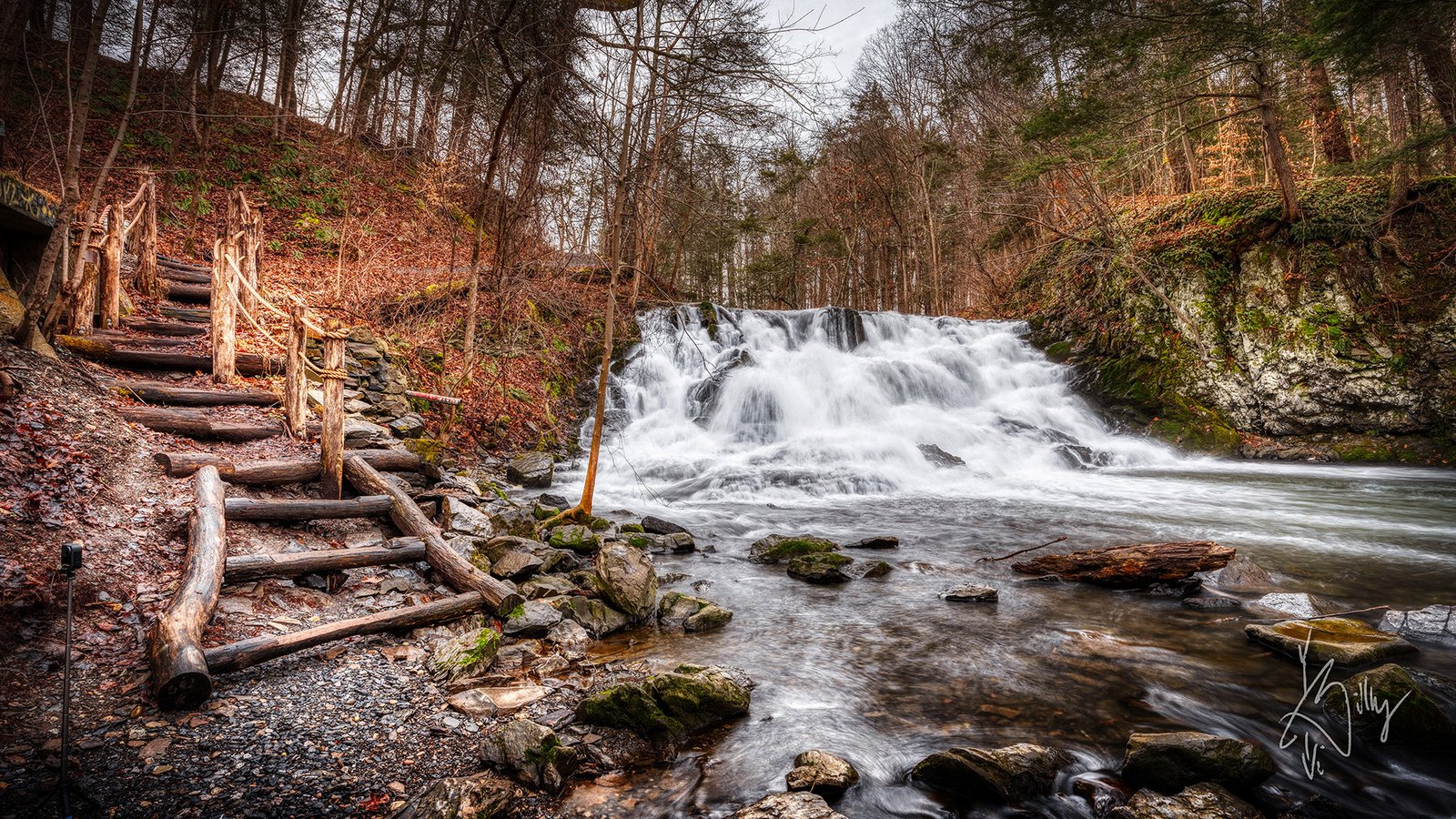
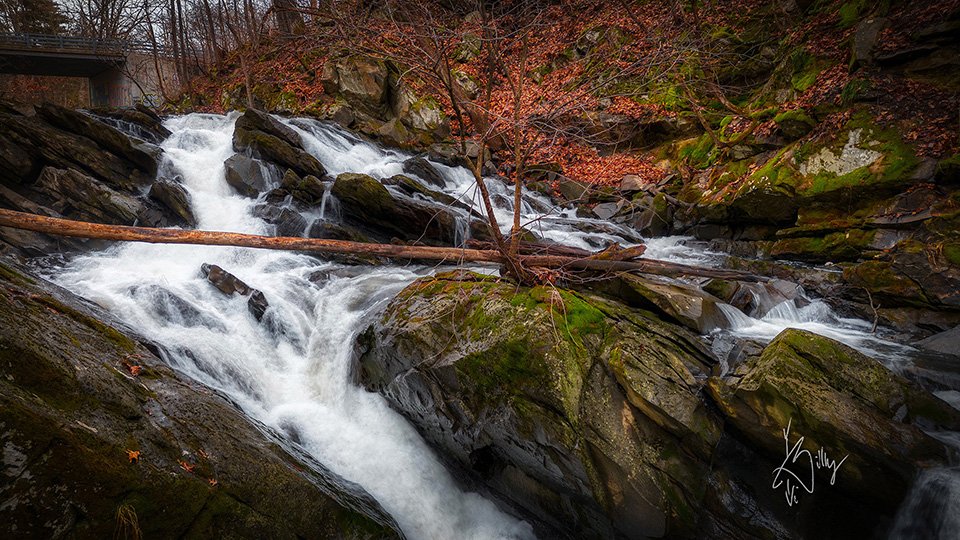
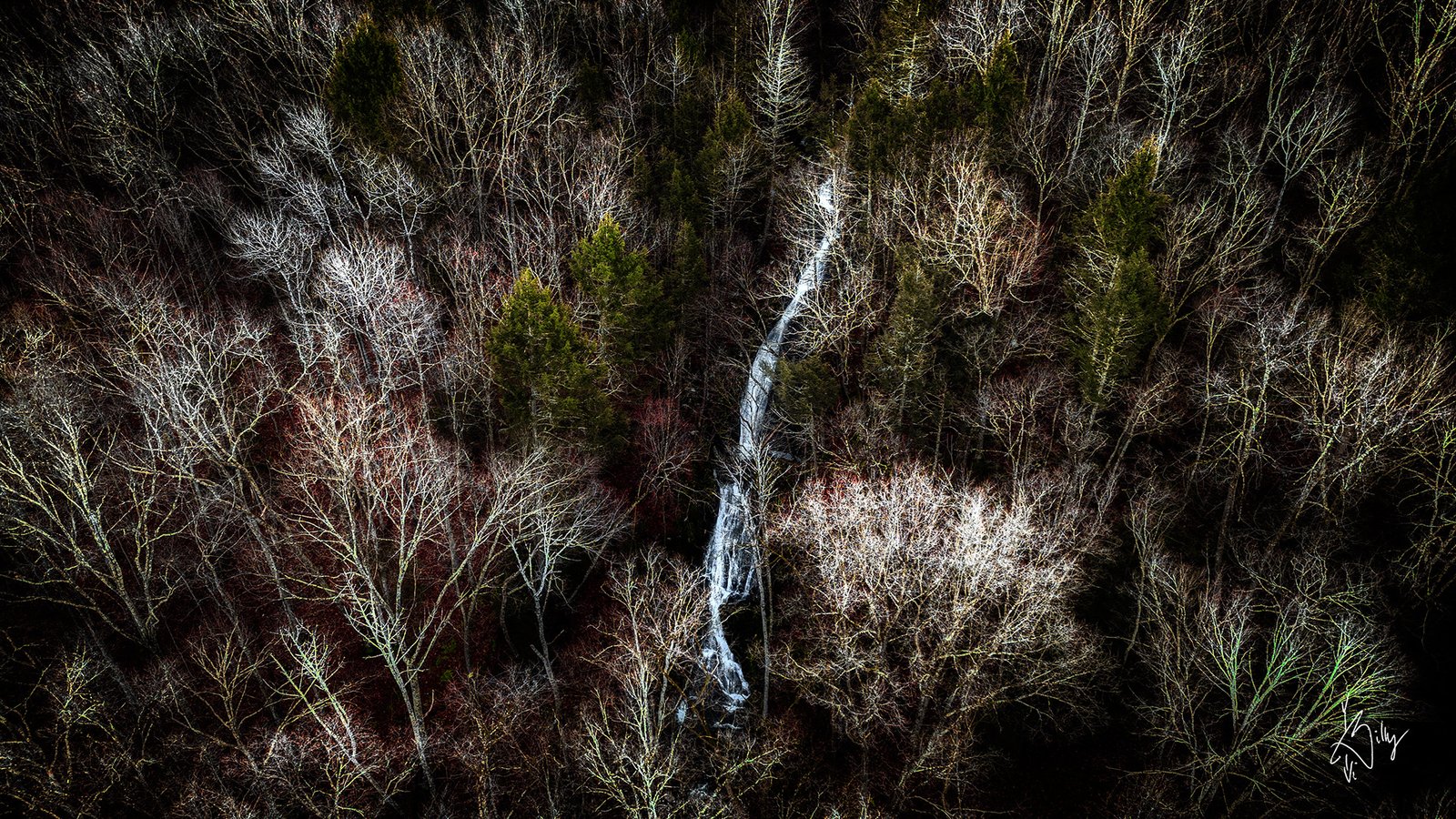
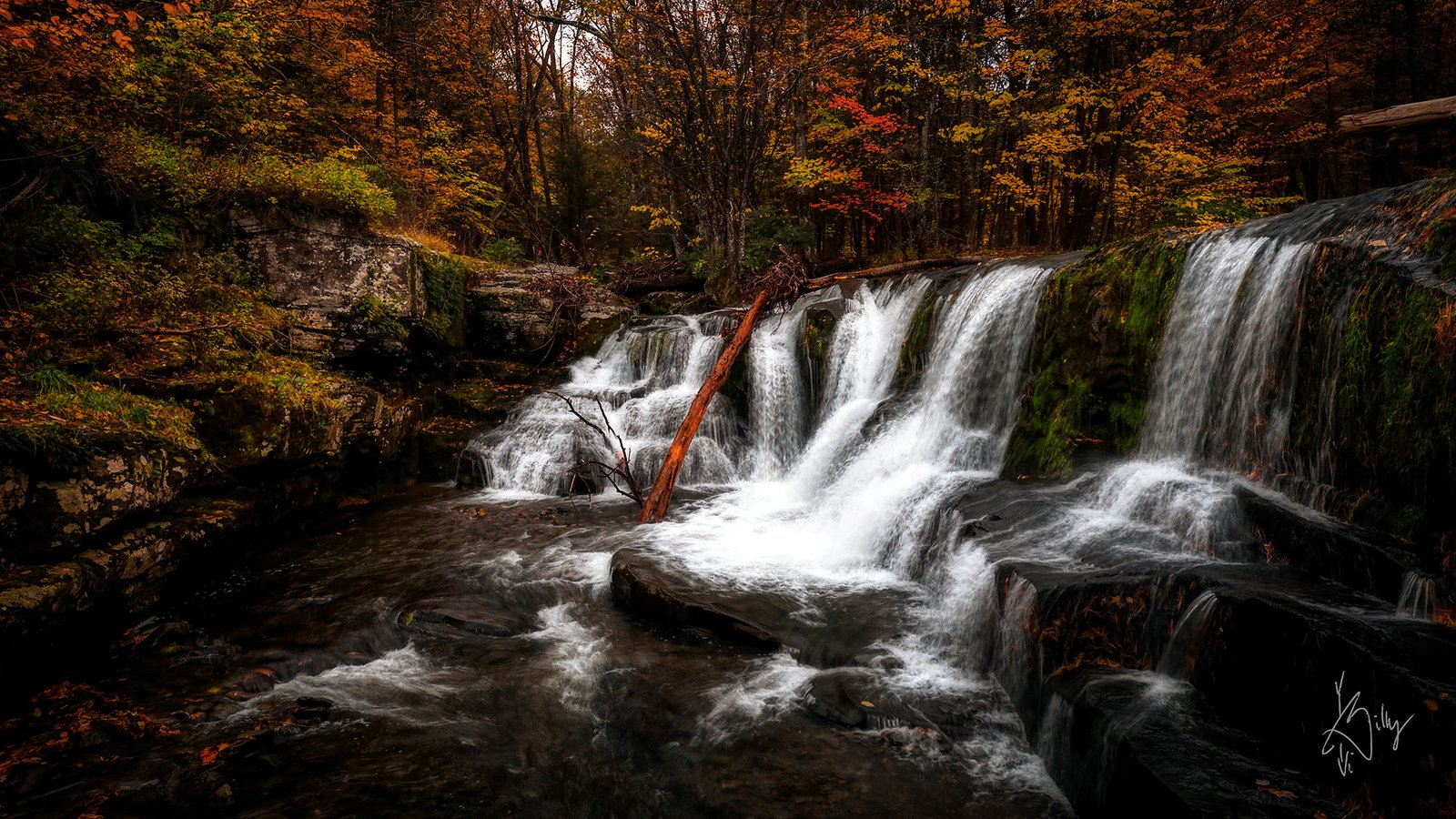
    Then again, there is Shaupeneak Ridge Waterfall. With an elevation gain of only 182 feet that you would only feel very briefly during the only 0.7-mile or 15-minute hike, it falls somewhere between the easy-to-get-to-but-tainted waterfall and the hard-to-get-to-but-pristine waterfall. And should you feel a hike is not complete without some clambering on top of rocks, you can optionally do so once you are at the waterfall. Yes, I will always prefer hiking to a waterfall as opposed to having no hike at all. But being that I am nowhere near hardcore when it comes to hiking, I say the hike to the waterfall at Shaupenaek Ridge hits the sweet spot. It perfectly embodies the very definition of something being short and sweet.

  • Zabriskie’s Waterfall and White Clay Kill Falls

    Zabriskie’s Waterfall and White Clay Kill Falls

    Why are waterfalls white?

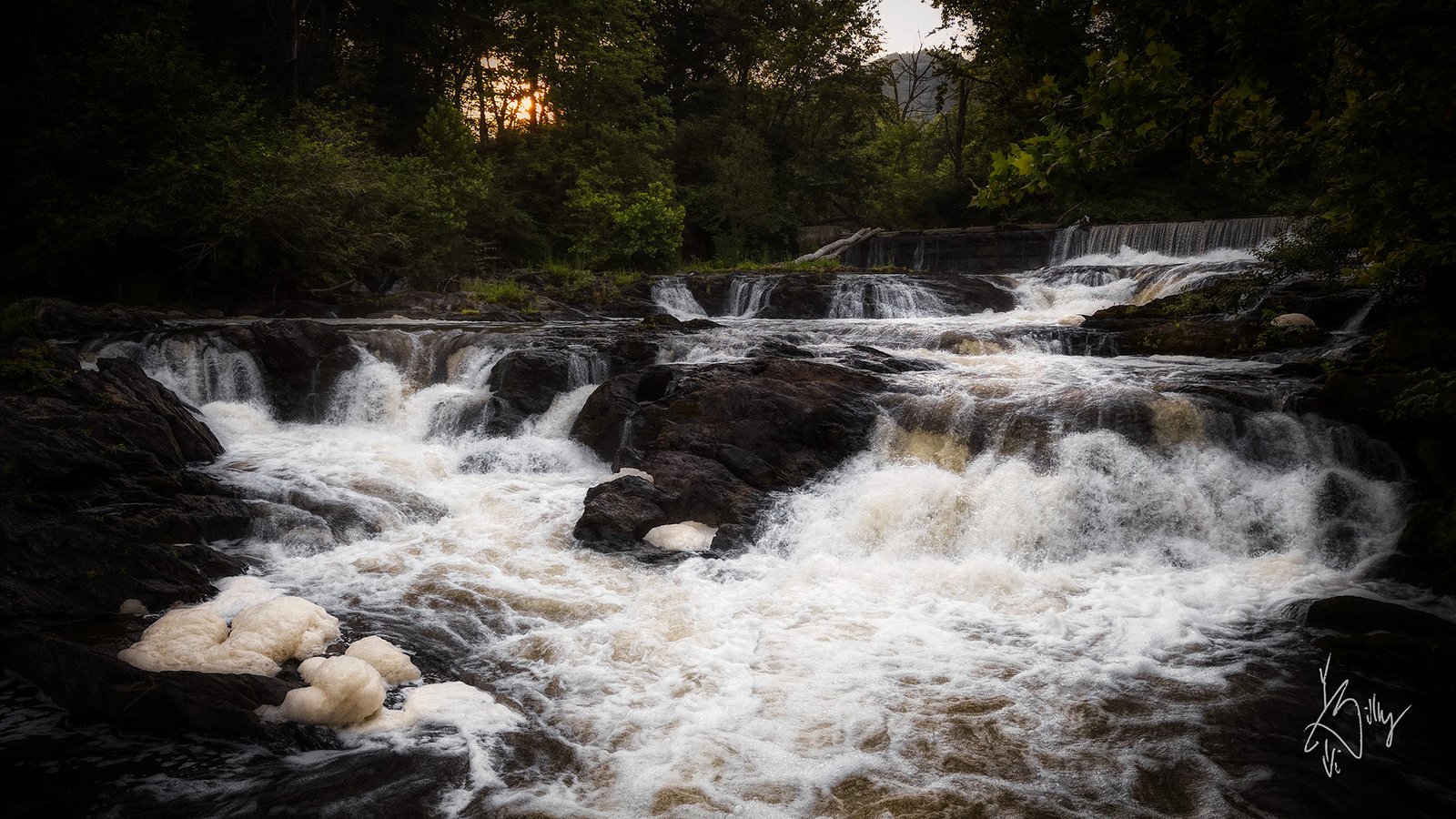
    Why are waterfalls white? If you had given the question just a moment of thought, “bubbles” might have popped in your mind, or floated, um, no pun intended, and you would be right.

    But why, you might ask, are bubbles white? Water, after all, is transparent.

    Because the bubble is shiny, light is reflected off its outer surface. Because the bubble is also transparent, some of the light enters the bubble where again, it is reflected off the shiny inner surface of the bubble. (Light also gets “refracted” as it enters the bubble but is not important for our purposes here.) In other words, light is bounced all around in and off the bubble. Put very many bubbles together and you get light scattering in all directions making the bubbles appear white.

    That is as much as I gleaned from my online research. But it still does not answer the question of why bubbles are white. Why not blue or green or maybe a light shade of magenta?

    White Clay Cliff Falls
    White Clay Cliff Falls

    The color white, they say, is the presence of all colors. (Black the absence.) Shine white light onto one side of a prism and out the other side comes all the colors of the rainbow (as different colors—or “wavelengths” in science-speak—inside the white light “refract”—another science-speak—at different angles). So there–white is the presence of all colors.

    From this I surmise that put very many bubbles together and with light of different colors bouncing off in all directions, the colors fuse or merge or blend together as they reach our eyes and so form the color white.

    Isn’t that neat?

    Anyways, how often do you see the color white in Nature? Coconut meat is white. So is pearl. And so are some flowers. But they’re small. In massive scales, you’d probably only see white in snowy countries. If you’re from the tropics like me, you’re out of luck. White is pretty much absent in Nature.

    Unless you go visit a waterfall.

    So thank Creation for the waterfall. A beauty in Nature resplendent that you can expect to find anywhere there is water—abundant in our blue ball planet—cascading down rocks. And when you visit a waterfall, think maybe not just of communing and reveling in Nature\’s powerful roar, but also of bathing in her shining white light.

  • Waterfall at Bashakill

    Waterfall at Bashakill

    More than a sideshow

    It’s one of those rare waterfalls that are in full view but one cannot get to because of the “no trespassing\” signs. Rarer still because the stream the waterfall is on seems to form the boundary between public and private lands. Admiring the waterfall from afar is all the visitor can do.

    The waterfall is at Bashakill, a 3,000+ acre marsh designated as a Wildlife Management Area.

    Fortunately, there is not a dearth of things to do at Bashakill including biking, hiking, kayaking, birdwatching (the bald eagle has been spotted there), fishing, and even hunting and trapping small mammals (with proper permit). So a waterfall, accessible or not, although usually a main draw in most attractions, would be a more than welcome, um, sideshow.

    Waterfall: 41°30\’34.4\”N 74°32\’33.4\”W

  • Plattekill Falls, Old Mill Falls, and Schalk\’s Falls

    Plattekill Falls, Old Mill Falls, and Schalk\’s Falls

    Three close-by waterfalls in the Catskill Mountains.

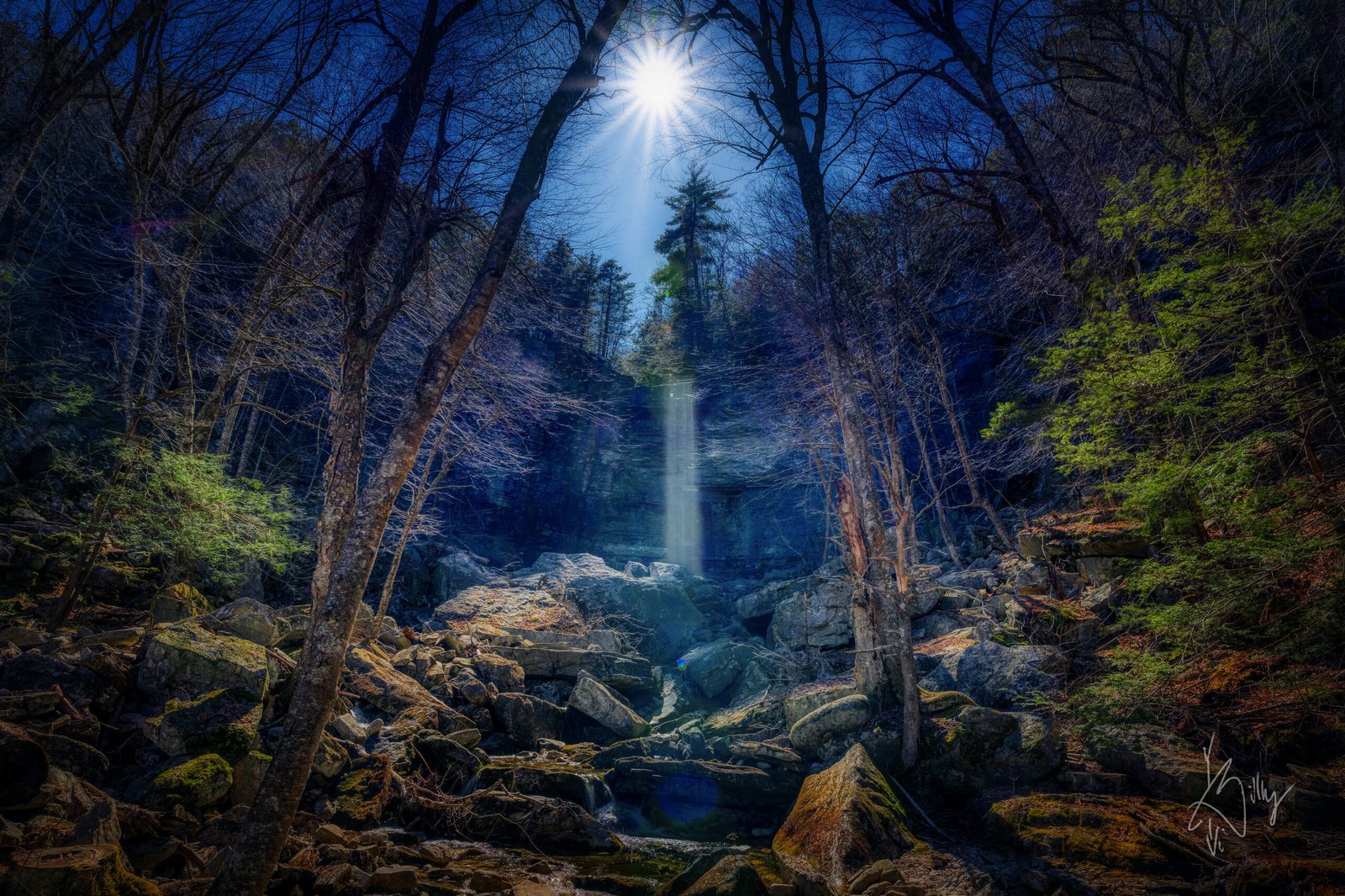
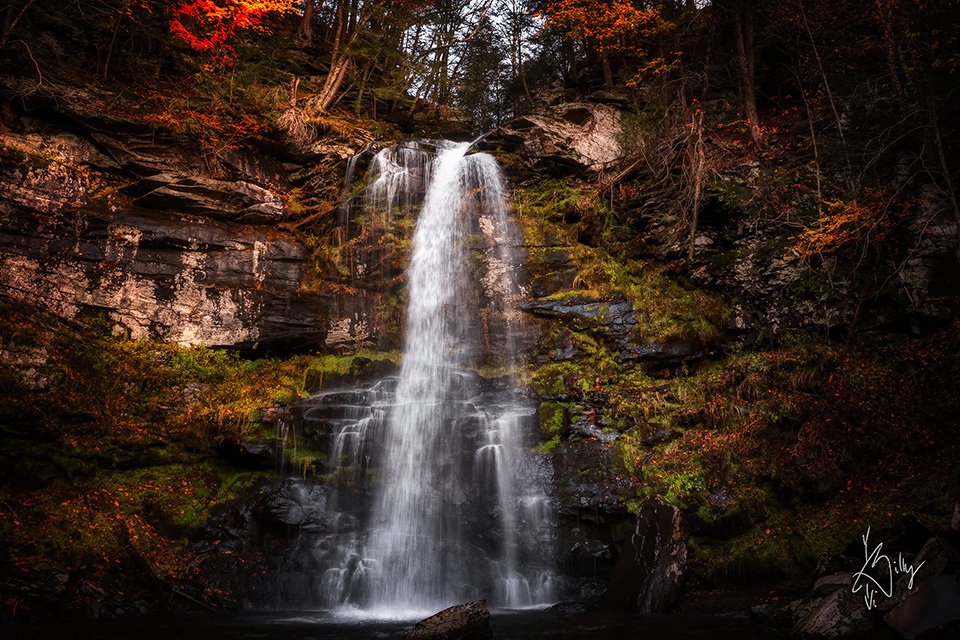
    Something like Plattekill Falls is probably what you have in mind when you think “waterfall\”. Gouged by Mother Nature in the Catskill Mountains to form a rocky amphitheater with water gushing down the middle from 75 feet high, its appearance is quite simply iconic.

    Plattekill Falls
    Plattekill Falls

    And as if Mother Nature isn’t sure if that is enough, she garnishes it with two, additional, small roadside waterfalls, Old Mill Falls just atop Plattekill Falls and Schalk’s Falls just three miles down the road.

    Old Mill Falls
    Old Mill Falls

    Anything, it would seem, she would do just to keep you coming back into Mother Nature’s arms.

  • Explore Buttermilk Falls: A Nature Escape Near NYC

    Explore Buttermilk Falls: A Nature Escape Near NYC

    Quick escape from the city.

    Living in a city space can be confining. Although parks help, there’s not much in the way of boundless wilderness like what one might find in the Catskills or beyond. But Buttermilk Falls County Park in Orangeburg, Rockland County comes close. Less than a mile away from one of the biggest malls in New York State, Palisades Mall, Buttermilk Falls County Park has two rocky overlooks on which the hiker may gaze upon the landscape 300 feet below and a waterfall that—because of its nearly impossible-to-access gorge—lay unspoiled from the humanity cropping up in settlements around the park’s perimeter.

    If you live in the area, there’s no question that you should visit. I’d say the park was meant for you. But if you need to drive a-ways to get there, you may find Buttermilk Falls County Park less alluring as you will not get the isolation in Mother Nature you might be expecting. You will constantly hear the noise of road traffic and the roar of low-flying jet planes to and from New York City. Care must also be taken that you not inadvertently trespass into the backyards of the occasional homes nearby.

    Still, a waterfall cascading and falling on black rock as to make the waterfall uniquely black-faced, I’d say Buttermilk Falls State Park has the makings of an attraction—an artistic expression of Mother Nature if you will—that can draw visitors from far and wide.

  • Slabsides – John Burroughs Nature Sanctuary

    Slabsides – John Burroughs Nature Sanctuary

    Part 2 of 2

    We have been to Slabsides before in 2014. But we didn’t go for the trails. We only went for Slabsides, the log cabin that John Burroughs built with his son, because it was open to the public for that one day. Having developed an interest in any bit of history of the place we now called home, it was an opportunity we did not want to miss.

    This time, though, I went for its trails. Not just once, but on three separate occasions.

    I did not plan on going there multiple times, however. It was all the result of poor—\”no\” might be the better word—planning on my part.

    Black Creek Falls 2
    Black Creek Falls 2

    The first time I went, I was only aware of the small cascade behind Slabsides and another small waterfall nearby according to a waterfall guide book I had. I found the cascade, but it was just a damp carpet of moss on some of rocks. There was no waterflow. It was supposed to be the larger of the two so I felt disinclined to continue looking for the second waterfall.

    At the parking lot as I was getting ready to leave, I saw a couple doing the same. On the chance that they might know, I blurted, “You guys know where the second waterfall is?” shaking my head in wide arcs to give them a chance to quickly say “no”, be rid of me, and be on their way.

    The woman beamed me a smile instead and gestured toward the road while the man I thought initially was sizing me up. Like, maybe he was pondering whether I was a stranger worth sharing a secret with. Go find it yourself buddy he seemed to say with his expressionless look.

    But soon he added, “There are three,” and started giving me a jumble of directions that all seemed to simply say the trails may be tricky to navigate but you can’t miss the waterfalls.

    Black Creek Falls 3
    Black Creek Falls 3

    Thanking them, I went off in the direction they pointed at leaving my car behind in the parking lot. I soon found the first waterfall and, no longer feeling empty-handed, I turned around and headed home.

    The second time I went was when I found out on alltrails.com that there was a waterfall at the end of a one-mile out-and-back I didn’t take that was off the main loop. I thought, the waterfall had to be in the video I was making if I didn’t want my viewers to point out what a fool I was for missing it. So I went again.

    The third time I went was because of a nagging thought gnawing at me. The couple at the parking lot clearly said, “three\”. Were they counting the others I had already found? Or were there actually two more waterfalls I hadn’t yet been to? I had to know. So with the possibility of going off on a fool\’s errand, I went yet a third time.

    Black Creek Falls 4
    Black Creek Falls 4

    I stitched together the clips from all three trips into one video (although cut up into two parts because of the length) and made it look like I hiked to all the waterfalls in one day. I wore the same clothes and pushed off getting a haircut to maintain this illusion. But I did that because all the waterfalls at Slabsides are indeed hike-able and are meant to be hiked in one day. A half day, even. So I am counting on your forgiveness for this apparent deception and lack of planning on my part.

    Black Creek Falls 5
    Black Creek Falls 5

    When we went to Slabsides in 2014, I remember we—as well as the many visitors that showed up—were greeted very warmly and with keen interest by the grand- and great-grandchildren of John Burroughs. They seemed happy to know that their late grandfather, John Burroughs, lives on.

    I would like to think that this YouTube video of mine in two parts, however clumsily, hastily, and incompetently put-together, will somehow contribute in that regard.

  • Slabsides at John Burroughs Nature Sanctuary

    Slabsides at John Burroughs Nature Sanctuary

    Part 1 of 2

    There is a small, 25-foot waterfall inside the John Burroughs Nature Sanctuary, or what is more popularly known as “Slabsides”, in West Park, NY. But because the waterfall is more like a small stream that happened to be falling down vertically and is further broken down into 3 even smaller segments—and is likely to be more damp than wet most times of the year except after when it rains—it is not one of the main draws at Slabsides, except maybe for those chasing waterfalls in the region, like me.

    Slabsides Falls
    Slabsides Falls

    Anyway, I went because of this tiny waterfall, and the knowledge that—at least according to a NY Waterfall guidebook in my possession which shall remain nameless as it has not been much help in my chase for waterfalls in the past—there is another small waterfall nearby visible from a distance but on private land.

    Peninsula
    Peninsula

    Well, to make a long story short, much to my surprise, Black Creek which runs through the John Burroughs Nature Sanctuary contains several waterfalls that are not very well known except maybe among locals (“semi-secret” according to one reviewer online). Indeed, Google Maps make no mention of these waterfalls and only one waterfall icon shows up on allrails.com’s trailmap. I learned about the waterfalls on the spot from fellow hikers at the parking lot.

    Black Creek Falls 1
    Black Creek Falls 1

    I counted 5 waterfalls with the sixth being the tiny waterfall at Slabsides. There were so many that I broke my video down into two parts. This is the first part. The second part will be published soon.

    Slabsides
    Slabsides

    I hope you enjoy the video. I also hope you learn something about Slabsides, the log cabin built by the rather eccentric essay-writer and naturalist, John Burroughs, over a hundred years ago.

  • Black Rock Forest

    Black Rock Forest

    A pocket of quiet

    I have known about Mineral Springs Falls for some time. It is the first waterfall mentioned in the used book I bought years ago, “New York Waterfalls” (2010) by Scott E. Brown. But because it’s in the direction of New York City just north of Bear Mountain and Harriman State Park, two popular hiking destinations for city-dwellers, I imagined there would always be crowds. So I avoided it and opted instead the Catskills upstate, farther away from the city, where Nature surely abounds and solitude more easily gained.

    That way of thinking, I learned, is not always right.

    I hiked Black Rock State Forest where Mineral Springs Falls is located one early sunrise when, while revisiting my old copy of the book, “New York Waterfalls”, I learned (again) that the waterfall was just 30 minutes away.

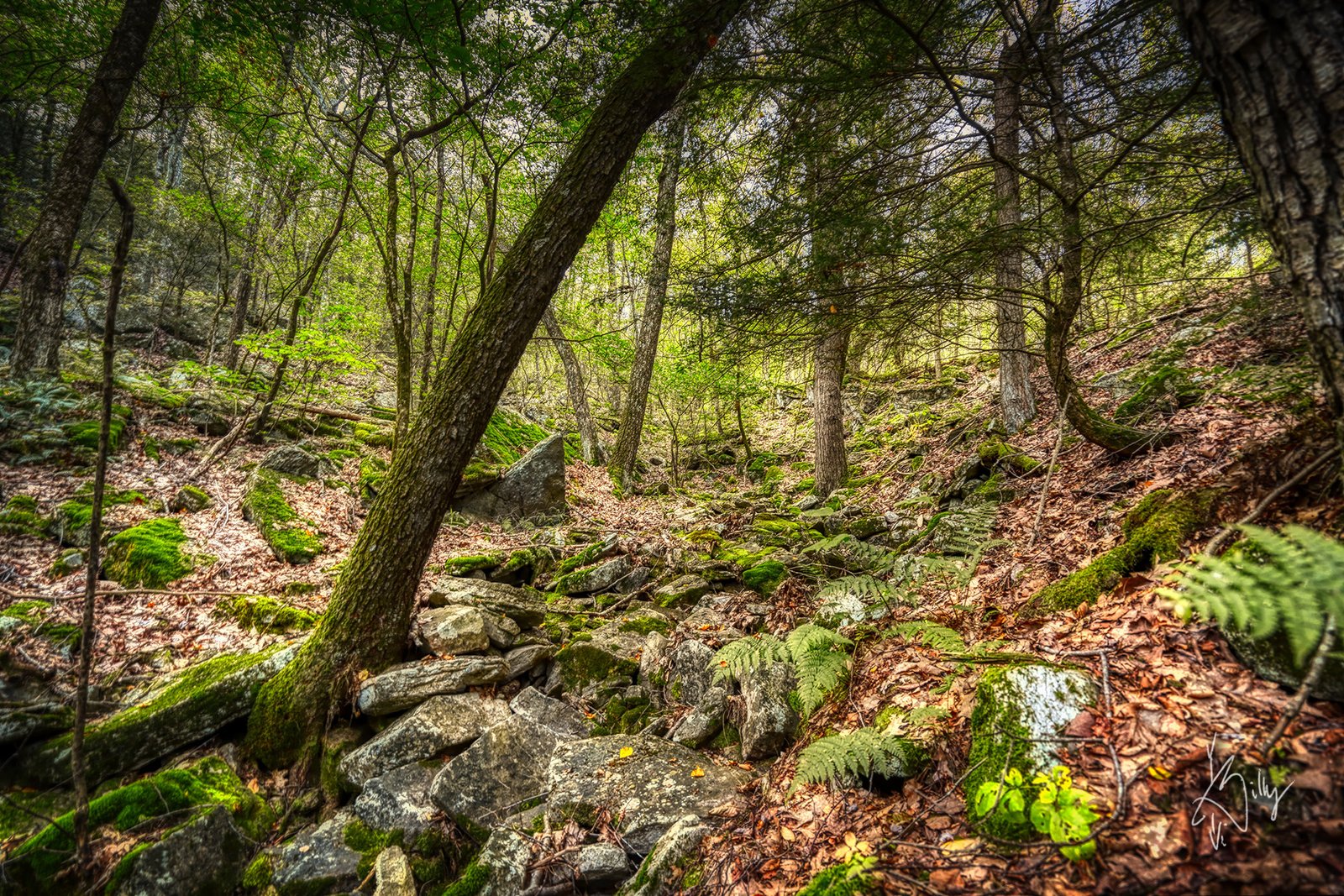
    What I found looked like undisturbed* Nature, the same as what one would expect farther upstate, with plant life possibly even more diverse. There were the usual ferns, moss, trees, and shrubs, but I’d say with greater variety for just one locality. Indeed, Black Rock Forest is “a living laboratory for field-based research and education, encompassing native terrestrial and aquatic ecosystems that are increasingly rare in the region,” according to its website, blackrockforest.org.

    A section of the Old Mineral Springs Trail which I took ascends 676 feet but involved passing through a level region with pine trees in all directions as far as the eye can see. How much more welcoming can a forest be?

    Then there were the streams and waterfalls, boulders, ledges, and rock formations that seemed to break the pattern and guarantee that the visitor’s expectations of what a trip in Nature should be like will all be met.

    I used to say, calm emanates from within. When engulfed in the hustle-and-bustle of city life, all one needed to still the frenzied mind was a small pocket of quiet—the shade of a tree at a park, a bench on an esplanade, or the coffee shop frequented by locals—pockets that can be found even in a city as busy as New York, if one cared enough to look.

    Magnify the scale and I say Black Rock Forest becomes the same pocket of quiet in an ever-increasing world of urbanization.

    * – Not completely undisturbed. \”In the late 19th century, Black Rock Forest had been heavily cleared and featured much pasture and farmland.\” Source: blackrockforest.org

  • Yaegerville Cascade

    Yaegerville Cascade

    Save room for dessert.

    Save room for dessert.

    Or appetizer.

    However way you want it, whether before or after the main 3-course “meal” of Yaegerville Falls, Sholam Falls, and Frozen Balls Falls—three waterfalls that if Nature’s creations could qualify as art would arguably be masterpieces—I urge you not to miss out on an un-named yet equally beautiful and serene water cascade at the start of Yaegerville Road, all along a stretch of Trout Creek only 1.2 miles long.

    And if “getting there” is “half the fun”, then the cascade is pure fun as there is virtually no “getting there” being so close to the road and should therefore earn a spot in your list of itineraries when you come visit this part of the Catskills for the three Instagram-worthy waterfalls in Yaegerville, New York.

  • Shawangunk Ridge State Forest

    Shawangunk Ridge State Forest

    A short loop in the Gunks with potential for a waterfall.

    The Shawangunk Mountains or the Shawangunk Ridge is long – 47 miles long. It extends from northern New Jersey to the Catskills and is a “continuation of” (I would interpret that as “not technically part of” but close enough to give more context—please feel free to correct me if wrong) the Appalachian Mountains.

    Yet most people would probably associate “the Shawangunks”—or “Shomgum” as it’s more properly pronounced by locals—with just a small portion of it enclosed by and around the Shawangunk Ridge State Forest straddling two counties of New York State, Sullivan and Ulster. Anywhere else you go in the range of mountains it would likely be called by other names.

    Height-wise, it’s not very high. Maximum elevation reaches only 2,289 feet at what is called “Sam’s Point”, diminutive when compared to mountains out west that climb to 14,000 feet and more, but typical of the east where the highest peak stands at 6,000+ feet in North Carolina.

    I mention all this to hopefully satisfy any curiosities you might have as to the types of trails and hikes one can do in the region, which I say would be my mission statement for filming and sharing my first-person videos of my hikes in the region.

    Thank you for watching. In this video I hike the Old Mountain Road – Yellow Trail Loop in “the Gunks”—a shorter moniker used by locals—where I gain an elevation of 299 feet along a 1.4-mile loop.