It is said that few places on Earth remain unexplored thanks to satellite imagery, GPS mapping, and, may I add, Instagrammers.
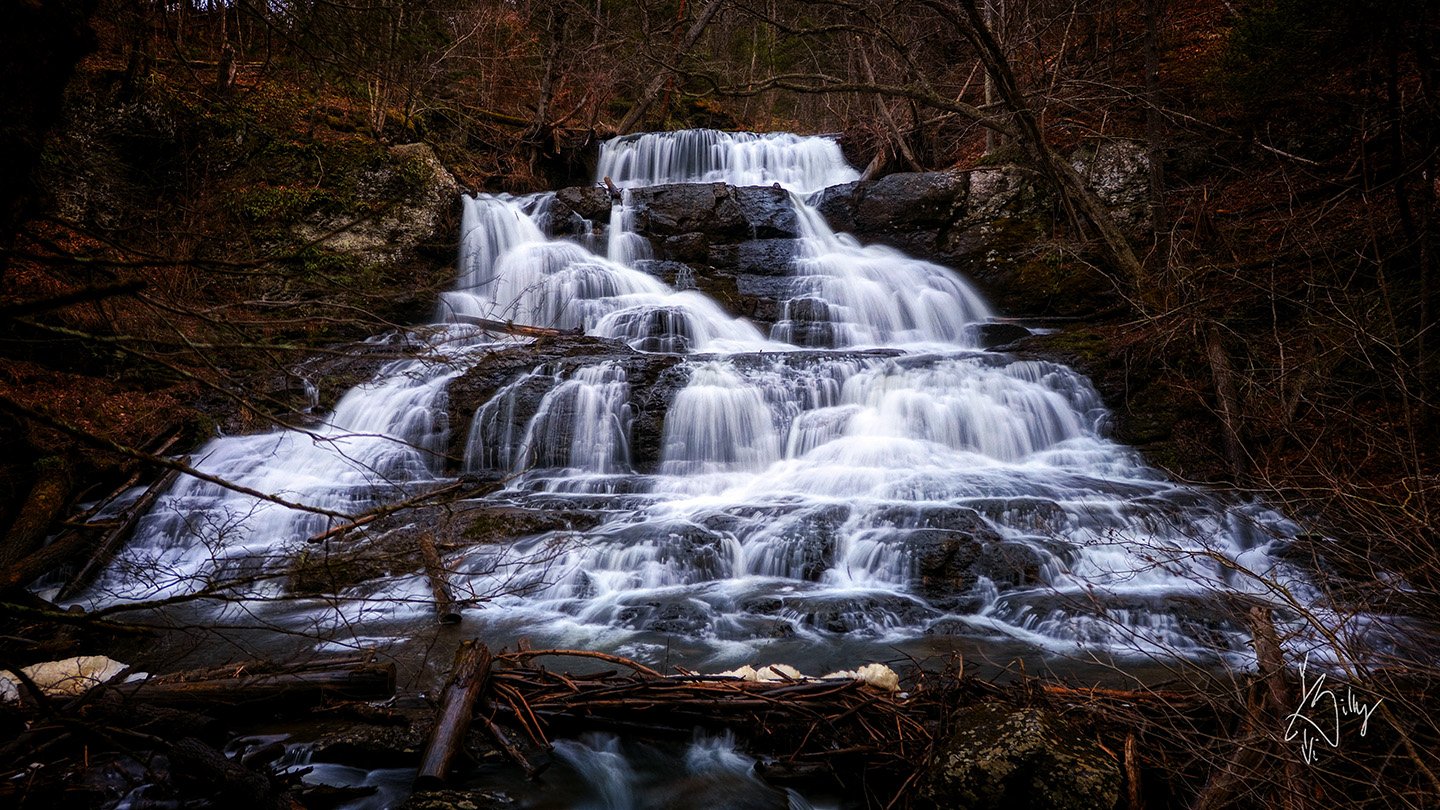
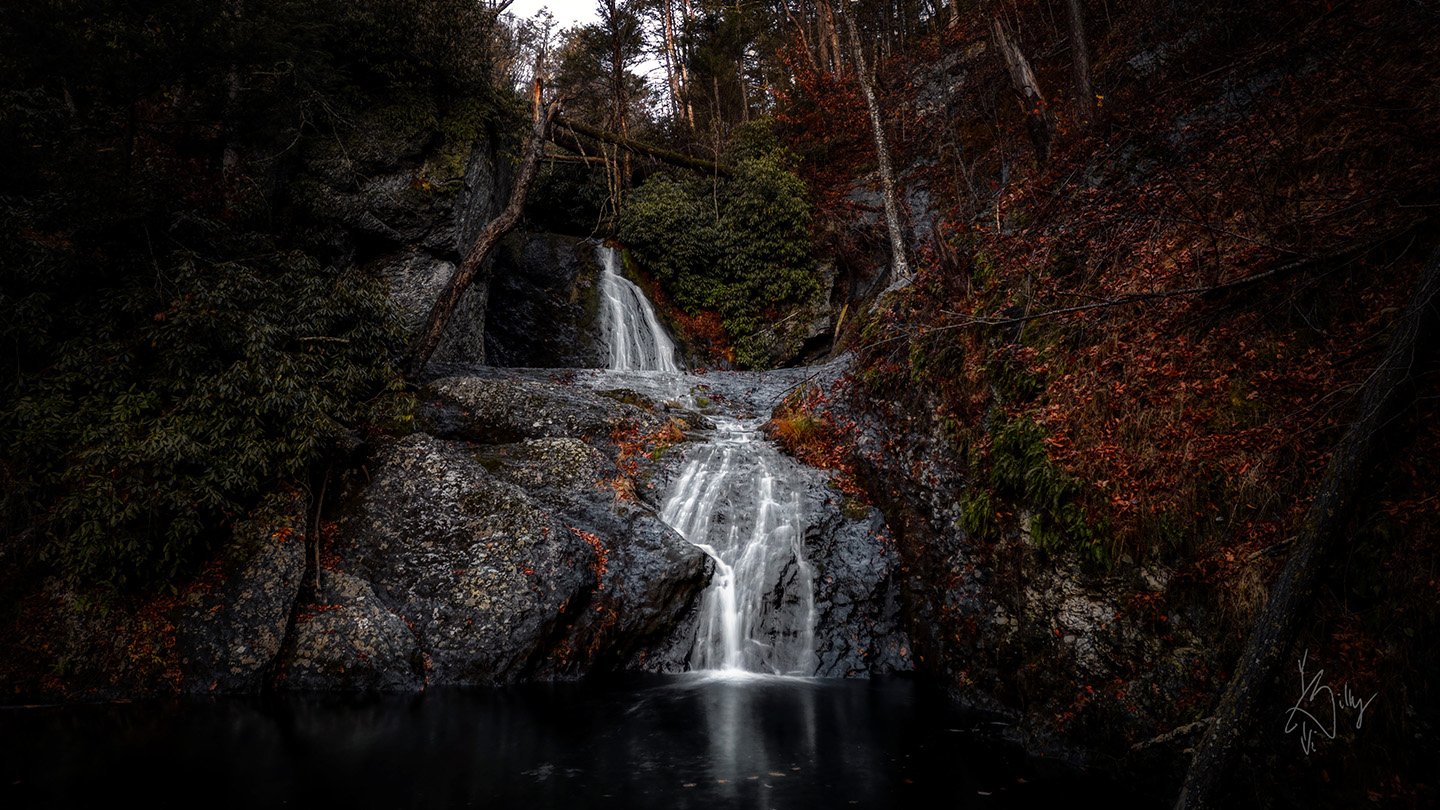
The waterfall on Arden Brook lies on a side trail off the main Arden Point trail. It is considered seasonal, meaning, water flows only after some rain and can dry up in the summer. But I didn’t know that. I was just surprised to learn there was a waterfall nearby, just across the Hudson River, and so off I went. It was summer.
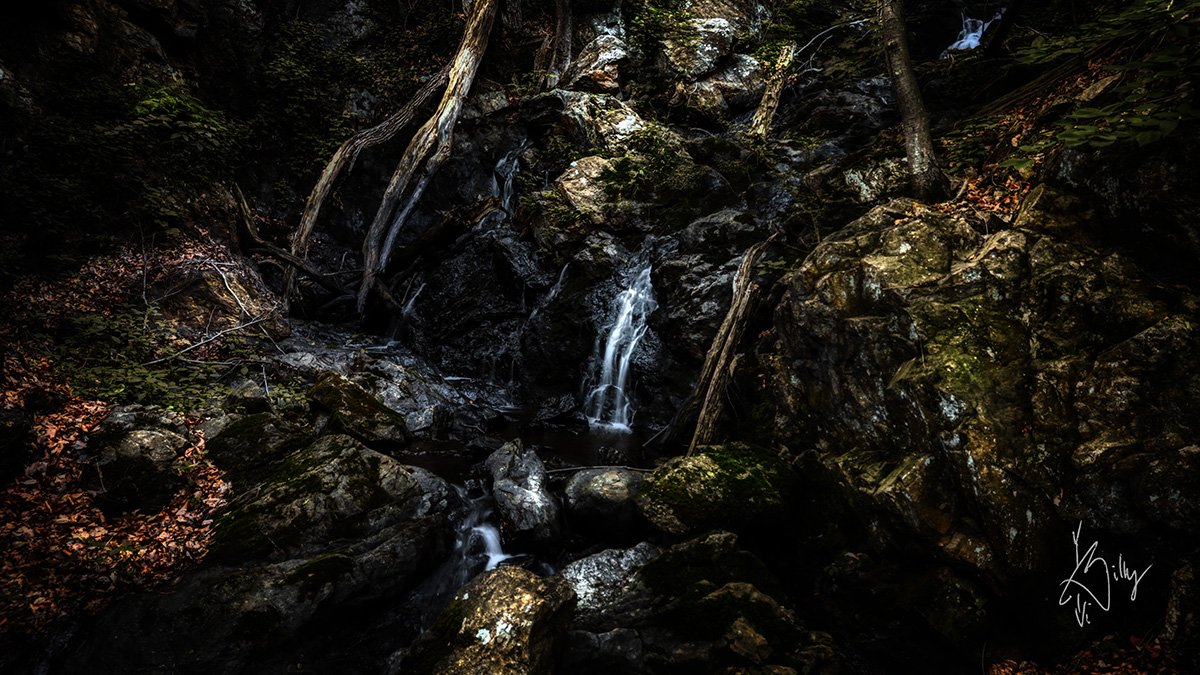
I was not disappointed. Yes, the flow was not strong as waterfalls go, but the waterfall was there, photogenic and set in a deep gorge carved by thousands of years of vertical erosion. I found no way down to the falls, and from the few photos I saw online, it seems no one did, too, perhaps also for thousands of years. All were taken from the trail above the cliff walls, where trees and shrubs obscured the otherwise breathtaking view.
Because the waterfall is off on a side trail of the main trail where hikers would rather stay on their way to the main attraction, Arden Point, I would think few would bother making the detour to a seasonal cascade obstructed by twigs and branches that may not even be there. That would explain the scarcity of photos or any mention of the waterfall on Arden Brook online.
If so, then what I was looking at may be one of the few remaining places on Earth left unexplored, a formation that took thousands of years in the making and that no human has ever set foot on, a gift from Mother Nature in the form of a waterfall in its most pristine for those who dare venture off the beaten path.
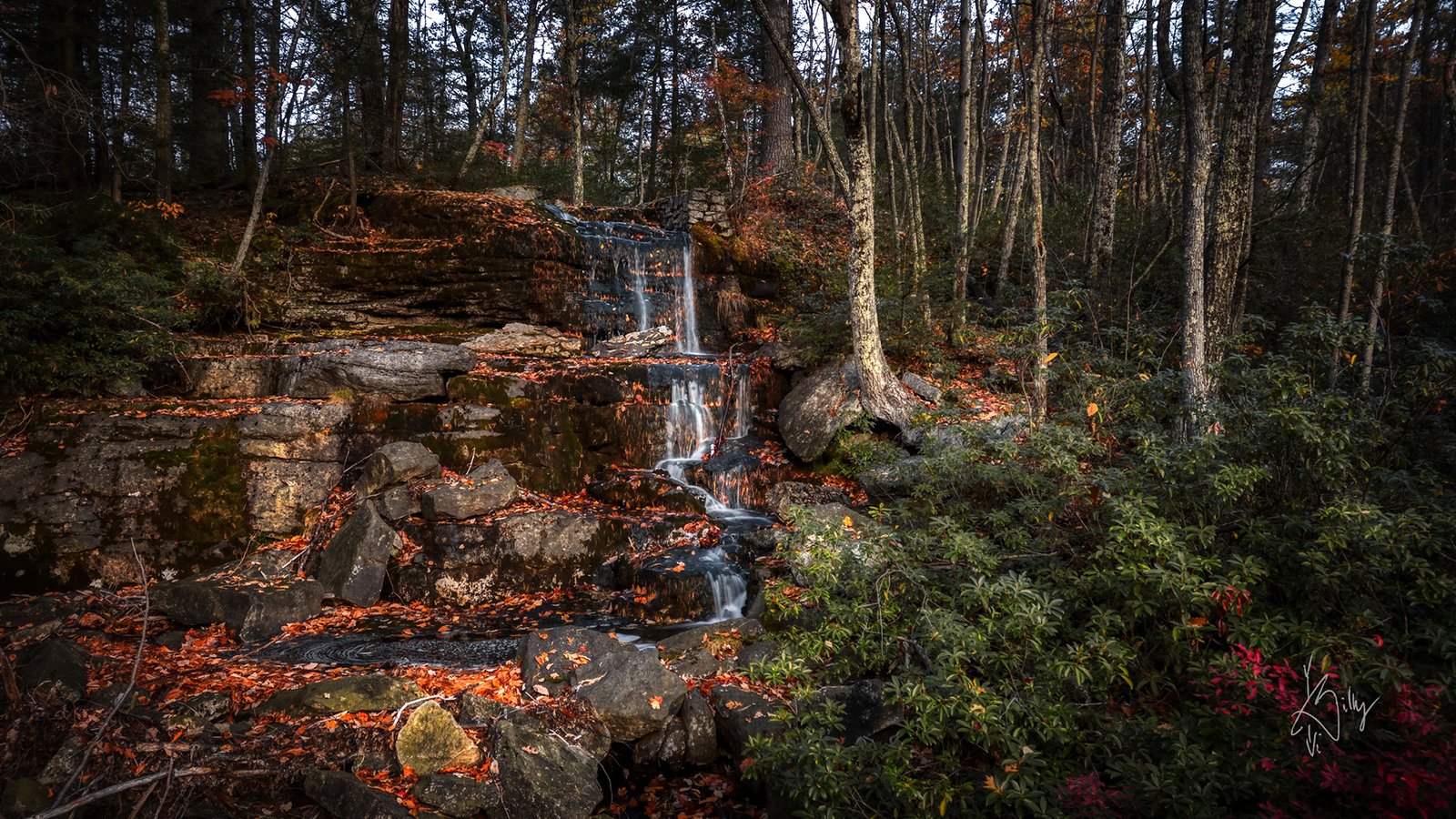
West Point Foundry Preserve in Cold Spring, NY is today an outdoor museum of what was once a factory for melting iron that is then poured into molds—a foundry—on the east bank of the Hudson River. It was established in 1817 because of the waterfall there that powered the factory.
Produced at the Foundry were municipal piping, cast-iron architectural elements, and cotton mill machinery as well as military armaments like guns and canons.
Indeed, the foundry gave the Union in the north a distinct advantage over the Confederates in the south during the Civil War (1861–1865) because many of America’s canons were built there at the time. Lincoln himself toured the factory when he visited the US Military Academy at West Point across the river.
During peacetime the first America,n locomotive was built there as well as the hull of the first American metal ship.
So, the West Point Foundry was in no small part instrumental in establishing America as an industrial superpower.
Foundry Brook
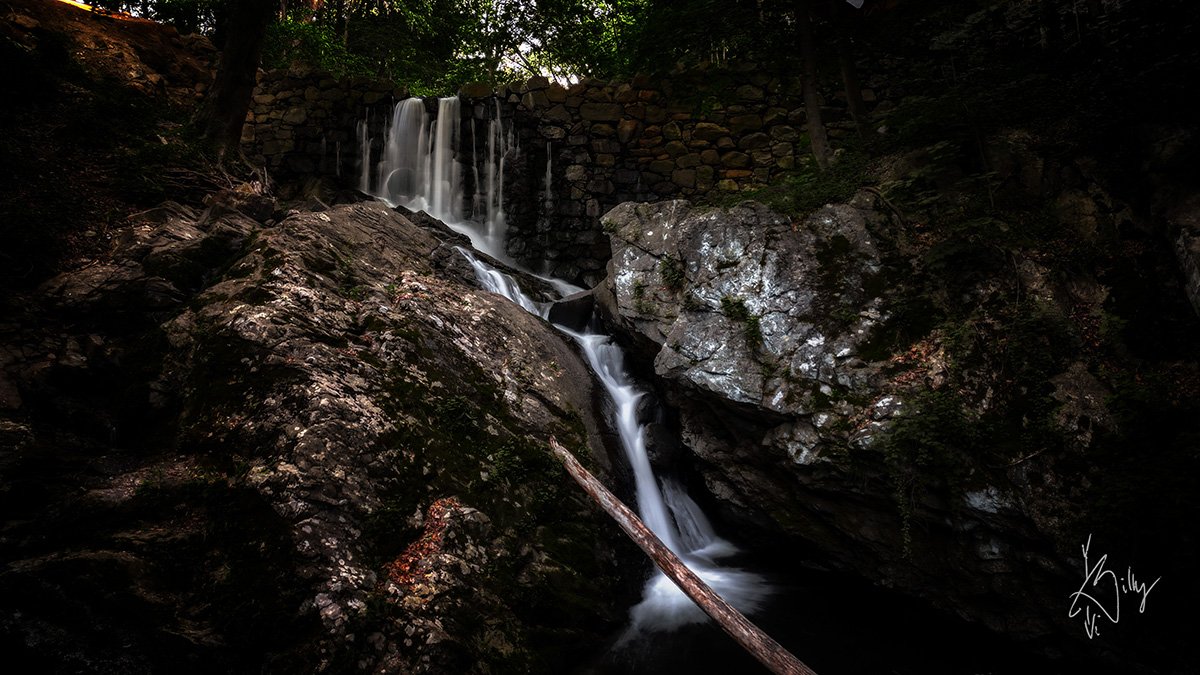
Outdoor museums are not generally my idea of a hike. Restorations, replicas, manicured lawns, interpretive panels, and audio guides are not what I seek on a trail. I prefer Nature in her purest form. Still, I love museums—indoors or out—but I visit them with a learning mindset, not hiking. So, when I learned that a waterfall was accessible via a short detour off the Preserve’s main trail—a waterfall dammed with what remained of a century-old rock wall at the end of a short trek in Nature—I quickly made plans. Books and trails are two things I love and it is rare, if ever, that I get to engage both learning and hiking mindsets in one outing.
I have always avoided Harriman State Park. And that’s largely because of its proximity to New York City. Where was the fun hiking in Nature only to run into the same people I worked with in the city? And constantly hear airplanes overhead and the noise of interstate traffic? City folks can have Harriman, I told myself, while I explored the Catskills, the Shawangunks, the Poconos, and points north and west away from the city and closer to the real thing. I saw myself as one who resisted the city mindset and therefore more deserving of Mother Nature’s affection.
Yet the few times I’ve been to Harriman State Park, I’ve always been impressed—not by modern conveniences like parking, toilets, groomed trails (most were not), kiosk maps, etc., but by the sheer, raw beauty of Nature there. The trees just seem prettier. Sunlight comes down through the gaps in the trees then bounces around to cast a soft glow in the deep forest. Two-and-a-half times the size of Manhattan and over 90% forested, it was peaceful, too, with only the sound of water in the nearby streams and birds chirping loudly overhead. Buffered by thick foliage, the noises of the city do not make it here. And all this, I thought, for Wall Street suits who cared more about money and transactions than the solemnity and sobriety of taking a walk in Nature.
It is said that Mother Nature has no karma. She nourishes and nurtures and devastates and destroys in equal measures. She neither awaits rewards nor suffers consequences for she does neither deeds nor misdeeds, only actions. And none of those actions—whether bringing flowers to bloom or shifting tectonic plates to raise mountains—come back to haunt her or ripple into her future. Mother Nature does what she does whenever she wants. There is no such thing as cause and effect as far as she is concerned.
And, likewise, I suppose, whether closer to the dealer of stocks or to the lover of trees, Mother Nature could not care any less as to where and when she whips up her artistry and stuns the world with infinite beauty.
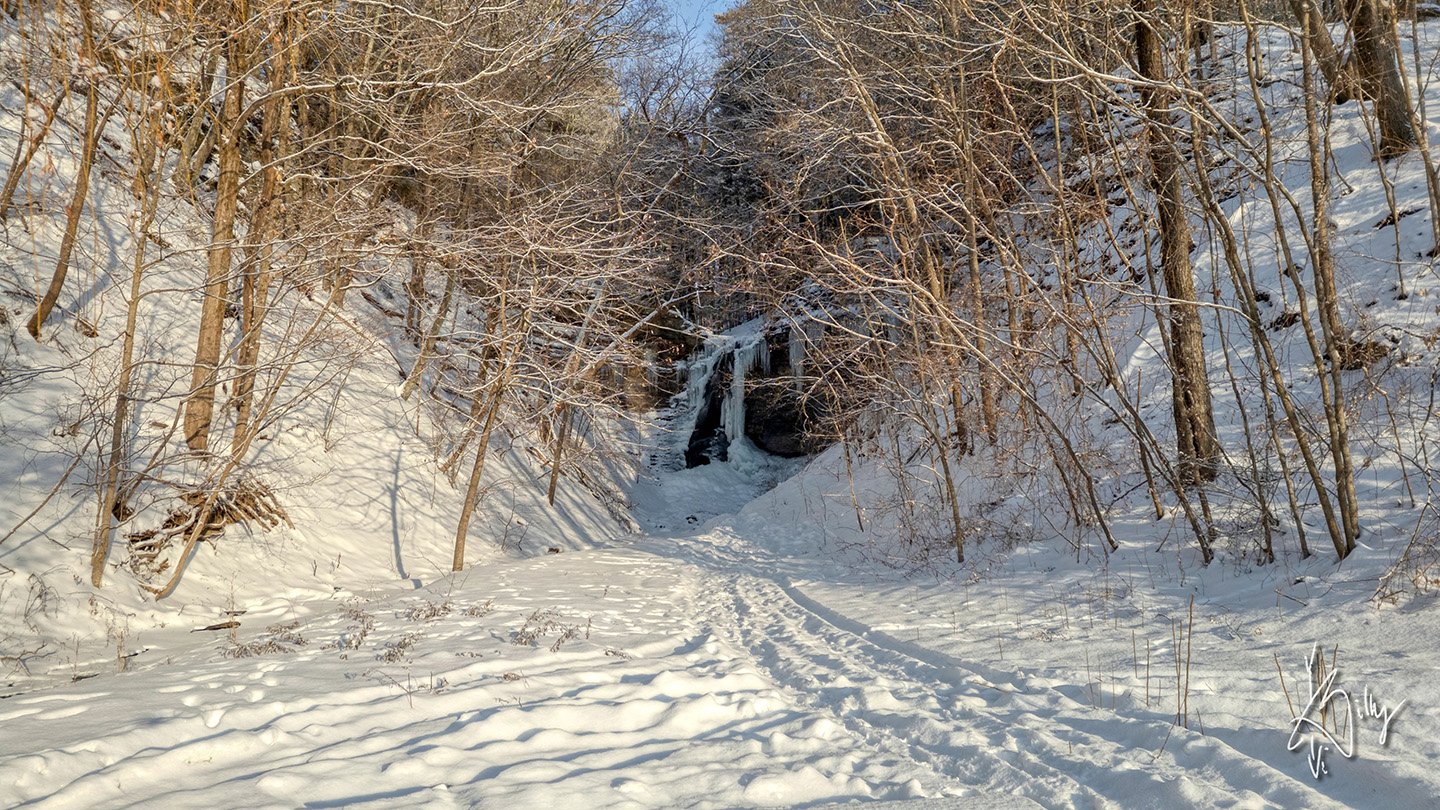
Winter has its own appeal. Snow makes the landscape drastically different from the other seasons such that the hiker may well be transported to a whole other planet.
But winter hiking can also be proportionately more hazardous compared to hiking in the other seasons. This I found out when I hiked to Upper Indian Ladders Falls last winter. The trail was barely visible under the patches of snow and what paths were exposed were mostly iced. The downward slope to the top of the waterfall did not help either as it could strike fear in the hearts of many such that the hiker may well turn around and flee. Which was precisely what I did last winter.
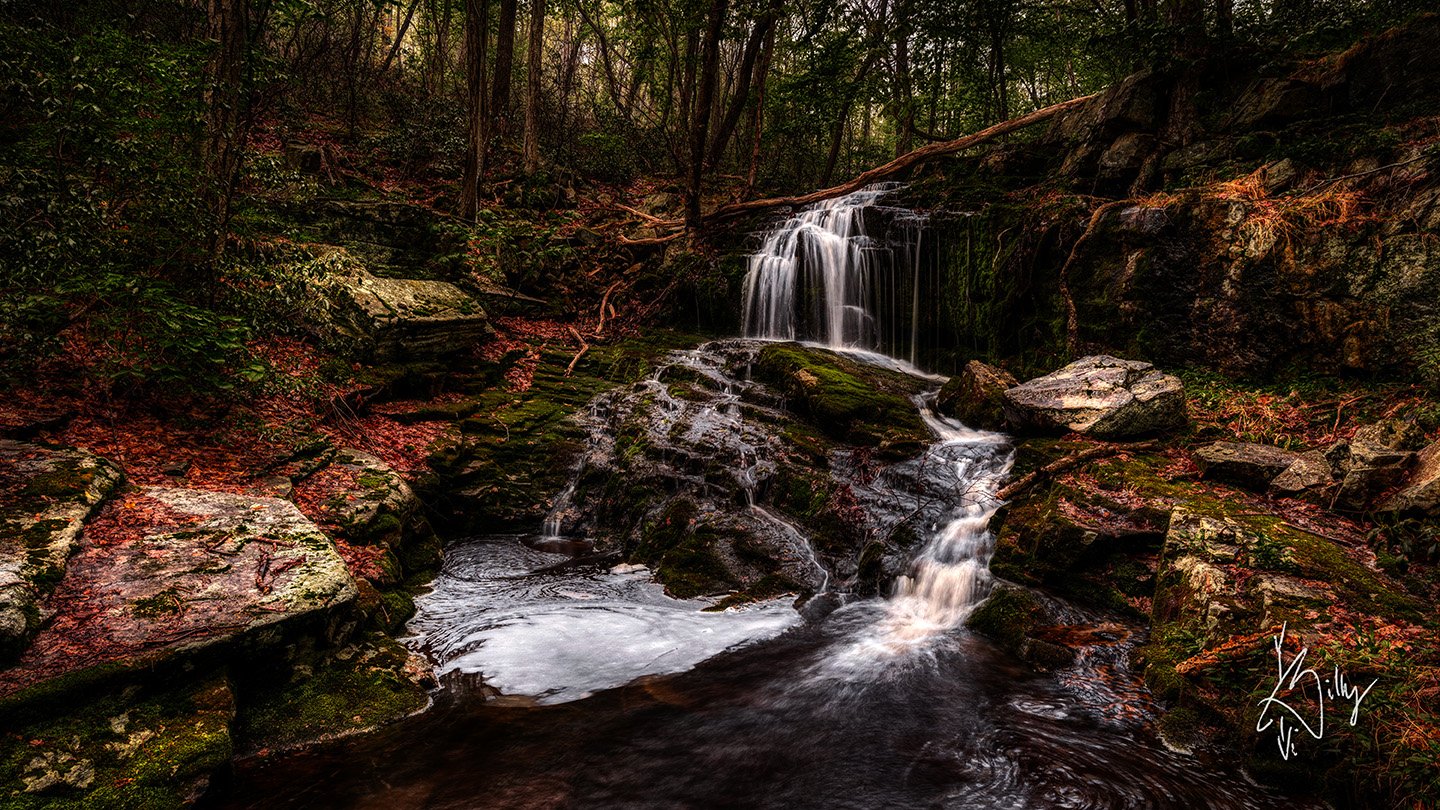
This time though, I came back in early spring. And what a difference a season change makes. Gone are the snow and ice and the dangers that come with them. Although the vegetation wasn’t yet lush and the birds weren’t exactly chirping, the vibes felt completely different. My perceptions of risk and hazard were gone. I was back in my elements.
Then, of course, summer will come and this place will be a knockout. Few things beat the visual of a waterfall in the heat of summer with its attendant mist spray cooling down the hiker.
Come fall, Mother Nature will just be showing off. Her fall colors will be what would set Earth apart from all the other planets in the Universe.
Then we’re back. We’ve come full circle. It’s winter again. No bad things need happen but the mood would feel ominous just the same. It’s time to hunker down.
And that, perhaps, is what makes winter appealing in its own way. What we may perceive of as the end, may simply be the dawning of a new beginning.
There are two major waterfalls on Hornbecks Creek in the Delaware Water Gap in Pennsylvania—the Upper Indian Ladders Falls and the Lower Indian Ladders Falls.
While both waterfalls lie on just one trail, Hornbecks Creek Trail, the section that connects the two is presently closed because weather-related erosion has made it hazardous. To visit both Upper and Lower Indian Ladders Falls, the hiker must do two hikes, one from the trailhead upstream, Upper Hornbecks Creek Trailhead, and one from the trailhead downstream, Lower Hornbecks Creek Trailhead. The two trailheads are a 9-minute drive apart.
When I visited Lower Indian Ladders Falls in the fall last year, I wondered how bad the closed section can be. Surely if one took the time and not rush in maneuvering around and on top of fallen trees, then the upper falls can be reached from the lower falls and vice versa without having to drive from one trailhead to the other.
Or so I thought.
Because when I next visited the Upper Indian Ladders Falls this year toward the end of winter, I got a taste of what “hazardous” meant.
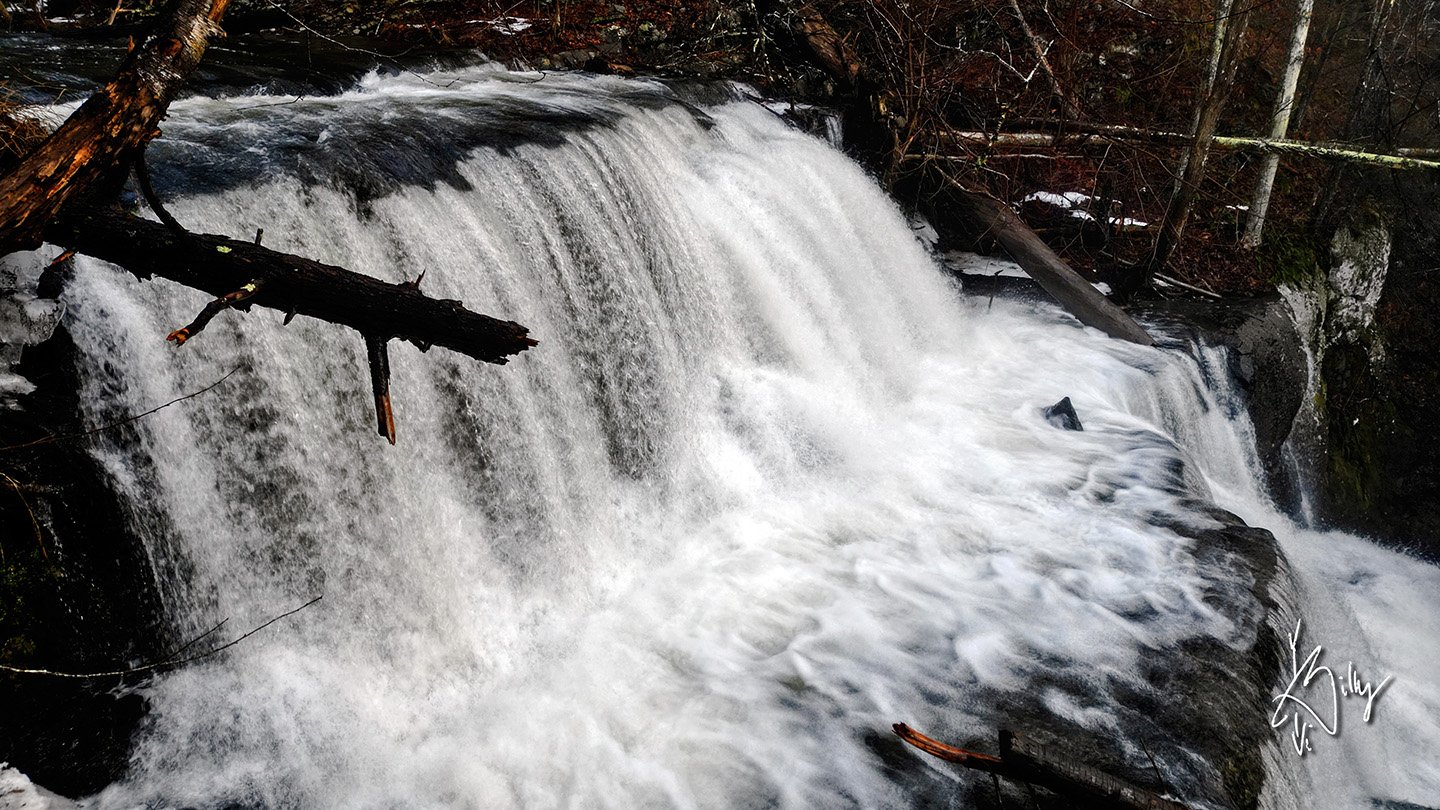
The hike to Upper Indian Ladders Falls from the Upper Hornbeck Creek Trailhead is just a half mile. Elevation gain is a manageable 151 feet. But as the hiker approaches the top of the waterfall, the ground slopes to a rather steep incline with no guard rail at the bottom. Should the hiker slip, the hiker could easily slide all the way down past the cliff’s edge and into the rocky bottom where the waterfall rages below. There are no trees to hold on to on the slope, just skinny branches from bushes that will not hold a person’s weight. The sight beholding the hiker, especially on a wet or icy day such as on the day I came, makes for a tail-turning view.
Where were the guard rails?
In the months I visited the various waterfalls in the region, I sometimes wondered why volunteers and the National Park Service—the government branch that monitors and maintains the Delaware Water Gap—went through all the trouble making the waterfalls more or less easily accessible. They deck the trails with wooden stairs and guardrails, fashion stair steps from rocks, clear fallen trees and litter, pave parking lots, build brick-and-mortar toilets and then do maintenance on them. Then, after all that, visitors are charged nothing for admission. They turn the region into a world-class bonanza of waterfall attractions all for free.
The Upper Hornbecks Creek Trail is rated easy. But that, I found out, is on a better-than-normal day. Because on the normal winter day that I came, with the sloped approach to the waterfall being partially covered with ice, I found it quite hazardous such that I had to make my own trails to get around the hazardous parts. And that, without any erosion. What more if there was?
I suppose volunteers are driven by one thing only, making the world a better place. And so, after going to great lengths making waterfalls accessible, it will be against their nature if one day they must tell me the trails have become hazardous, and I could go no further.
And these were the thoughts that occurred to me as I stared down the approach to Upper Indian Ladders Falls. However hazardous I found the downward slope at Upper Hornbecks Creek Trail to be, I thought I was, at least, not in a closed trail. Because should one dare hike a closed trail, one must keep in mind that there will be no others for days, weeks, or months to come should one find oneself suddenly in dire need of aid.
How does a short hike to an impressive waterfall sound?
A waterfall in the Catskills that no one has heard of?
And how about no hike at all?
Because that’s what you get when you visit the waterfall in Hurley, NY—a 50-ft. roadside waterfall hiding in plain sight that locals wish remains a secret. But off-the-beaten-paths in today’s age of Instagram don’t stay hidden for long. “Influencers” are bound to find them and showcase them to the world.
And that’s how I found out about Hurley Falls. I stumbled upon it while surfing the Web. Also known as “Coward’s Falls”, the name likely mutated from “Cow Herd’s Falls” when back in the day dairy cows liked to gather there under the cool shade.
Situated less than 0.1 mile from Hurley Mountain Road, a country backroad that parallels the busy Route 209 so only locals use it, the waterfall stands in the canopy of trees leading to it from the road hiding in the shadows. Unless one turns one’s head at just the right instant as one drives by at 50 mph, the waterfall can easily be overlooked. That is, if there is even anyone at all in that backroad outside of locals—who are perfectly happy for passing drivers—to overlook it.
I suppose there’s nothing wrong when locals wish to be left alone. Who wants rowdy outsiders trampling down one’s memory lanes?
I’m no “influencer” and I have no desire to be one. But I do like sharing gems I find in my area, thinking that if that is all everyone ever did and nothing else, then maybe the world can be a better place…
I did not expect parking to be reserved only for hotel guests at Winter Clove Inn when I arrived at the trailhead for Venus Bath and Artist Falls. I didn’t remember any of the websites I visited saying so. But there they were, not just one but multiple guests-only signs enforcing the inn’s policy. After circling around looking for street parking without any luck, my only option was to rely on the inn’s good graces to allow me to park—otherwise, my hour-long drive to the Catskills would have been for naught. I stepped inside the inn.
But there was no one at the front desk. No one was on the entire ground floor, either, as I walked around saying hello. So, I left a note with my contact information saying I was parked at the trailhead and apologized for my intrusion.
I set off on the trail.
I hurried my hike so I can return to the parking lot as quickly as I can, hoping my car wasn’t issued a ticket—or worse, towed—before I came back. But, more importantly, I did not want to wear out my (presumed) welcome.
But then I got lost on the trail.
I missed a turn, perhaps due to my haste, and what was supposed to be a one-hour out-and-back became a two-hour loop as I tried to find my way back to the trail.
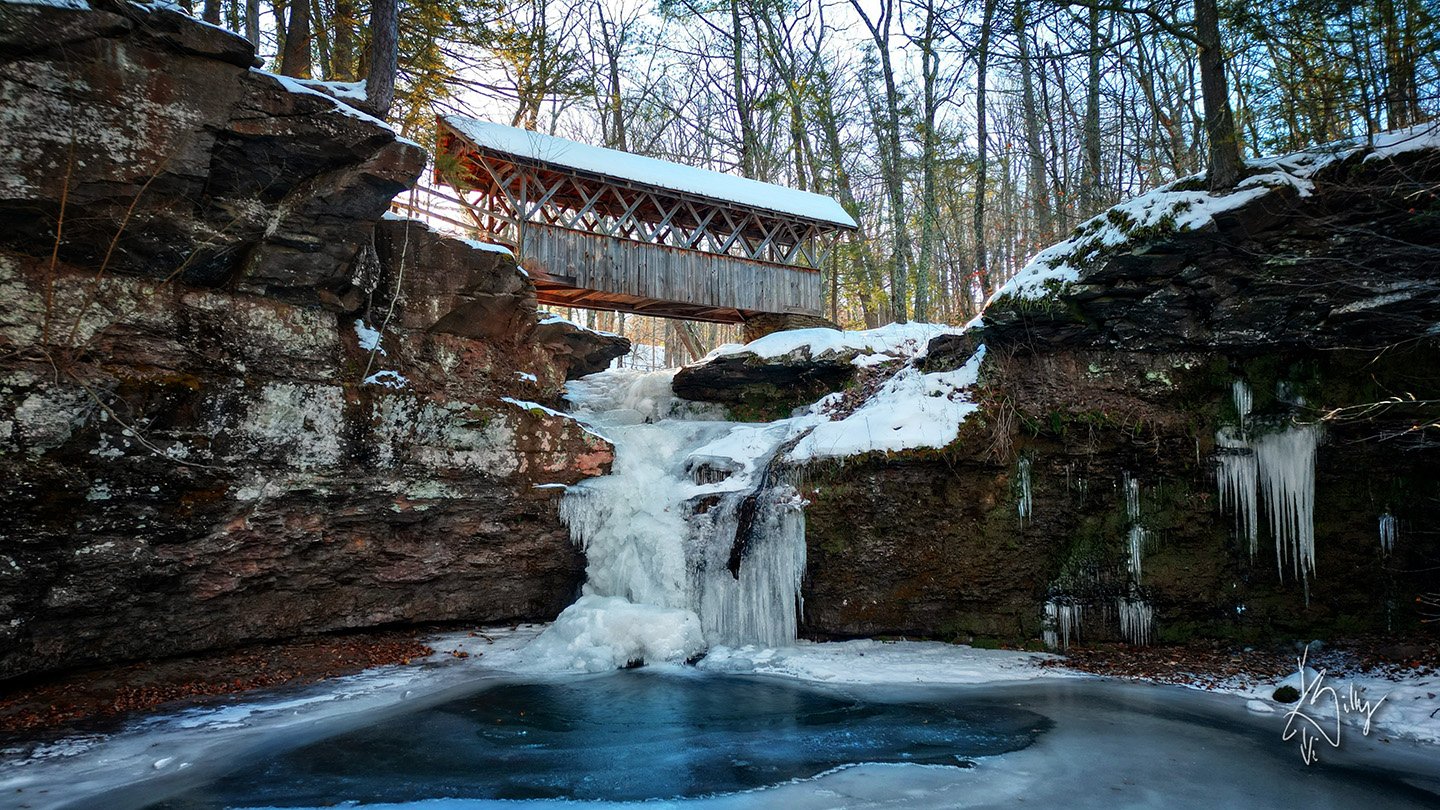
In the end things worked out. I made it to Venus Bath, a low rock ledge spanning the width of the shallow brook with an opening dead center for the water to gracefully flow through instead of spilling over like water on top of a dam. And Artist Falls was a 25-foot waterfall with a covered bridge on top. What more need one say to paint a picture-perfect postcard scene? Two beautiful, frozen waterfalls in the Catskills just half-a-mile apart in a landscape blanketed by soft, white snow.
(There was a third, Gaia Cascade, between the two falls that I skipped, again in my haste.)
And there was no ticket on my car’s windshield when I reached the parking lot.
A website I found later states visitors need only inform the front desk, which was what I did, to park at the trailhead. And another website states more parking was available at the inn’s bowling alley just a short walk away.
The inn’s multiple guests-only parking signs in such a small space seemed rather ominous. I’m sure many turned away and headed home upon seeing the stern signs. But in light of the positive experience I just had, and the two websites I found later, I am inclined to think otherwise. The inn was probably trying to stem the growing tide of interlopers on its property once picture-perfect postcard photos of Artist Falls started circulating online and, like Venus Bath, will welcome the few well-meaning visitors to freely flow through.
It seems one need not venture deep into Nature to find waterfalls in the Delaware Water Gap, a region of wondrous natural beauty in the northern part of Pennsylvania. It is simply brimming at the seams, so to speak, with waterfalls.
Variously referred to (at least by me) as the Poconos, the Pocono Mountains, Dingmans Ferry, or simply that place “not far from picturesque Milford”, the Delaware Water Gap–with “water gap” being defined as a gap in a mountain range formed by water (like a river) flowing through it, and “Delaware” being (I think) the Delaware River that flows into the Atlantic in the State of Delaware–is home to several waterfalls many of which are popular while some seem to have been lost to the casual tourist. Tumbling Waters is one of the latter.
Perhaps the reason for that is it takes a long, 3-mile hike to experience just one waterfall at Tumbling Waters. If the visitor simply wants a waterfall experience in the Poconos, options abound with a lot less effort, more touristy vibes, and therefore more bang for the buck. The three waterfalls at George W. Childs, for example, begin at only 0.2 mile from the trailhead. At Bushkill, the first and second of several waterfalls begin at only 0.1 mile. And Raymondskill Falls is only a 0.1-mile walk from the parking lot.
There is no question a short walk in Nature accords one the moment needed to get away from the stresses of daily life. Like reading a book, engaging in a hobby, and listening to music, Nature provides a means of escape.
So, with more inviting options, why would anyone visit something like Tumbling Waters?
Change.
A long walk in Nature gives one time to ponder on the profound (whatever that may be), reflect on one’s own faults and shortcomings, clear the mind, forge a path forward, and so on, and so on. A long walk in Nature can liberate the self from baggage weighing down on one’s mind and set a baseline from which one can spring forth and start afresh.
And should a waterfall land in one’s path along the way, one could take that as culmination of one’s thoughts, dreams, and, yes, prayers and take that first bold step forward toward change knowing that as part of a greater whole one is never truly alone.
A waterfall tall and majestic is a sight to behold.
But unlike a mountain that has to be 1,000 feet or higher otherwise it’s just a “hill”, a waterfall has no height or width restriction for it to be called a “waterfall”. If water falls vertically down a rock ledge of higher elevation to a rock ledge or pool of lower elevation, then it is rightfully and literally a waterfall.
Indeed, water dropping just one foot high through a narrow chute between two rocks is a waterfall. But imagine widening that chute to the width of a river spanning dozens of feet while keeping the same height of one foot and one cannot be faulted for calling it a “cascade”.
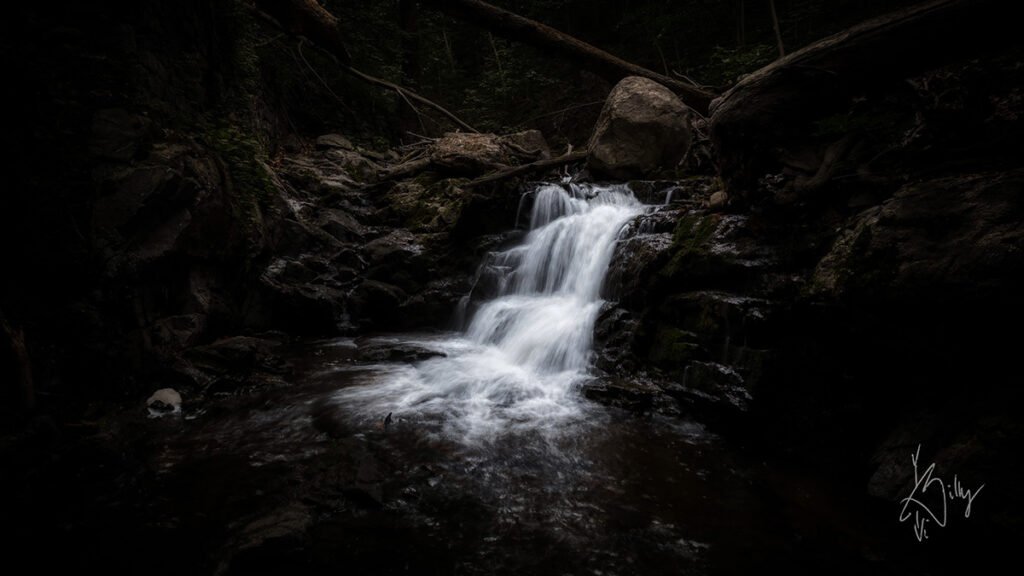
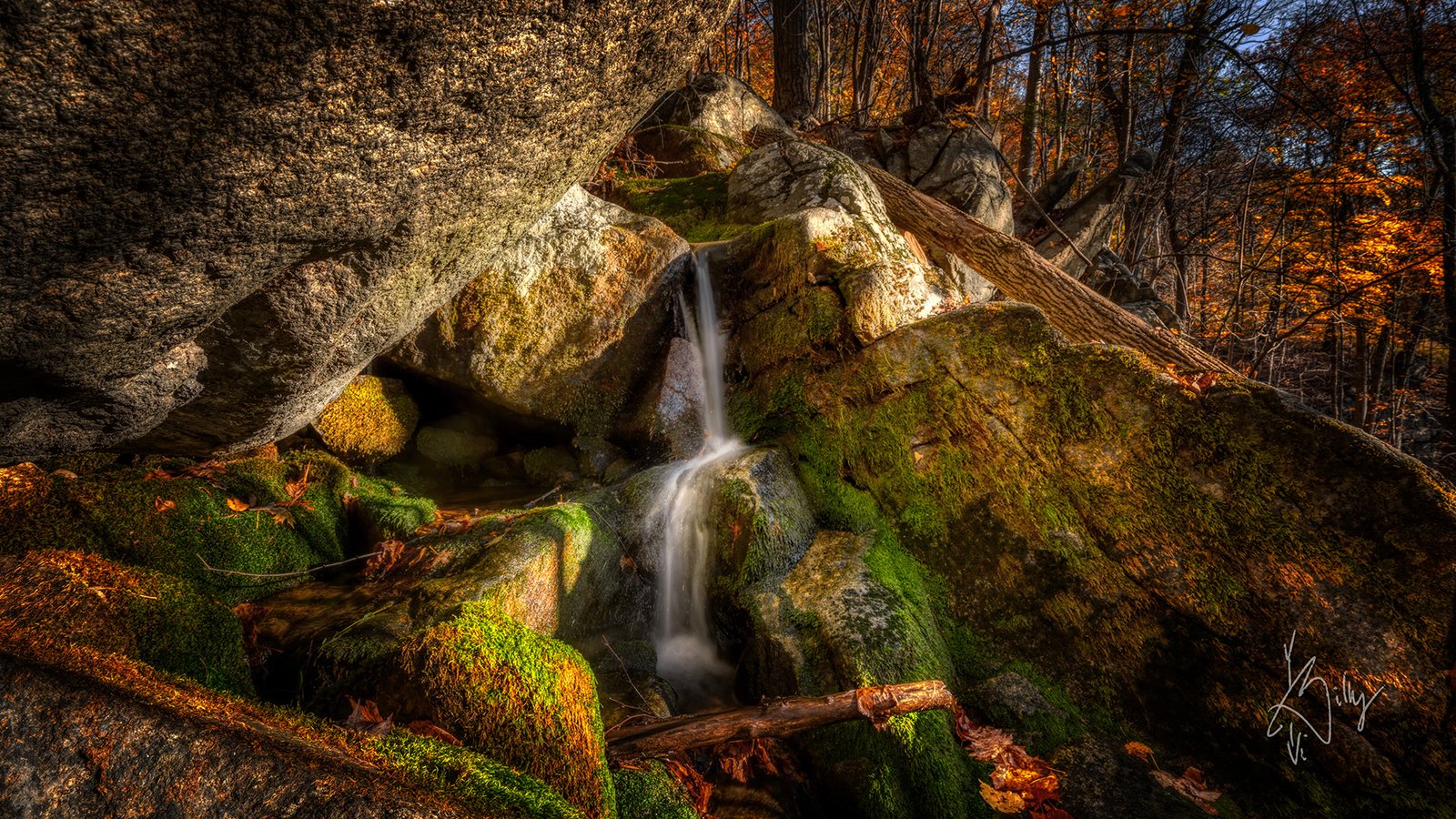
So, I need no one’s forgiveness when I declare that I have found two waterfalls on Kakiat Trail at Harriman State Park, albeit small.
Harriman State Park’s mountains—yes, they are over 1,000 feet tall—do not seem to have the resource to power water down the slopes year-round into raging waterfalls. So it’s not known to be a hotspot for waterfalls. Except for the waterfall called Arthur’s Falls, the rest, 11-22 depending on which website you visit, are seasonal and are likely not going to be there when you visit unless you come at just the right time—right after a heavy downpour.
But the waterfall experience is not one of sight alone. Whether it’s the thunderous roar or the light pattering, the sound a waterfall makes is perhaps Mother Nature’s best instrument in elevating one’s whole being into the realm of rejuvenating bliss.
Minnewaska State Park is huge. And very, very beautiful. Streams, waterfalls, views, rock formations, lakes, carriage trails, hiking trails, biking trails, even fantastic cross-country skiing—name it, Minnewaska State Park has it. No wonder it has in the 1800s become a booming domain of the well-to-dos which has since the 90s been transformed into the public park that it is today for a meager $10-per-vehicle-no-matter-how-many-people-you-can-safely-cram-in-there fee and NYC day-trippers began coming in droves for a romp in Nature “upstate”. So, when coming on a summer or fall weekend, unless you plan on arriving before opening at 9 AM, be prepared for not getting into the park at all.
Just saying.
But there are alternatives. Outside the main park there’s Stony Kill Falls which we ended up going to years ago when we saw the long line of cars on NY44/55 trying to get in. There are also trailheads here and there with limited parking, some free, some not. People on these “alternates” don’t normally stay there the whole day so you might get lucky finding parking as people come and go.
The waterfall at Sanders Kill Creek is one such alternative. Although it’s right next to busy NY44/55, where you’ll often hear traffic, this is still a legitimate waterfall worth seeing. It is just a short and effortless 0.2-mile walk from the ~8-car lot at Jenny Ln where you can park for free.
And if you’re already parked at Jenny Ln and made it to Sanders Kill Creek, you can maybe walk the rest of the way effortlessly on NY44/55 into the main gate at Minnewaska State Park less than a mile away and walk in for free.