Category: Travel

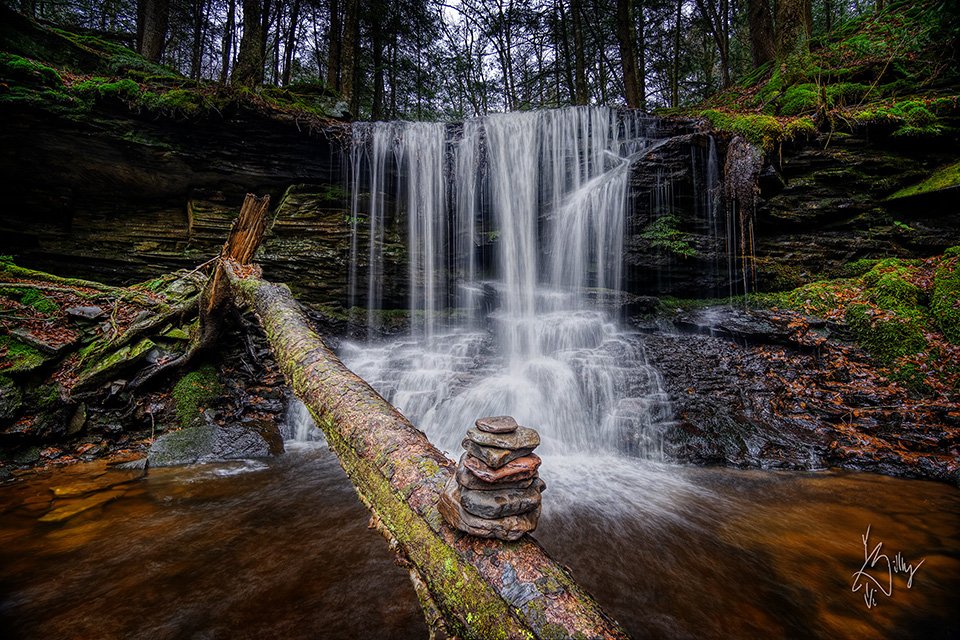
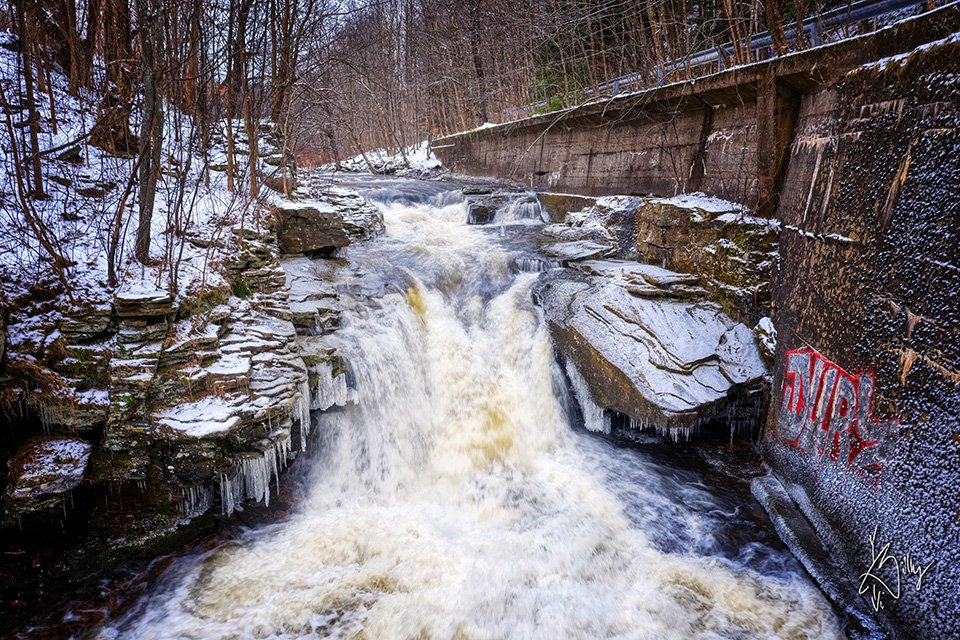
  • Beaverskill Falls

    Beaverskill Falls

    Waterfall in an abandoned town.

    Route 17, or “Quickway” as it is known to locals, is the longest New York State highway running from Mahwah in New Jersey all the way to the Great Lakes upstate. It is a major artery for people coming from New York City going to Binghamton, the Finger Lakes, Niagara Falls, and other points northwest. And so every town and village along Route 17 is primed for business luring travelers to sample food and hospitality in otherwise sparse and rural backcountry locales.

    But when progress encroaches as what happened in the hamlet of Parksville, setbacks happen. In 2012, a bypass-expressway opened bypassing Parksville and its less than optimal main street—a section of Route 17—that will one day become part of Interstate 86.

    Today, that old section of Route 17—now Parksville Road—is lined with abandoned diners, a gas station, a once mammoth souvenir shop, and other shuttered commercial buildings. It has acquired the looks of a deserted town.

    But the hamlet is not fully dead. Robert Uccelli, a restaurateur who back in the day helped in my becoming an earning photographer, is now co-owner of a gas station there where “business has been good so far”. A decades old family-owned pharmacy has plans to reopen. Parksville is also entry point for area attractions like campgrounds, Willowemoc Creek, a covered bridge, and is home to a rail trail that is perfect for beginning hikers.

    Which brings me to why I visited Parksville—a waterfall on Beaverskill Creek by the road on one side and the rail trail on the other.

    A small, less-than-obvious waterfall would probably not resuscitate a dying hamlet on its own. But an easy-off-easy-on Exit 98 on Route 17 could serve as convenient food and gas stop the next time you travel northwest with the added attraction of setting off on an abandoned sites sightseeing tour along the way.
  • High Falls

    High Falls

    Big-little waterfall.

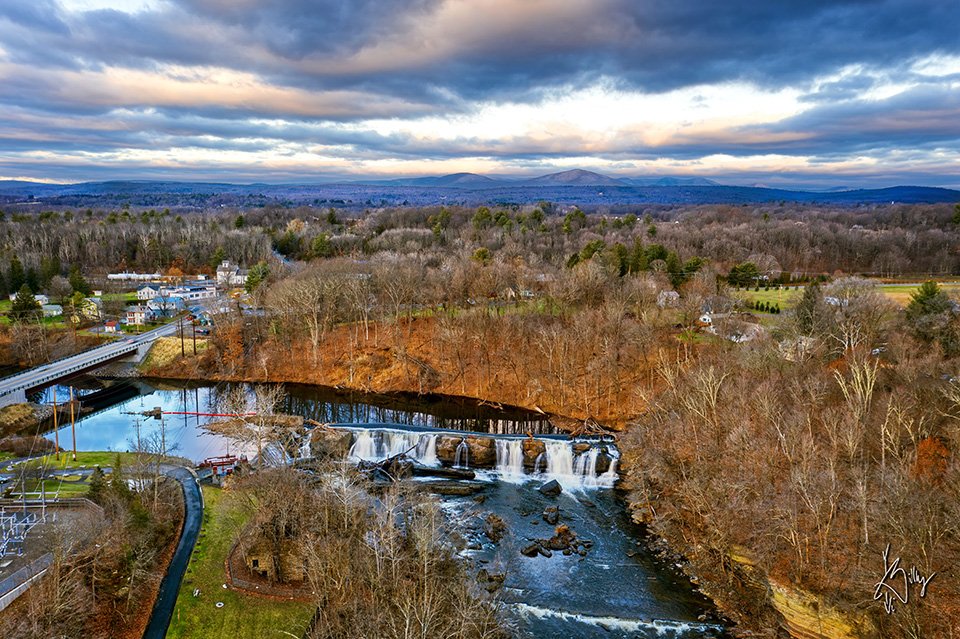
    High Falls is a little big waterfall in the town of Marbletown, NY.

    “Little” because the small area from which to admire the falls is located some distance away with trees in the way making the waterfall obscured and \”little\”.

    “Big” because the waterfall is huge at 200 feet wide and 30 feet tall.

    The best viewing position is occupied by a power plant and is off-limits to the public. (In fairness, the whole area could have been declared off-limits but pedestrians are welcome to roam freely and are even provided with tourist-friendly information signs.)

    So despite being massive, the visitor doesn’t feel the waterfall’s power. Because the waterfall is loomingly tiny and thunderingly soft far in the distance.

  • Kaaterskill Falls

    Kaaterskill Falls

    A daytrip to “Her Majesty” from New York City.

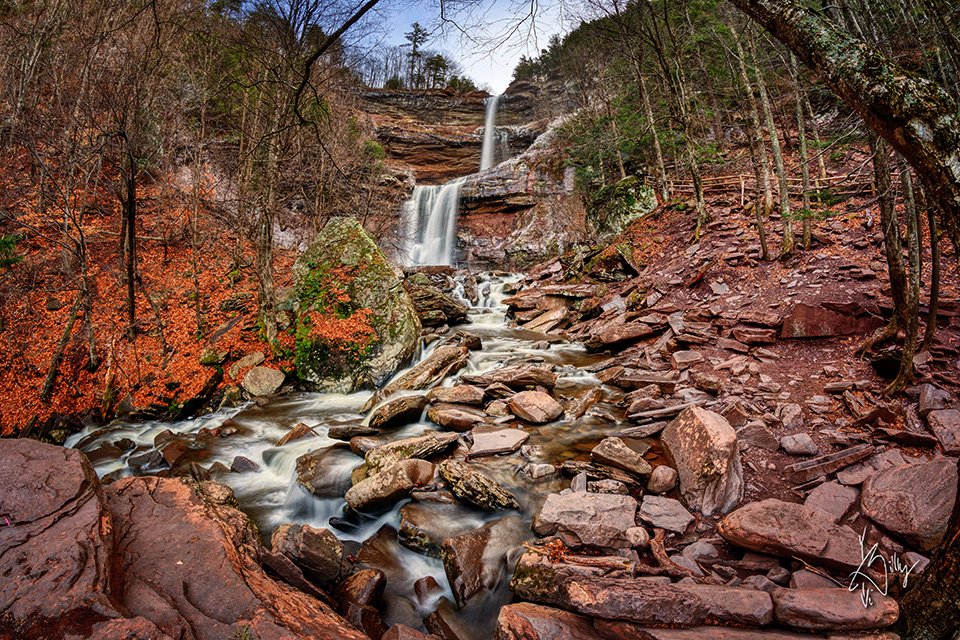
    Kaaterskill Falls is possibly the most beautiful waterfall in New York State. With a two-stage drop totaling 260 feet it turns charmingly to the left as if the viewer at the base of the falls is given only a casual sideways glance by a woman sitting upright in a posture of elegance.

    It can also be the most dangerous. Even avoiding the cliffs that are the cause of many fatalities, the steep and narrow 200-step stone staircase twists and turns and is constantly sprayed slippery and wet or icy that a single misstep could cause serious harm.

    Fortunately, there are two ways of getting to the falls. The trail from Laurel House just described is short (1.7 miles roundtrip or about 20 minutes going down, longer going up) but involves a steep descent and ascent if one wishes to view the waterfall in its entirety from its base. The other is from Bastion Falls on Route NY-23A. It is longer (2.7 miles roundtrip or about an hour each way) but much safer on a mostly level ground if one contents oneself with just admiring the beauty of the waterfall from below.

    But don’t let the dangers of a seductive temptress deter you from visiting. An estimated 100,000 enjoy the waterfall each year without incident making Kaaterskill Falls one of the most popular daytrips in the Catskills from New York City.

  • Bastion Falls, Moore’s Bridge Falls, and Fawn’s Leap

    Bastion Falls, Moore’s Bridge Falls, and Fawn’s Leap

    Three roadside waterfalls in the Catskills.

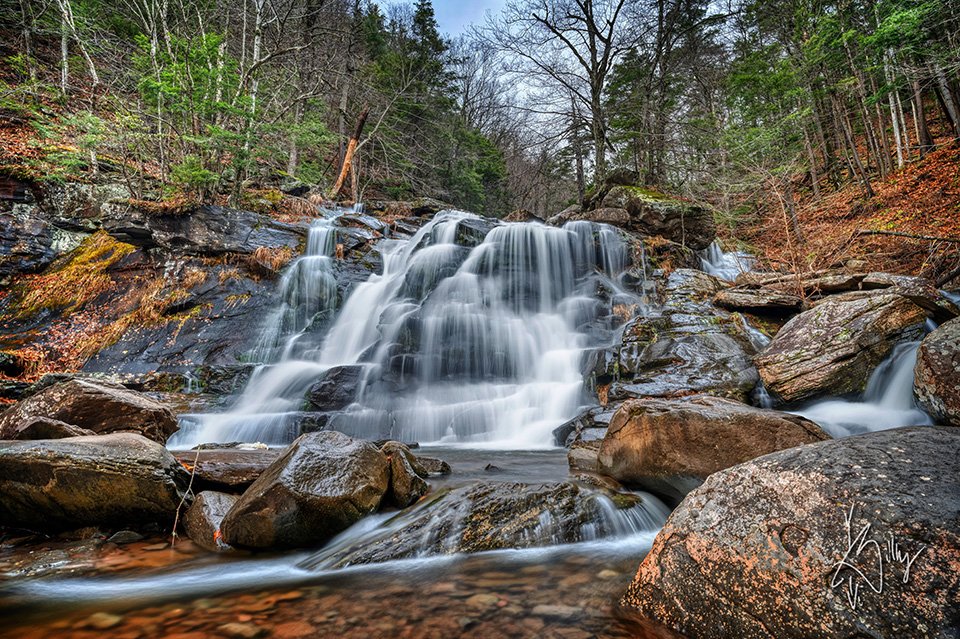
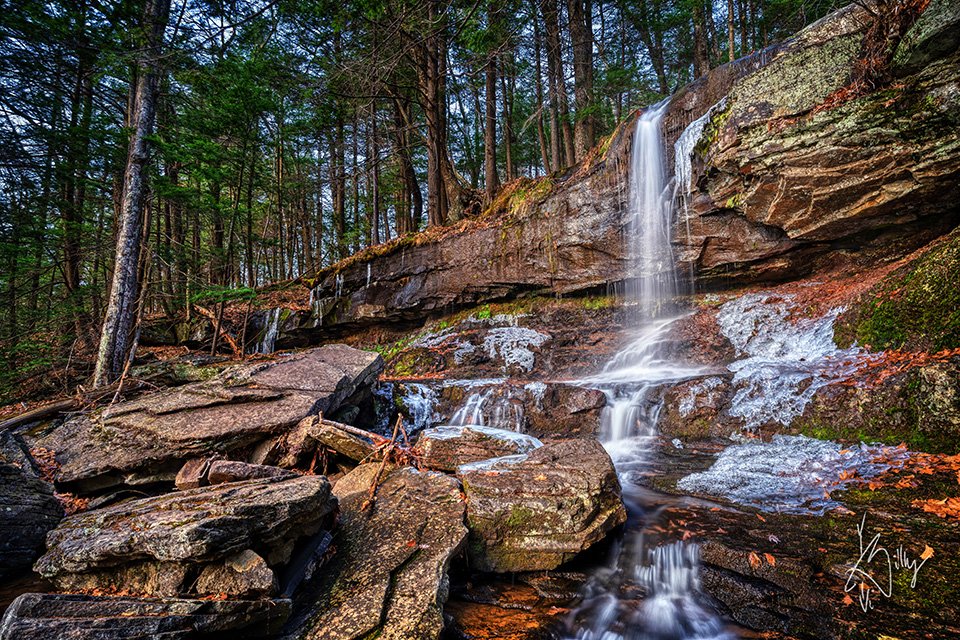
    New York State Route 23A, or at least its first 3.5 miles heading west from the hamlet of Palenville in the Catskills, can be another “waterfall highway” like Peekamoose Road. But whereas 6 waterfalls can be seen from Peekamoose Road, only 1 of 3 waterfalls—and highly dramatic at that as the ever loud and strong falls at Bastion located at the bottom of the curve of the horseshoe-shaped road—is visible from NY-23A.

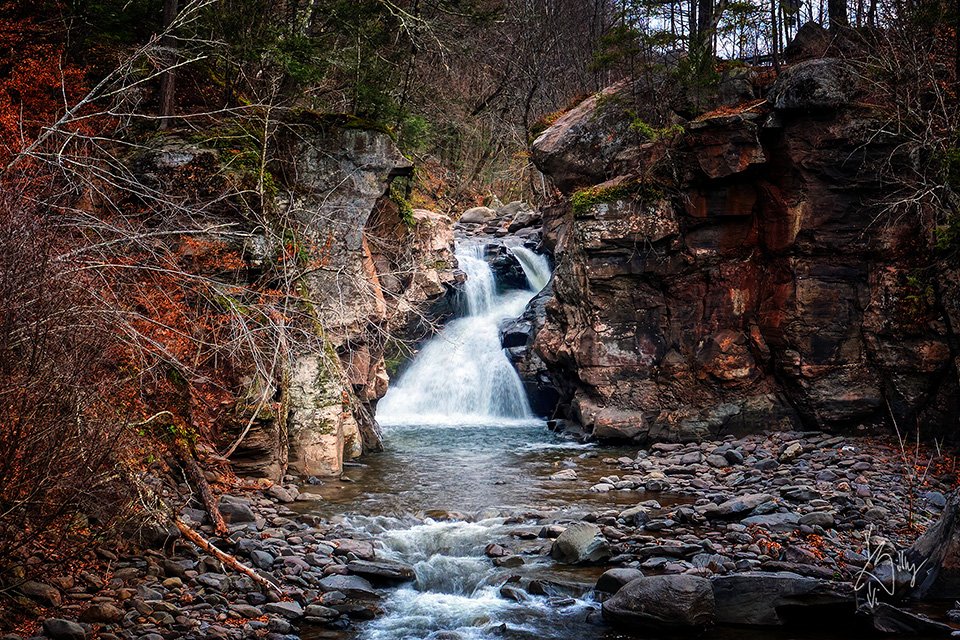
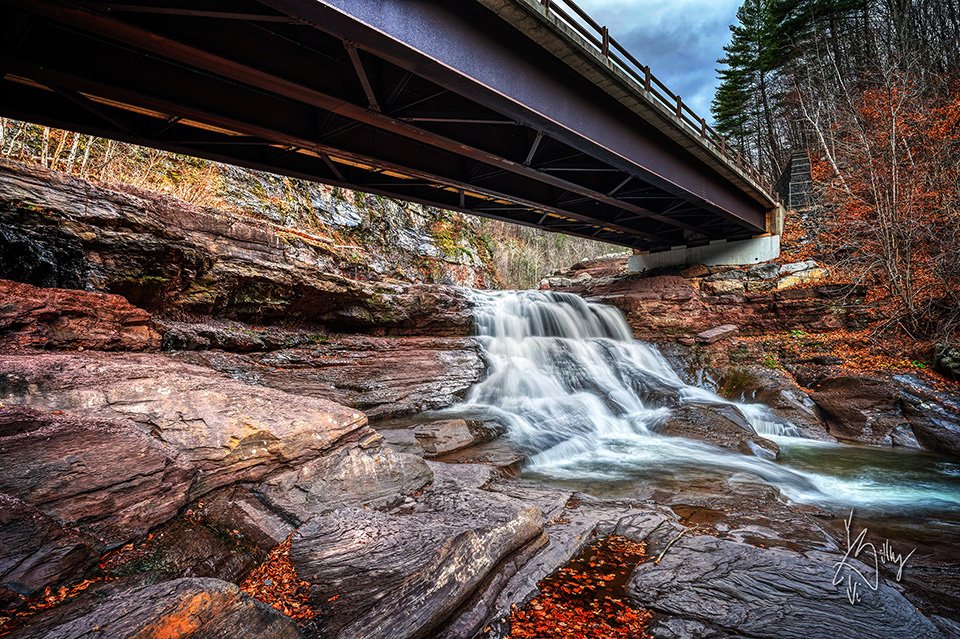
    The other two are Fawn\’s Leap—a popular swimming hole for cliff-jumpers concealed by the surrounding cliffs—and the waterfall at Moore’s Bridge that’s nowhere to be seen because it\’s right under the bridge you are driving on.

    Fawns Leap
    Fawn\’s Leap

    And if your eyes are quick enough during late fall to winter, you may be able to spot 3 additional hillside waterfalls all along the road through the leafless trees.

    Moores Bridge Falls
    Moore\’s Bridge Falls

    I made two trips at Bastion Falls—the second one with Vi—because I lost my camera’s lens hood during my first outing. What I thought was a cheap, easily replaceable plastic part turned out to be nearly a hundred bucks.

    So, yes, at a hundred bucks (with tax), going back on a second trip just to look for the lens hood was worth it. And there was hardly any mulling over between the two of us for the time, effort, and expense (mainly gas) of such an operation with unpredictable outcome as whether we find the lens hood or not, it was rationale to visit Nature’s masterpiece—a beautiful waterfall—even one that we had seen many times before.

  • Ashley Falls

    Ashley Falls

    Waterfall a short hike from the campground.

    We’ve only stayed at a campground once in Baxter, Maine but it gave us a pretty good idea of the party atmosphere that can be experienced there. Everyone is fit and healthy and in high spirits such that it could, according to some online reviews, be difficult to get a good night’s sleep. North-South Lake Campground in the Catskills, being the biggest in the Catskill Forest Preserve and close to the big city of New York I imagine would be no different. Activities galore which includes camping, swimming, boating, and hiking with many easily accessible natural wonders close by.

    There is so much to see and do at North-South Lake Campground (named after the hourglass-shaped lake oriented north-to-south) that a little known waterfall, Ashley Falls, could hardly command the attention of the camper especially when dry spells in the summer could reduce the flow of water to a “drip”.

    Such was not the case, however, when I visited one sunrise in late fall. The campground was closed (not sure if COVID-related) and so I was, as far as I can tell, the only soul around. Fall brings rains so the waterflow at Ashley Falls impressed. The few pictures of Ashley Falls I saw online seemed like quick cellphone snaps taken from a good distance away. None bothered to come for a closer shot. So I could—I like to think, anyway—be the first to make some time and take more proper photos of Ashley Falls.

    Regardless, Ashley Falls is a great little waterfall along possibly the busiest trail in the Catskills where you can spend some time alone with Mother Nature away from the boombox-beat of the ever-frenzied North-South Lake Campground.

  • Second Waterfall on Willowemoc Creek

    Second Waterfall on Willowemoc Creek

    Culmination of an unfinished journey.

    When Vi and I went to a stream that flowed into Willowemoc Creek intending to see two waterfalls in July, we thought a small cascade a few yards after the first waterfall was the second waterfall.

    Thinking we have seen the two waterfalls, we turned back.

    Comparing our photos later with those in my guidebook, I noticed the second waterfall should have been taller and a straight drop instead of the cascade we saw.

    We did not make it to the second waterfall.

    I did not consciously plan on making another trip after learning of our mistake. There were plenty of other waterfalls I can visit. But I somehow felt compelled to revisit one day and complete a mission that was left hanging.

    This, one might say, is the culmination of that unfinished journey.

  • Plattekill Falls and Platte Clove

    Plattekill Falls and Platte Clove

    The trail to Plattekill Falls is a half-mile, 100-ft descent from The Red Cabin, a cabin painted bright red on Platte Clove Road. Platte Clove, a deep valley located in the Catskill Mountains, can be seen from a viewpoint about half-way down the trail.

    Platte Clove and Plattekill Falls drew the eyes of early American painters sailing the Hudson River and then hiking the mountains upstate. Having visited Platte Clove and the ruggedness of the surrounding areas, Thomas Cole, a 19th-century English-American painter, founded the Hudson River School, a movement that produced paintings reflecting themes in the mind of every frontiers -man and -woman of the time: discovery, exploration, and settlement.

     dsc5338

    The movement continues today. The Red Cabin hosts jury-selected artists in various disciplines every summer for week-long residencies.

    The Red Cabin in the woods brightly visible from the road should serve as marker that, around here, wonders gouged by Nature over geologic time and that gained the admiration of artists past and present are literally just around the bend.

  • The Scenic Beauty of Joppenbergh Mountain

    The Scenic Beauty of Joppenbergh Mountain

    A Hike, A View, A Village

    The minute I saw the view from Joppenbergh Mountain in the latest issue of a local magazine I wondered why I have never heard of it. The view, IMO, is the most iconic in the Hudson Valley and perhaps even in New York State. One might expect scenery like this in a New England state like Vermont but this one is right here in New York State just two hours from New York City.

    The village of Rosendale at the foot of the mountain also has much to offer for fun. It is small but Main Street is lined with quaint cafes, shops, inns, and restaurants. It even has its own bookstore and a Himalayan crafts store. It’s almost like a mini-Woodstock. Willow Kiln Park preserves the kilns once used in the town’s late 19th century booming cement industry and the Rosendale Trestle, the highest span bridge in the United States when it was constructed in 1872, now serves as park and walkway 150 feet above the ground.

    It’s fall, it’s not far, and the hike isn’t long—and although at only 500 feet Joppenbergh Mountain technically cannot be classified as a “mountain”—as one famous naturalist once said, the mountain was calling and so I must go. So go I did.

  • Diamond Notch Falls

    Diamond Notch Falls

    I didn’t know I was already at Diamond Notch Falls until I recognized the wooden bridge from pictures I saw online. That was how brief and nearly effortless the 0.8-mile hike was. Add to that the scenery along the trail made up of the colorful fall leaves lit golden by the sunrise and the brook alongside that teased the hiker constantly to pause and meander among its multiple rocky cascades, the hike felt even shorter.

    Then again, this might be the perfect hike for many. A short nature hike with a waterfall at the end could be the most appealing outdoor adventure for people of all ages.

  • Beyond the Trail: A Rocky Scramble to Stony Notch Falls

    Beyond the Trail: A Rocky Scramble to Stony Notch Falls

    You probably won’t find Stony Notch Falls in the Catskills if you googled for it. The reason for that I think is it is off trail. Many people might not know about it. While climbing up the Red Trail on Devil’s Path just off scenic NY-214 leading to Platte Cove, you will quickly veer off trail once you catch sight of the dry creek bed below ahead of you. You will clamber on top of rocks and boulders following the seemingly dry creek (there’s water beneath the rocks) at a steep ascent, gasping and panting and awkwardly angling each step for a proper foot landing on every carefully chosen rock. But not to worry, well before your anticipated second wind kicks in, Stony Notch Falls will have already made its appearance. The climb may be rocky and steep, but it is short. And that—along with the absence of a crowd—might make your trek to Stony Notch Falls a rewarding adventure in the wilds of the Catskills.