
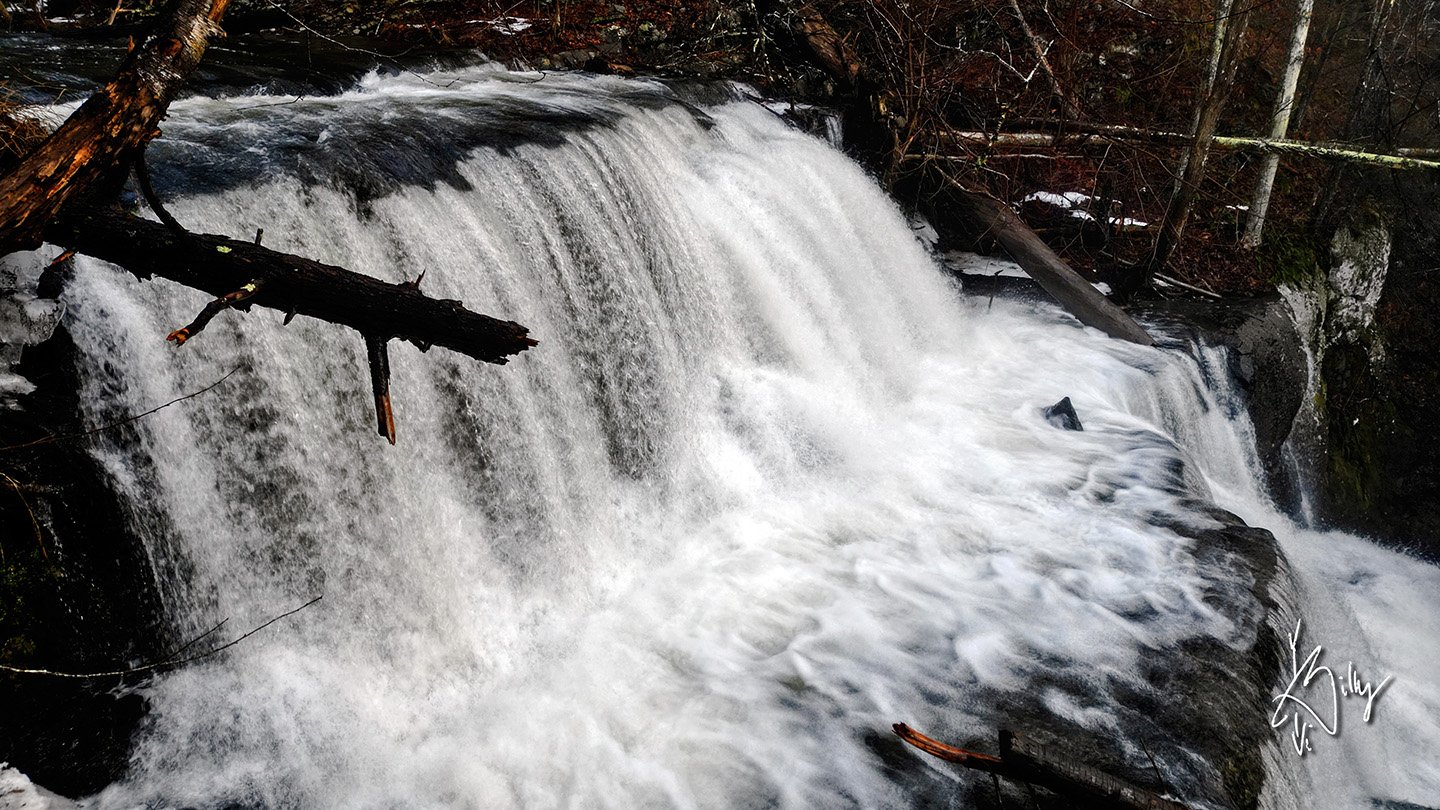
A Lesson in Trail Safety
There are two major waterfalls on Hornbecks Creek in the Delaware Water Gap in Pennsylvania—the Upper Indian Ladders Falls and the Lower Indian Ladders Falls.
While both waterfalls lie on just one trail, Hornbecks Creek Trail, the section that connects the two is presently closed because weather-related erosion has made it hazardous. To visit both Upper and Lower Indian Ladders Falls, the hiker must do two hikes, one from the trailhead upstream, Upper Hornbecks Creek Trailhead, and one from the trailhead downstream, Lower Hornbecks Creek Trailhead. The two trailheads are a 9-minute drive apart.
When I visited Lower Indian Ladders Falls in the fall last year, I wondered how bad the closed section can be. Surely if one took the time and not rush in maneuvering around and on top of fallen trees, then the upper falls can be reached from the lower falls and vice versa without having to drive from one trailhead to the other.
Or so I thought.
Because when I next visited the Upper Indian Ladders Falls this year toward the end of winter, I got a taste of what “hazardous” meant.
The hike to Upper Indian Ladders Falls from the Upper Hornbeck Creek Trailhead is just a half mile. Elevation gain is a manageable 151 feet. But as the hiker approaches the top of the waterfall, the ground slopes to a rather steep incline with no guard rail at the bottom. Should the hiker slip, the hiker could easily slide all the way down past the cliff’s edge and into the rocky bottom where the waterfall rages below. There are no trees to hold on to on the slope, just skinny branches from bushes that will not hold a person’s weight. The sight beholding the hiker, especially on a wet or icy day such as on the day I came, makes for a tail-turning view.
Where were the guard rails?
In the months I visited the various waterfalls in the region, I sometimes wondered why volunteers and the National Park Service—the government branch that monitors and maintains the Delaware Water Gap—went through all the trouble making the waterfalls more or less easily accessible. They deck the trails with wooden stairs and guardrails, fashion stair steps from rocks, clear fallen trees and litter, pave parking lots, build brick-and-mortar toilets and then do maintenance on them. Then, after all that, visitors are charged nothing for admission. They turn the region into a world-class bonanza of waterfall attractions all for free.
The Upper Hornbecks Creek Trail is rated easy. But that, I found out, is on a better-than-normal day. Because on the normal winter day that I came, with the sloped approach to the waterfall being partially covered with ice, I found it quite hazardous such that I had to make my own trails to get around the hazardous parts. And that, without any erosion. What more if there was?
I suppose volunteers are driven by one thing only, making the world a better place. And so, after going to great lengths making waterfalls accessible, it will be against their nature if one day they must tell me the trails have become hazardous, and I could go no further.
And these were the thoughts that occurred to me as I stared down the approach to Upper Indian Ladders Falls. However hazardous I found the downward slope at Upper Hornbecks Creek Trail to be, I thought I was, at least, not in a closed trail. Because should one dare hike a closed trail, one must keep in mind that there will be no others for days, weeks, or months to come should one find oneself suddenly in dire need of aid.