Category: Travel

  • Cattail Brook Falls

    Cattail Brook Falls

    A roadside waterfall in the Catskills

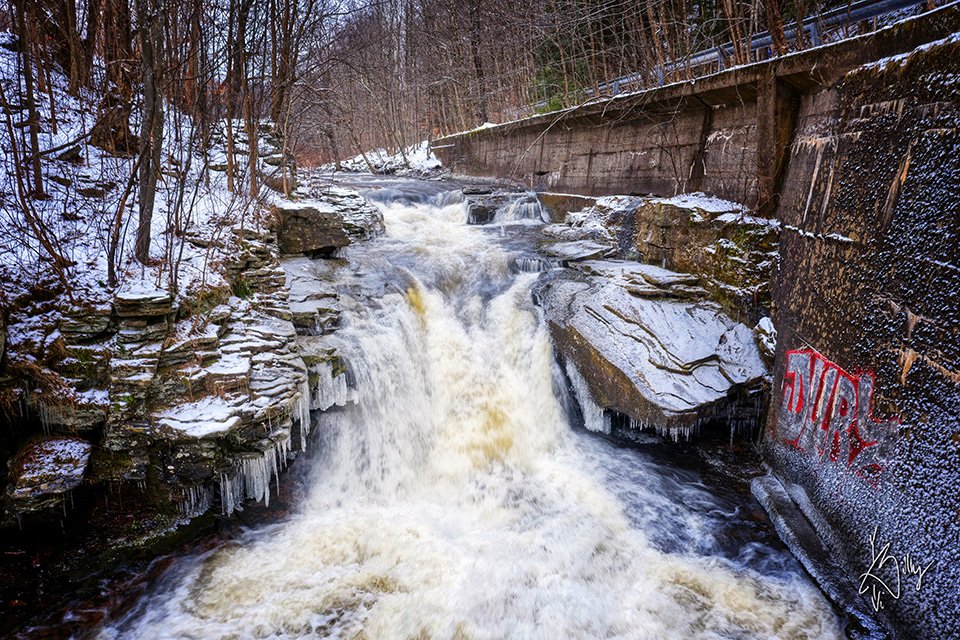
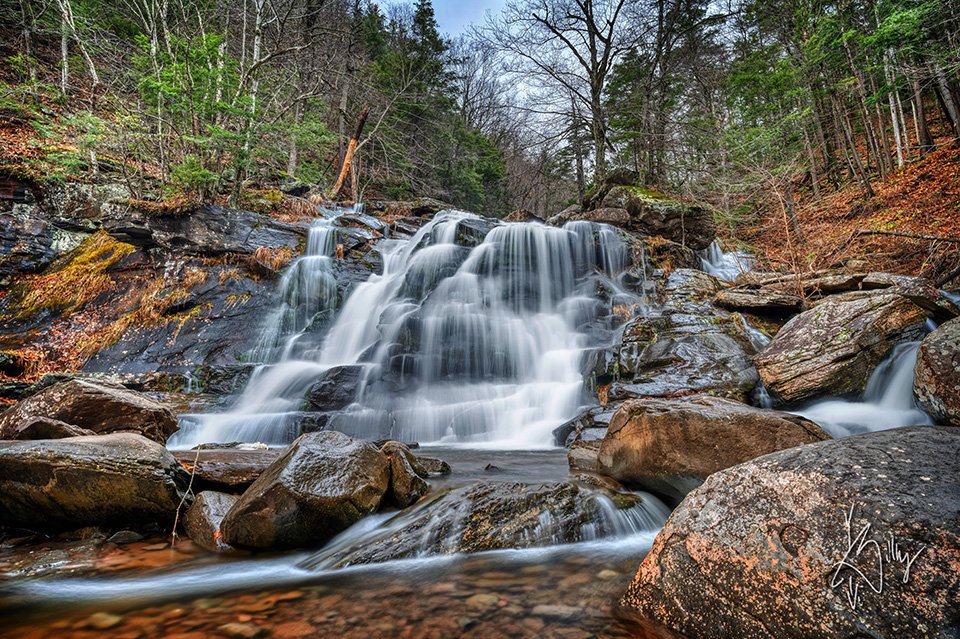
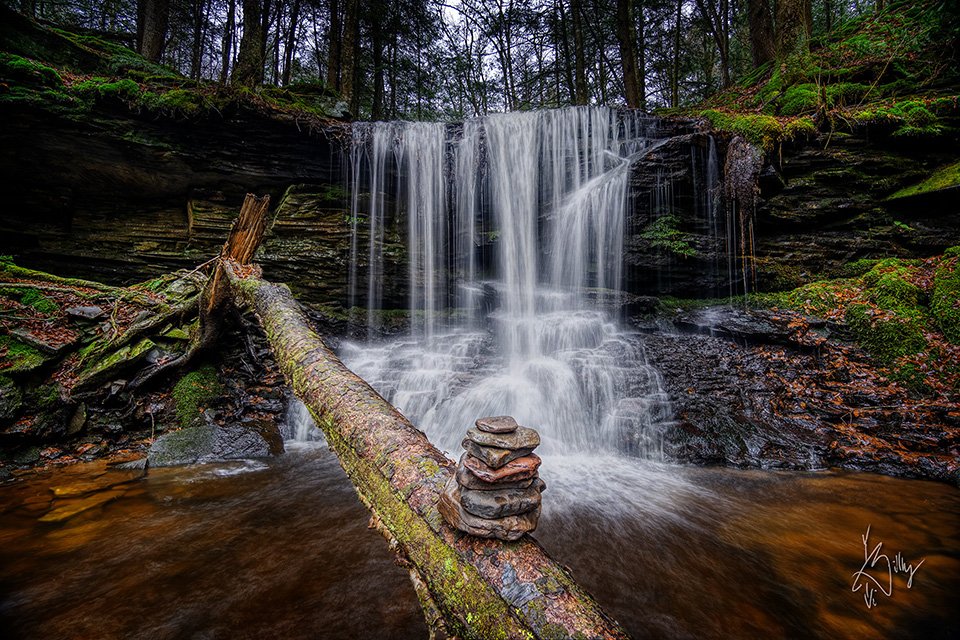
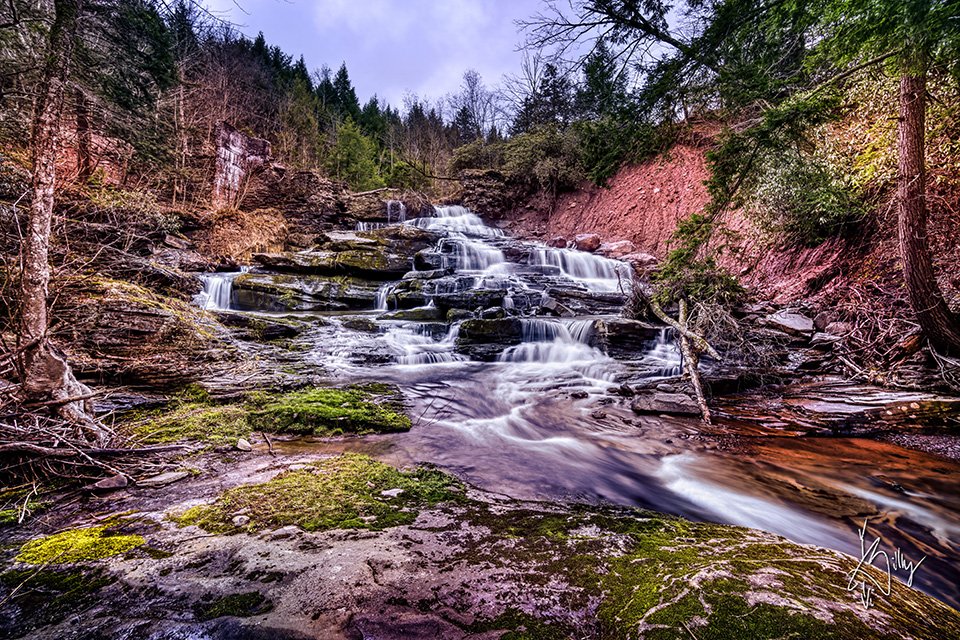
    Cattail Brook Falls is a roadside waterfall in Livingston Manor, a hamlet in the Catskill region of New York.

    It is not well-known and not well-visited as I only learned about it through my own researching online.

    There is no parking and no official trail. Just a narrow opening along the guardrail wide enough for one person to pass. There is, however, a patch of grass by the roadside wide enough for cars to park about 50 yards away.

    After visiting the falls, as I was on my way out, I saw a sign on the ground near the guardrail half-buried in the dry leaves that said “private”. So, maybe the waterfall is on private land, I don’t know.

    Still, I wish the place would be developed as the cascading waterfall offers plenty of dipping nooks for young and old and even toddlers alike and looked like a perfect swimming hole for a summer family outing. The road it’s on is a continuation of Main Street on Livingston Manor, a hamlet just a mile up. The way Main Street was structured IMO looked more like catering to out-of-towners than it does to locals with two gas stations, one café at least, a shop for tackle and outdoor gear, several inns with one looking rather very upscale, and small, quaint shops that altogether make for an alluring off-the-beaten-path getaway in the Catskills.
  • Moodna Viaduct

    Moodna Viaduct

    Not just for rail enthusiasts.

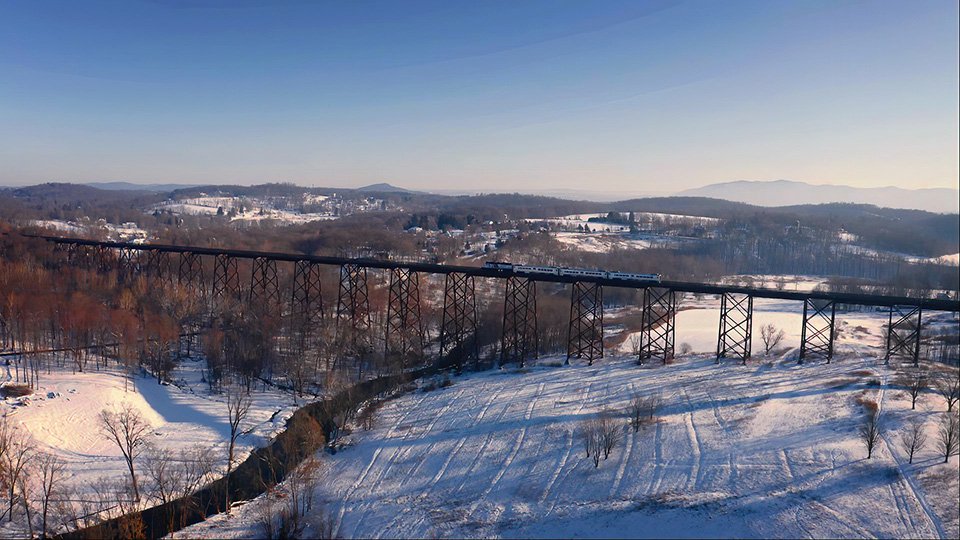
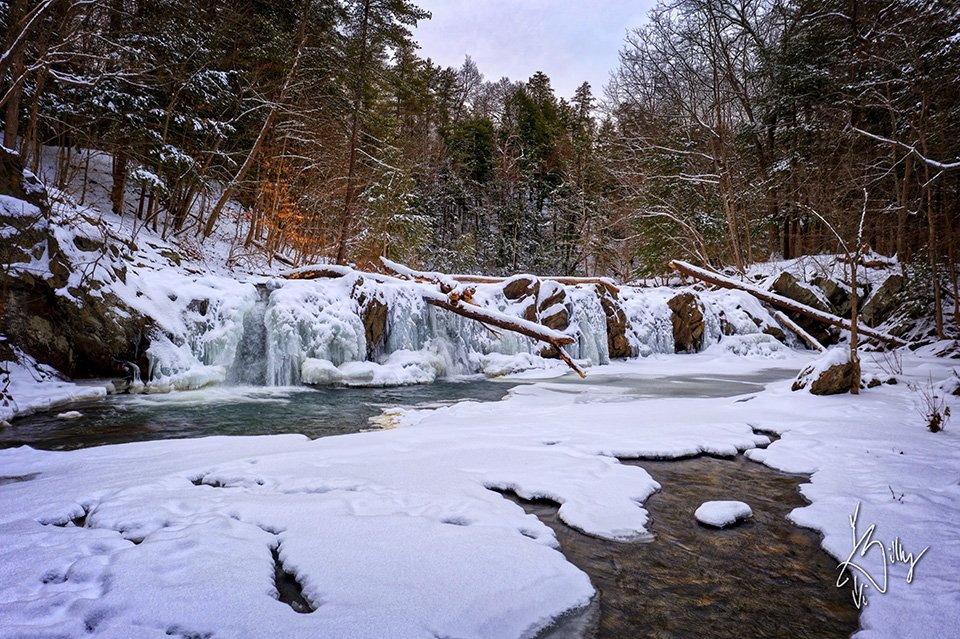
    Moodna Viaduct is probably stuff you only see in movies. Yet it is real and is only an hour’s drive from New York City. Like Hogwart’s Express in the Harry Potter movies, it is an elevated railway—a “viaduct”—suspended in mid-air 200 feet high and 3,000 feet long spanning atop a hilly meadow between Schunemunk Mountain and the town of Cornwall in Orange County, New York.

    New Jersey Transit operates the Port Jervis Line on the railway servicing commuters from the northern and western parts of Orange County going to work in New York City and then coming back seven days a week. I used to ride on that train daily and always enjoyed the crossing at Moodna. Coming from New York City, majority of the passengers get off at Harriman—the station before Moodna Viaduct—so the train is virtually empty and I can look out the windows on both sides of the train to admire the view.

    The Port Jervis Line runs between Hoboken in New Jersey and Port Jervis in New York, a town that borders with Pennsylvania. If you only wish to experience Moodna Viaduct, however, you can simply drive to Harriman Station then take the train for the next station, Salisbury Mills/Cornwall, 15 minutes away. You\’ll pass Moodna Viaduct along the way. Fare is only $2.75 each way.

    I am not suggesting you do this, however. Careful planning is needed because the railway is single-track, meaning, trains in both directions share the one track. Trains do not run as frequent as you might like. You will end up sitting idly at a train station staring out into the parking lot for 22 minutes to an hour or more with nothing to do while waiting for the train to reach its final destination, turn around, and come back for your return trip. Train glass windows may also not be pristine-new—they\’re general public commuter cars—and could have scratches far too many for any serious type of photography.

    Still, once back at Harriman, Woodbury Commons Premium Outlets—arguably New York’s most famous outlet shopping center—is only a 6-minute drive away. A short, elevated rail ride surrounded by hills and mountains and nature could, especially for those enthusiastic about rails, be an interesting companion activity to a day of shopping. No need to travel to the United Kingdom or Switzerland for a once-in-a-lifetime adventure. A “Hogwarts Express”-like train ride experience is well within reach from New York City.

  • Hannacroix Creek Preserve

    Hannacroix Creek Preserve

    Beauty off the beaten path.

    Just 20 minutes shy of reaching Albany—not a short trip by any means when coming from major points south especially New York City—is Hannacroix Creek Preserve. It is a nature preserve in the town of New Baltimore that has several marked hiking trails, one of which leads to a waterfall.

    The trail starts with an incline that the New Baltimore Conservancy calls “moderately steep”. You won’t reach the preserve’s maximum elevation of 360 feet if the waterfall is all you\’re after (unless you also do the Red Loop trail), but the 200-foot elevation you do gain is bunched up at the start of the already short 0.6-mile hike, making for a rather steep ascent you’d likely call anything but “moderate”. I found myself panting as I neared its top.

    The waterfall isn’t big at about 8-10 feet tall. But its craggy wall of rocks spanning the entire width of the creek looks imposing and menacing like a row of prehistoric defensive linemen crouched shoulder-to-shoulder preventing you from advancing any further. Even without a waterfall, which can be weak at times when the water runs low, the rock formation alone can still command awe.

    It’s far, it’s steep, and it’s small. They’re probably great excuses for staying put in the cozy indoors.

    But, occasionally, nature’s beauty off the beaten paths and a little workout can be all that we need to help us get by from day to day.

  • Bash Bish Falls

    Bash Bish Falls

    Double the fun.

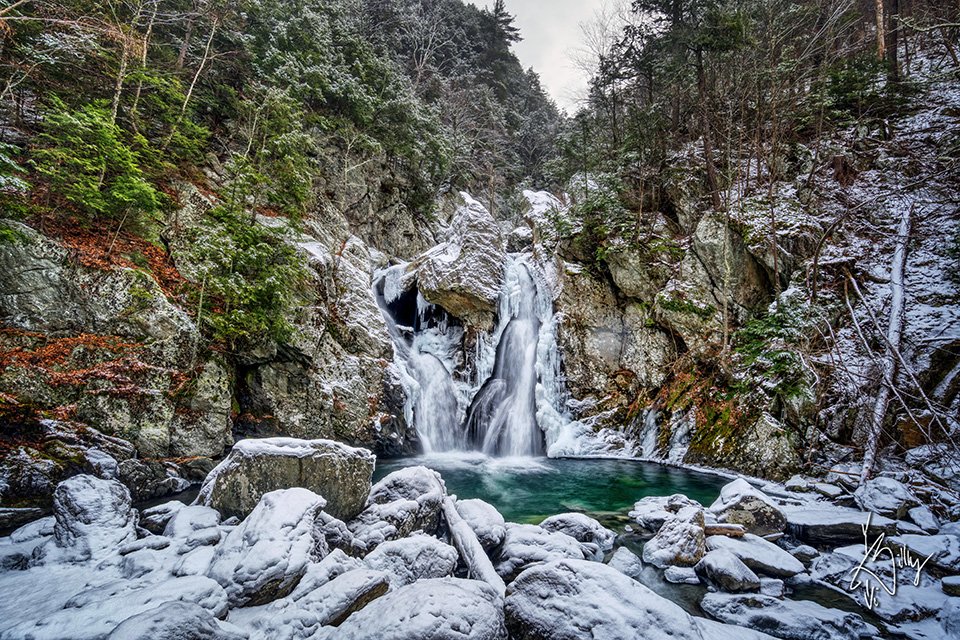
    Bash Bish Falls is different in that the waterfall is in Massachusetts but the trail begins in New York. At some point during the 3/4-mile nature hike from New York the hiker is welcomed into Massachusetts.

    But that is just one thrilling aspect of it—being able to know exactly where to stand so one foot rests in New York while the other in Massachusetts—because the big draw is of course the waterfall itself called Bash Bish.

    Like a dagger thrust in the heart of the falls, a massive schist and granite boulder sits atop the falls splitting the waterfall in two creating gushing flows on each side with equal strength and power in stereo audio.

    Indeed, one of two origins of the name “Bash Bish” comes from the sound the water makes. The other origin is of an unfaithful Indian maiden tied to a canoe sent plunging down the 80-foot waterfall. Her name was Bash Bish.

    So, there. Two states, two waterfalls, two name origins. Bash Bish Falls seems to spare no expense in exceeding the hiker’s expectation. Visit Bash Bish Falls and you will double the fun at every turn.

  • Beaverskill Falls

    Beaverskill Falls

    Waterfall in an abandoned town.

    Route 17, or “Quickway” as it is known to locals, is the longest New York State highway running from Mahwah in New Jersey all the way to the Great Lakes upstate. It is a major artery for people coming from New York City going to Binghamton, the Finger Lakes, Niagara Falls, and other points northwest. And so every town and village along Route 17 is primed for business luring travelers to sample food and hospitality in otherwise sparse and rural backcountry locales.

    But when progress encroaches as what happened in the hamlet of Parksville, setbacks happen. In 2012, a bypass-expressway opened bypassing Parksville and its less than optimal main street—a section of Route 17—that will one day become part of Interstate 86.

    Today, that old section of Route 17—now Parksville Road—is lined with abandoned diners, a gas station, a once mammoth souvenir shop, and other shuttered commercial buildings. It has acquired the looks of a deserted town.

    But the hamlet is not fully dead. Robert Uccelli, a restaurateur who back in the day helped in my becoming an earning photographer, is now co-owner of a gas station there where “business has been good so far”. A decades old family-owned pharmacy has plans to reopen. Parksville is also entry point for area attractions like campgrounds, Willowemoc Creek, a covered bridge, and is home to a rail trail that is perfect for beginning hikers.

    Which brings me to why I visited Parksville—a waterfall on Beaverskill Creek by the road on one side and the rail trail on the other.

    A small, less-than-obvious waterfall would probably not resuscitate a dying hamlet on its own. But an easy-off-easy-on Exit 98 on Route 17 could serve as convenient food and gas stop the next time you travel northwest with the added attraction of setting off on an abandoned sites sightseeing tour along the way.

  • High Falls

    High Falls

    Big-little waterfall.

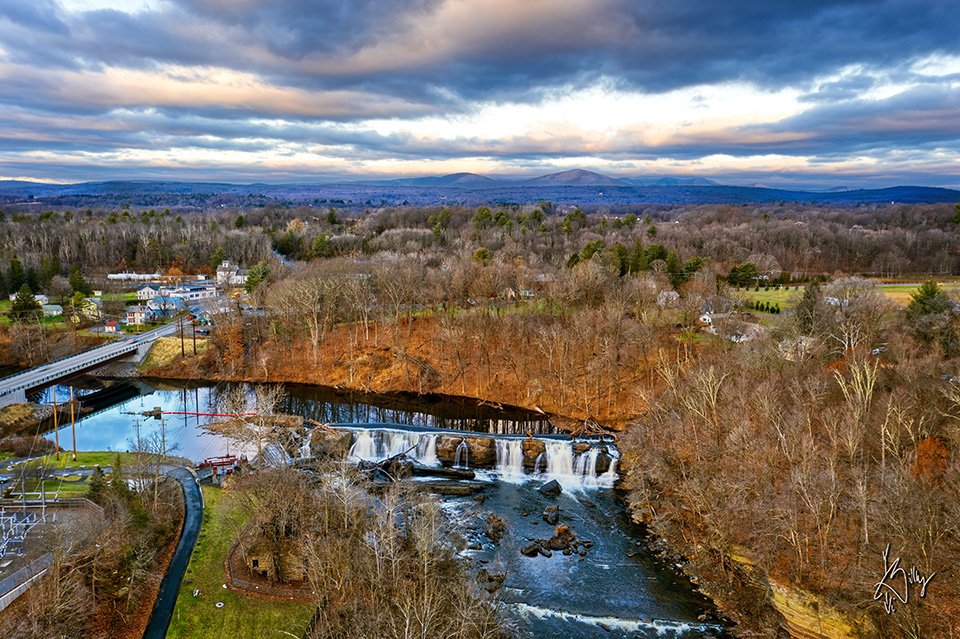
    High Falls is a little big waterfall in the town of Marbletown, NY.

    “Little” because the small area from which to admire the falls is located some distance away with trees in the way making the waterfall obscured and \”little\”.

    “Big” because the waterfall is huge at 200 feet wide and 30 feet tall.

    The best viewing position is occupied by a power plant and is off-limits to the public. (In fairness, the whole area could have been declared off-limits but pedestrians are welcome to roam freely and are even provided with tourist-friendly information signs.)

    So despite being massive, the visitor doesn’t feel the waterfall’s power. Because the waterfall is loomingly tiny and thunderingly soft far in the distance.

  • Kaaterskill Falls

    Kaaterskill Falls

    A daytrip to “Her Majesty” from New York City.

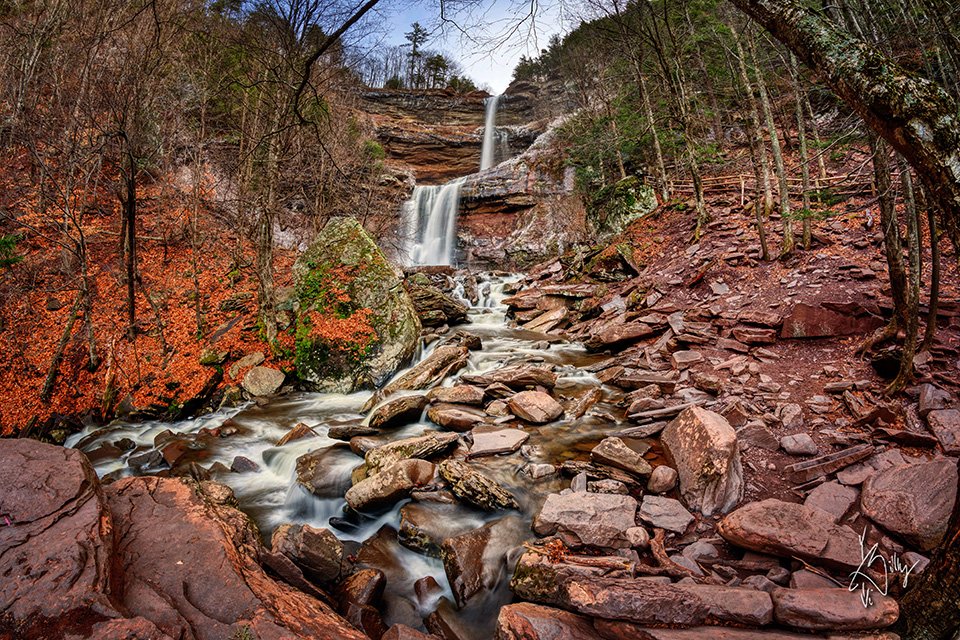
    Kaaterskill Falls is possibly the most beautiful waterfall in New York State. With a two-stage drop totaling 260 feet it turns charmingly to the left as if the viewer at the base of the falls is given only a casual sideways glance by a woman sitting upright in a posture of elegance.

    It can also be the most dangerous. Even avoiding the cliffs that are the cause of many fatalities, the steep and narrow 200-step stone staircase twists and turns and is constantly sprayed slippery and wet or icy that a single misstep could cause serious harm.

    Fortunately, there are two ways of getting to the falls. The trail from Laurel House just described is short (1.7 miles roundtrip or about 20 minutes going down, longer going up) but involves a steep descent and ascent if one wishes to view the waterfall in its entirety from its base. The other is from Bastion Falls on Route NY-23A. It is longer (2.7 miles roundtrip or about an hour each way) but much safer on a mostly level ground if one contents oneself with just admiring the beauty of the waterfall from below.

    But don’t let the dangers of a seductive temptress deter you from visiting. An estimated 100,000 enjoy the waterfall each year without incident making Kaaterskill Falls one of the most popular daytrips in the Catskills from New York City.

  • Bastion Falls, Moore’s Bridge Falls, and Fawn’s Leap

    Bastion Falls, Moore’s Bridge Falls, and Fawn’s Leap

    Three roadside waterfalls in the Catskills.

    New York State Route 23A, or at least its first 3.5 miles heading west from the hamlet of Palenville in the Catskills, can be another “waterfall highway” like Peekamoose Road. But whereas 6 waterfalls can be seen from Peekamoose Road, only 1 of 3 waterfalls—and highly dramatic at that as the ever loud and strong falls at Bastion located at the bottom of the curve of the horseshoe-shaped road—is visible from NY-23A.

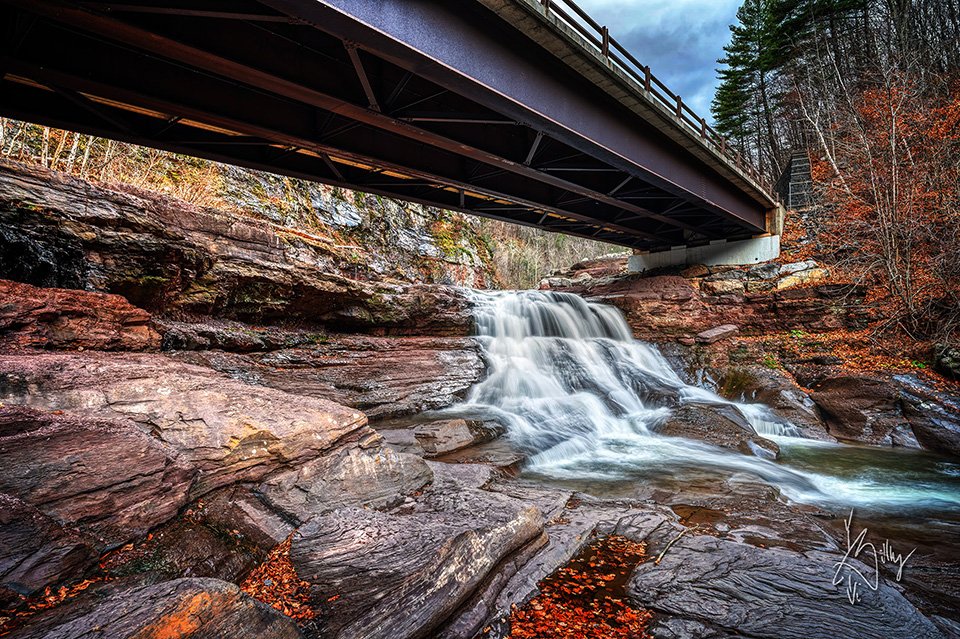
    The other two are Fawn\’s Leap—a popular swimming hole for cliff-jumpers concealed by the surrounding cliffs—and the waterfall at Moore’s Bridge that’s nowhere to be seen because it\’s right under the bridge you are driving on.

    Fawns Leap
    Fawn\’s Leap

    And if your eyes are quick enough during late fall to winter, you may be able to spot 3 additional hillside waterfalls all along the road through the leafless trees.

    Moores Bridge Falls
    Moore\’s Bridge Falls

    I made two trips at Bastion Falls—the second one with Vi—because I lost my camera’s lens hood during my first outing. What I thought was a cheap, easily replaceable plastic part turned out to be nearly a hundred bucks.

    So, yes, at a hundred bucks (with tax), going back on a second trip just to look for the lens hood was worth it. And there was hardly any mulling over between the two of us for the time, effort, and expense (mainly gas) of such an operation with unpredictable outcome as whether we find the lens hood or not, it was rationale to visit Nature’s masterpiece—a beautiful waterfall—even one that we had seen many times before.

  • Ashley Falls

    Ashley Falls

    Waterfall a short hike from the campground.

    We’ve only stayed at a campground once in Baxter, Maine but it gave us a pretty good idea of the party atmosphere that can be experienced there. Everyone is fit and healthy and in high spirits such that it could, according to some online reviews, be difficult to get a good night’s sleep. North-South Lake Campground in the Catskills, being the biggest in the Catskill Forest Preserve and close to the big city of New York I imagine would be no different. Activities galore which includes camping, swimming, boating, and hiking with many easily accessible natural wonders close by.

    There is so much to see and do at North-South Lake Campground (named after the hourglass-shaped lake oriented north-to-south) that a little known waterfall, Ashley Falls, could hardly command the attention of the camper especially when dry spells in the summer could reduce the flow of water to a “drip”.

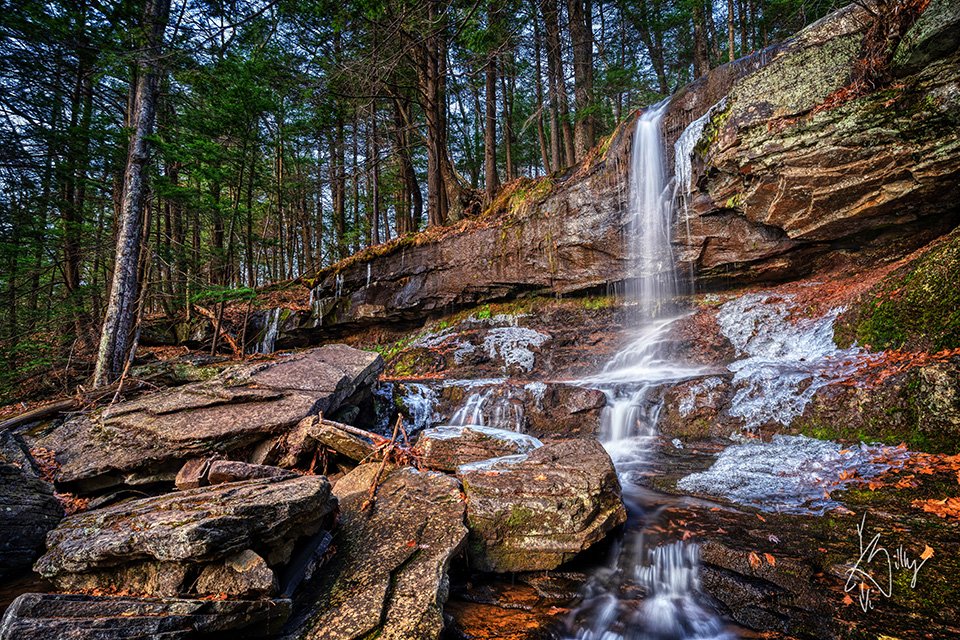
    Such was not the case, however, when I visited one sunrise in late fall. The campground was closed (not sure if COVID-related) and so I was, as far as I can tell, the only soul around. Fall brings rains so the waterflow at Ashley Falls impressed. The few pictures of Ashley Falls I saw online seemed like quick cellphone snaps taken from a good distance away. None bothered to come for a closer shot. So I could—I like to think, anyway—be the first to make some time and take more proper photos of Ashley Falls.

    Regardless, Ashley Falls is a great little waterfall along possibly the busiest trail in the Catskills where you can spend some time alone with Mother Nature away from the boombox-beat of the ever-frenzied North-South Lake Campground.

  • Second Waterfall on Willowemoc Creek

    Second Waterfall on Willowemoc Creek

    Culmination of an unfinished journey.

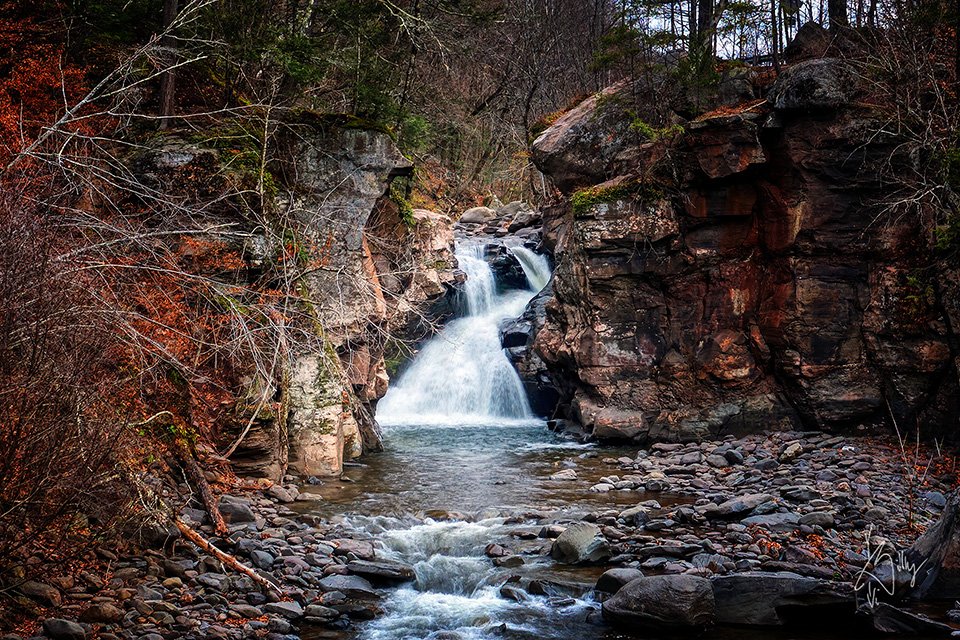
    When Vi and I went to a stream that flowed into Willowemoc Creek intending to see two waterfalls in July, we thought a small cascade a few yards after the first waterfall was the second waterfall.

    Thinking we have seen the two waterfalls, we turned back.

    Comparing our photos later with those in my guidebook, I noticed the second waterfall should have been taller and a straight drop instead of the cascade we saw.

    We did not make it to the second waterfall.

    I did not consciously plan on making another trip after learning of our mistake. There were plenty of other waterfalls I can visit. But I somehow felt compelled to revisit one day and complete a mission that was left hanging.

    This, one might say, is the culmination of that unfinished journey.