Category: Travel

  • Winter Hiking Adventures at Fuller Mountain

    Winter Hiking Adventures at Fuller Mountain

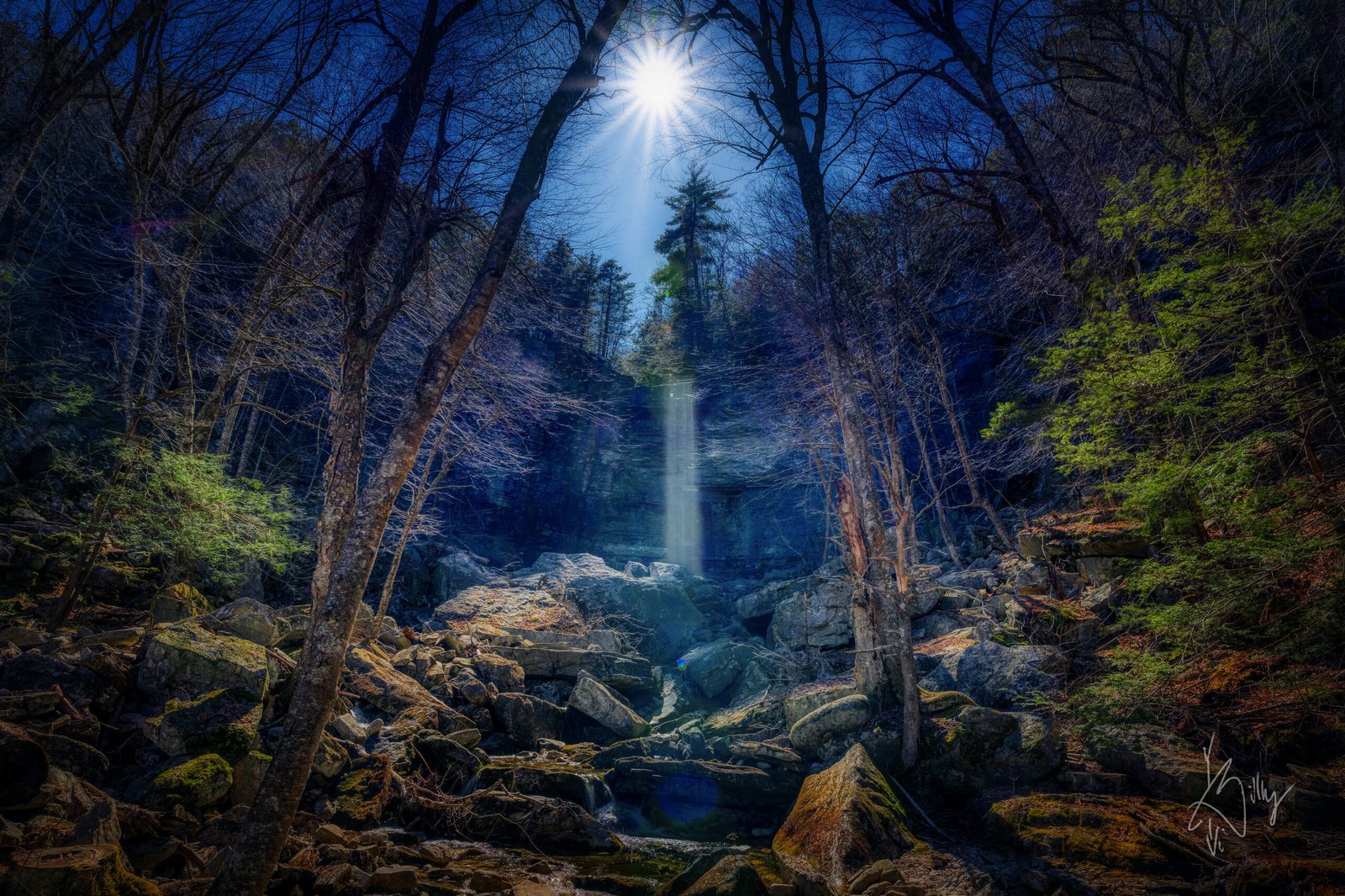
    Communing with Nature in winter.

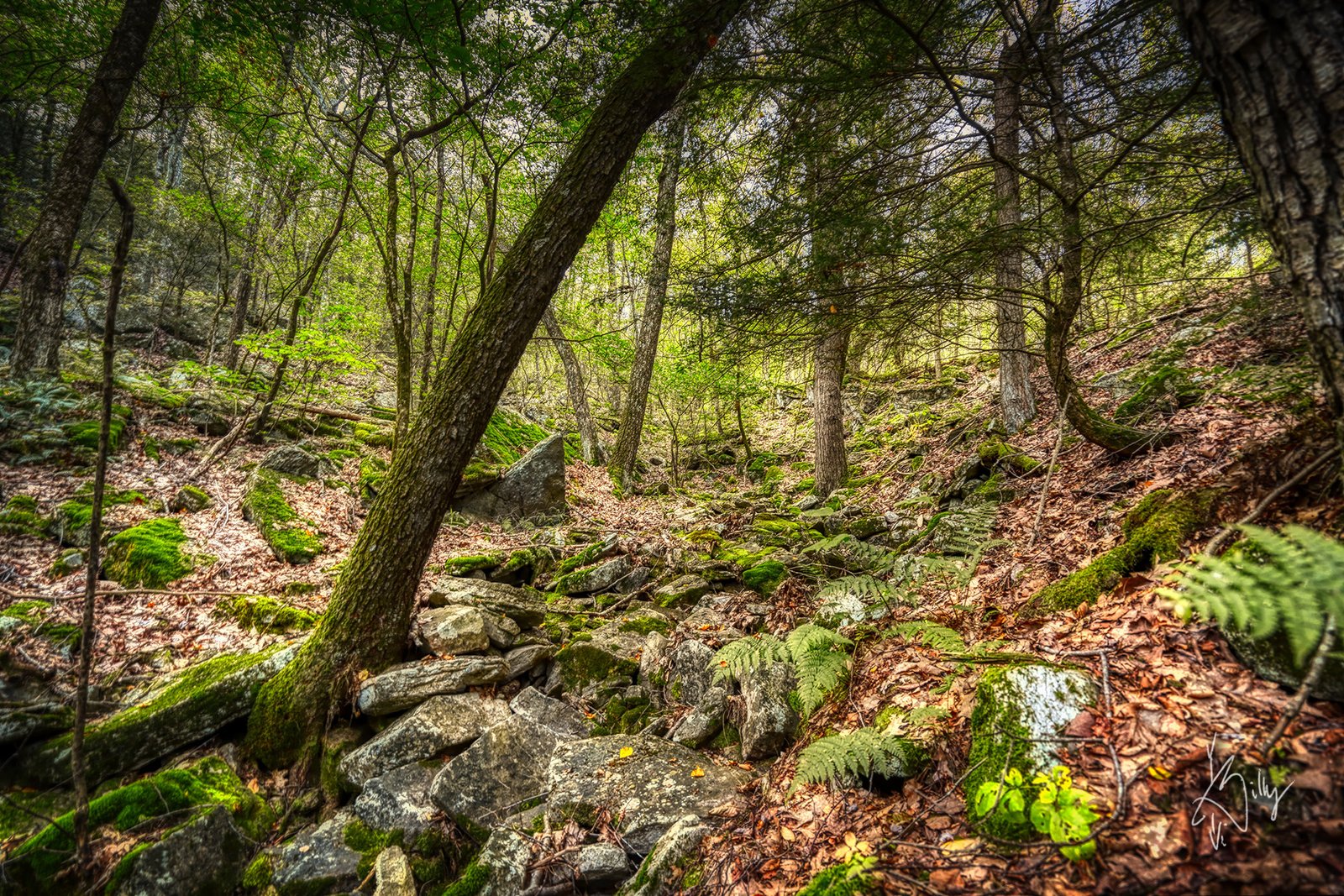
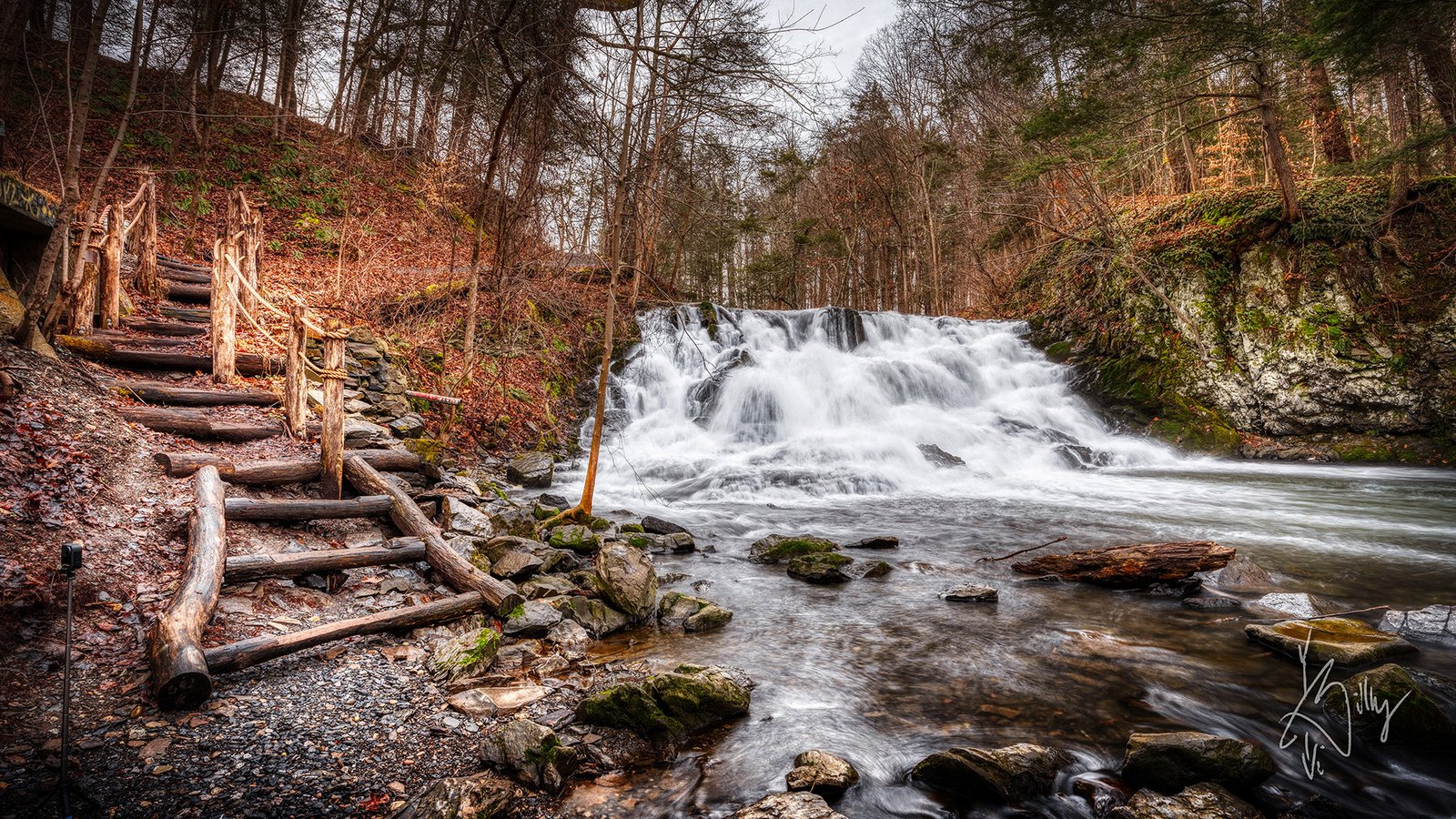
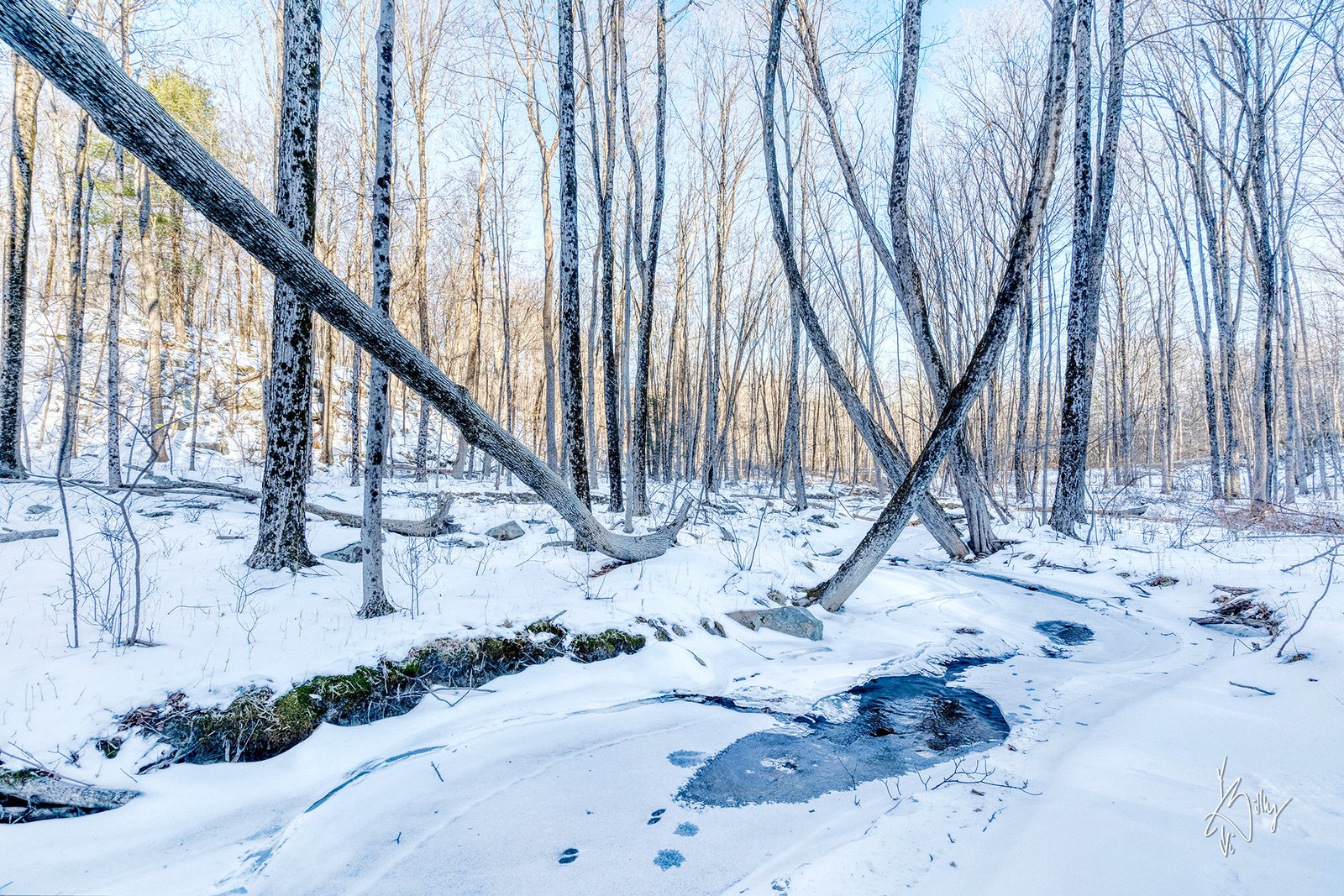
    Well, I’m back at Fuller Mountain. But whereas I hiked the north loop last fall, or what is officially called, Mountain and Creek Loop, this time, in the winter, I hiked the south loop, which is officially called, um, South Loop.

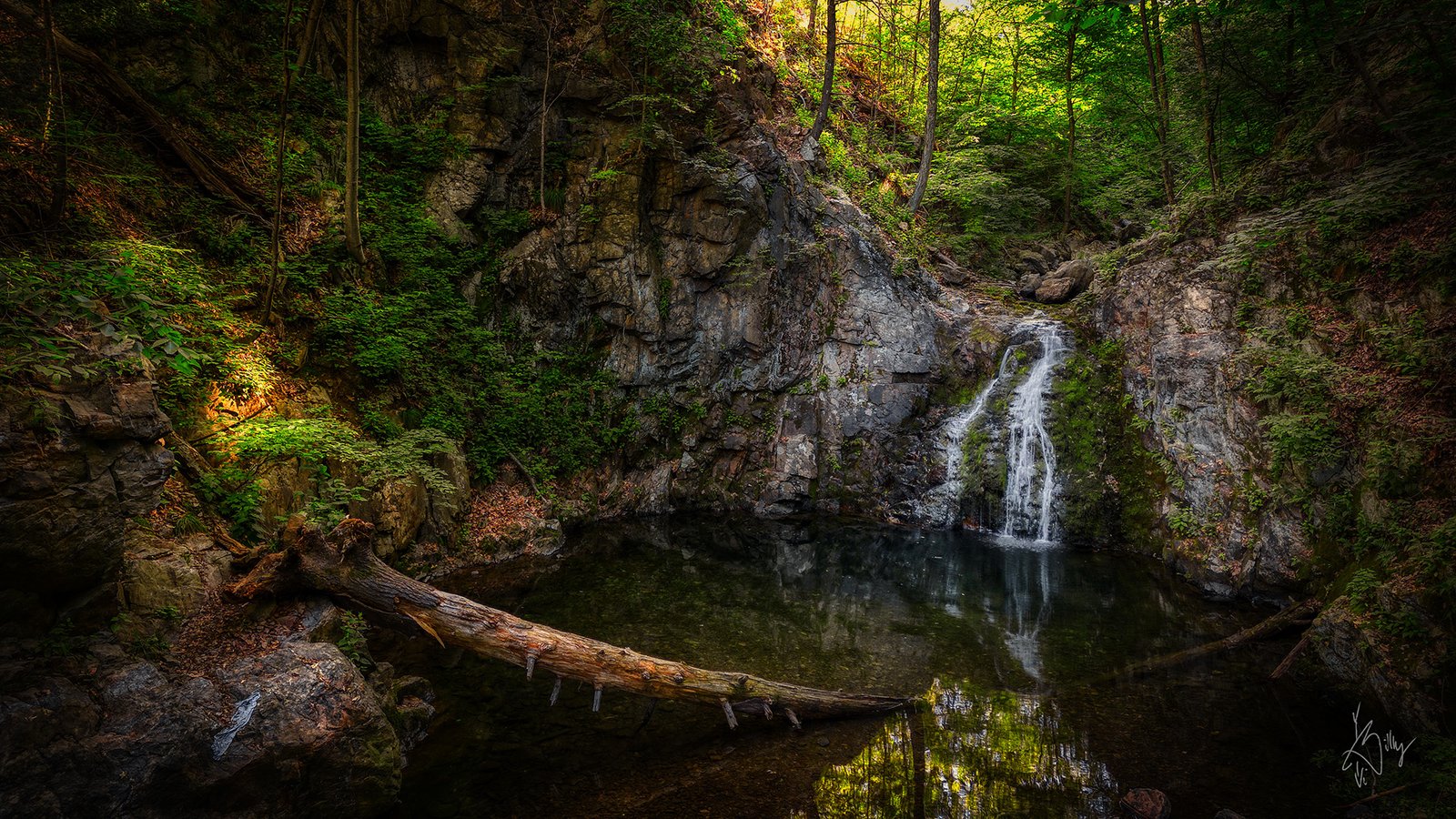
    But before I get to that, I have to be honest and say I go to these trails like the ones at Fuller Mountain (and Gobbler’s Knob in a recent post) only because I think I am running out of waterfalls to go to. I love Nature and I love photography and a waterfall during or at the end of a hike in addition to experiencing wonder and satisfying my wildest imaginations taps, too, into my swelling desire of expressing Nature in whatever creative form I can muster.

    The changing of the seasons, too, might have something to do with that. Who needs a waterfall when Nature casts a dazzling blaze of colors in the fall, cheerful flowers and butterflies in the spring, the forest sounds and vivid greens in the summer, and the profound silence of a snow-covered landscape in the winter?

    Indeed, these are in fact what I am just finding out. Constantly being lured into trekking in Nature by forces unseen, I go to places like these with photography and videography in mind but walk away always feeling richer and calmer in ways unknown.

    I can always revisit the waterfalls I’ve already been to, again and again and again if I wanted, but the trails I visit afterward, such as the ones at Fuller Mountain, are not leftovers by any means or by any stretch of the imagination.
  • Scenic Overlook: Trails to Explore at Fuller Mountain Preserve

    Scenic Overlook: Trails to Explore at Fuller Mountain Preserve

    Short hike to an expansive view.

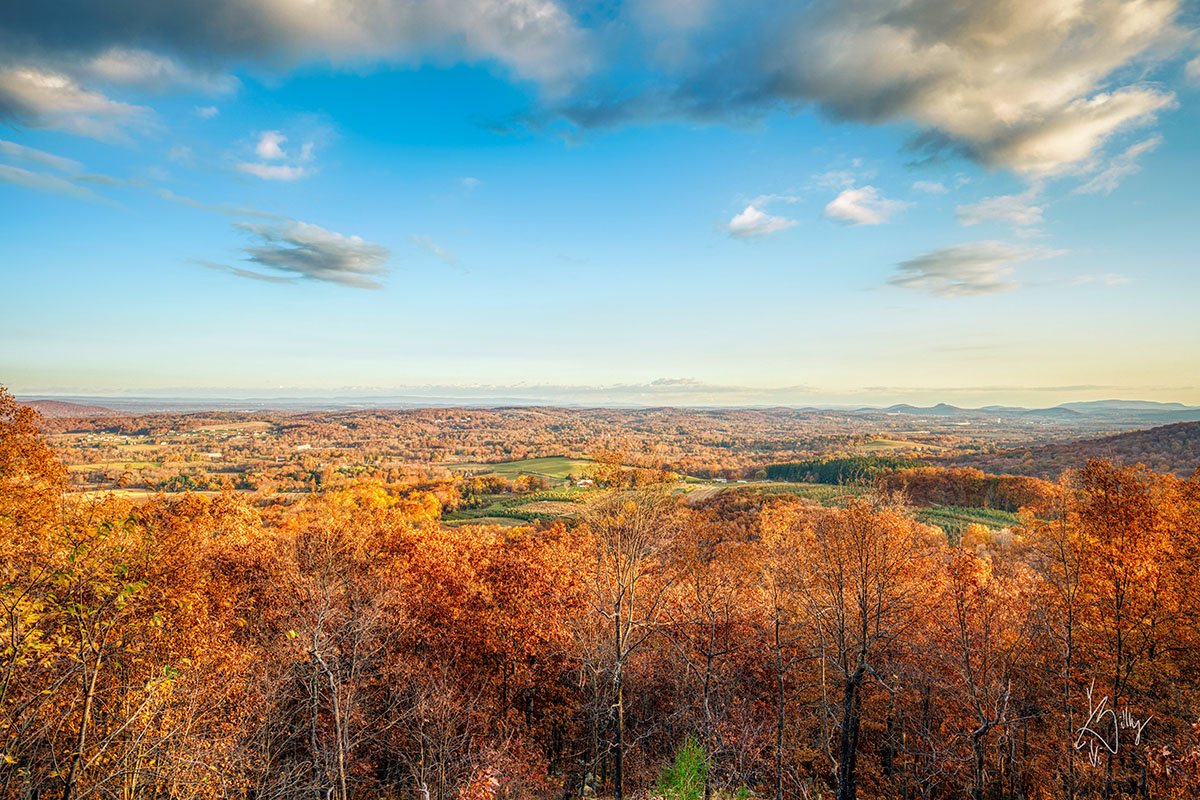
    There are two ways of getting to the overlook at Fuller Mountain Preserve in Warwick, NY.

    There’s the easy, nearly level, 0.9 mile trail (1.8 miles round trip) of uniform scenery—the woods—with an elevation gain of only 162 feet.

    And there’s the slightly more challenging but more varied 1.3-mile trail (2.6 miles round trip) that includes a ravine and a stream and with more twists and turns and ups and downs for a total elevation gain of 265 feet.

    But you need not pick one trail over the other. Although the two trails—one labeled “green” and the other “orange”—are mostly parallel to one another, where hikers on either trail are occasionally within sight from the other, the two trails join near the endpoints—the trailhead and the overlook—and so can be hiked as a loop. You can take one trail out and the other trail back.

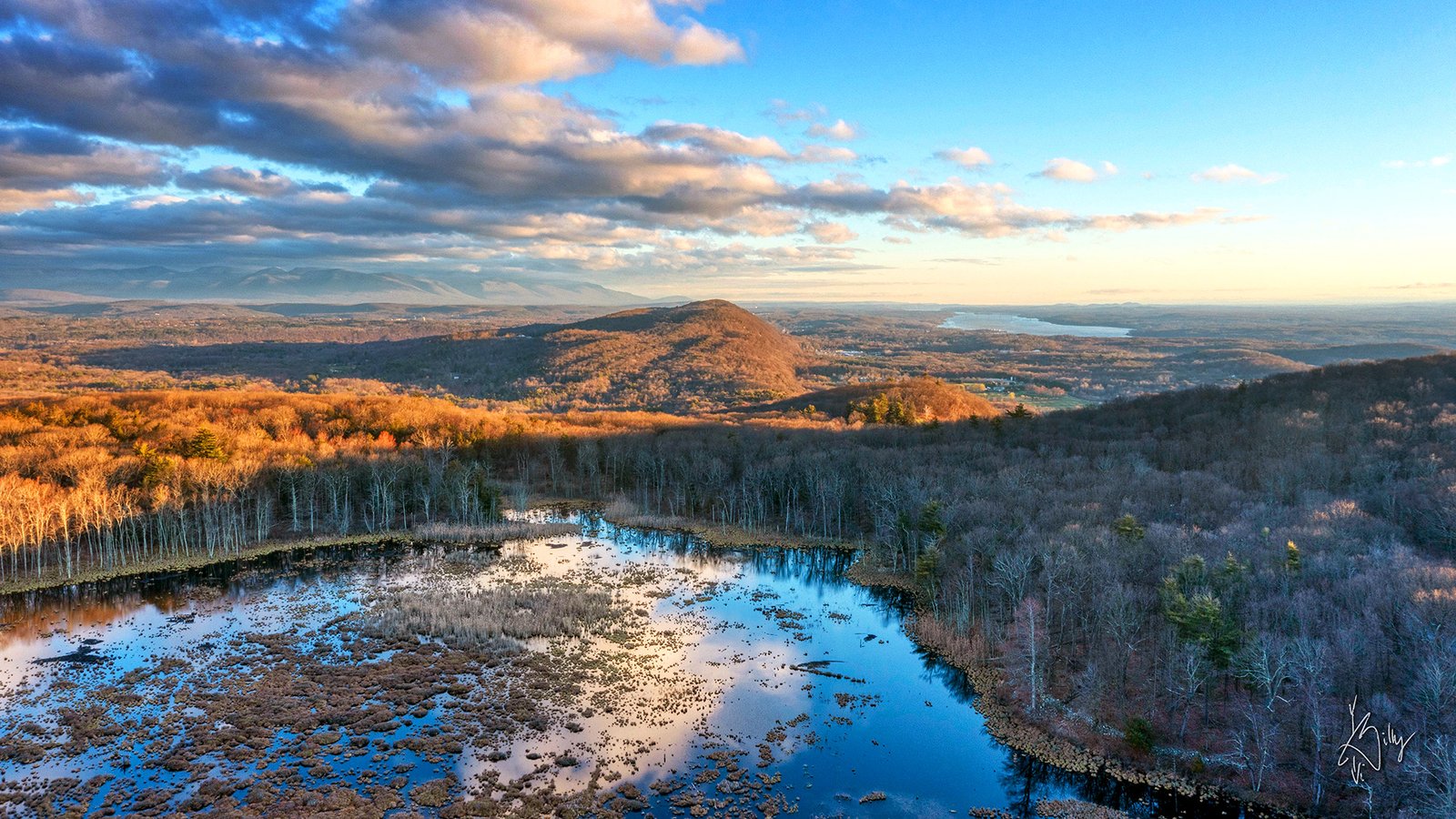
    Either path you take, however way you get there, the overlook will offer an expansive view of the valley below from 1,800 feet high, a welcome culmination after just a 20-minute invigorating walk in the woods surrounded by nothing but Nature.

  • Is the Shortcut Worth it at Gobbler’s Knot?

    Is the Shortcut Worth it at Gobbler’s Knot?

    Perks and perils on the trail.

    My unofficial maximum hiking distance is two miles. (Or four miles round trip.) But that’s not because of the difficulty involved. Rather, it’s all the time I have. At the human walking pace of about 20 (I’d estimate 30 on uneven terrain) minutes per mile, that translates to about two hours of hiking round trip on mountainous terrain.

    So whenever I learn of a shortcut, in particular the shortcut to Gobbler’s Knob in Otisville, NY featured in this video, I feel beckoned and compelled to do it.

    And, let’s be honest, wouldn’t you take the shortcut, too, if you knew about it? You will get there in no time with less to little effort.

    There may, however, be caveats. If there’s elevation gain, then that elevation gain is compressed into a short distance resulting in a steep and possibly treacherous incline when going up the side of a mountain. And, as with any shortcut, there may be reasons people don’t take it. Bears, for one, may nest there.

    Without giving away spoilers in case you want to watch the video (I hope you do), let me just state what is likely a truism when it comes to shortcuts. (At least according to my elementary school teacher when I was in Grade 3.) In our relentless quest for the quickest way to get where we’re going, a shortcut may have its perks, but, we must not forget, it may have its perils, too.

  • Challenging Hikes: My Search for Graham Mountain’s Waterfall

    Challenging Hikes: My Search for Graham Mountain’s Waterfall

    This was meant to be a waterfall hike but as determined as I was – I tried 3 different times – I failed to find the waterfall.

    Graham Mountain State Forest is located in the Port Jervis area where hiking trails abound because it is in a section of the Shawangunk Ridge, a ridge of bedrock that spans three counties in New York State (Ulster, Sullivan, and my Orange county), which is itself in a section of the much longer and much larger Appalachian Mountains that spans thirteen states and that form a barrier to western travel for east coasters in the United States.

    I’ve been in nearby Huckleberry Ridge which I consider my most difficult hike. The hike wasn’t long but reaching the waterfall required a 600-foot descent (which meant a 600-foot climb on the way back) in just 0.7 mile. (Or about a 180-meter climb in 1 km.) I had to stop several times on the way back less to catch my breath than to give my heart rest.

    So when I learned there was a waterfall in nearby Graham Mountain State Forest, I delayed going there until I knew more. But information online was scant. So, devising a strategy to make the hike more manageable (while keeping in mind my Huckleberry Ridge experience), I went.

    The region’s, um, notoriety, in my mind anyway, delivered. The challenge this time was not the steep-descent-in-short-distance like it was at Huckleberry Ridge, but rather the rocky ravine that poised as a danger every step of the way. One misstep and I could hurt myself in a trail that is not exactly teeming with fellow hikers to come to my aid.

    So, apologies if you see no waterfall in my video. I am hoping instead it will at least give a more balanced and more accurate picture of what hiking might involve. Things will not always go according to plan. Some say, the more you do something, the better you become at it. I would like to now add, the more you do something, too, the more you open yourself up to the potential pitfalls that go along with the activity. Minimizing them, which I think I was successful at in my, um, failure at Graham Mountain State Forest, is key.

  • Hiking and Nature at Madam Brett Park in Beacon, NY

    Hiking and Nature at Madam Brett Park in Beacon, NY

    It could be that I came to hike on a Saturday morning instead of my usual Sunday morning that there were already people at Madam Brett Park even at just after sunrise. Then again, the city the park is in, Beacon, is small and thriving so it probably wouldn’t be surprising to find people there even on Sunday mornings. People out for a stroll, a jog, a change of scenery, a breath of fresh air, or a walk with their dogs to complete their morning routines.

    The out-and-back, 2-mile trail isn’t itself wild. (You can go for an additional 3 miles if you hike the loop around the adjacent Dennings Point State Park, a 64-acre peninsula that juts into the Hudson River.) You won’t be hiking in the wilderness with uneven and rocky terrain as in, say, the Catskills or the Shawangunks—the paths are flat some earth some paved and a portion of which with a boardwalk along Fishkill Creek on one side and ruins on the other, while crossing a railroad track and solar farm and passing through a Visitor Center—and you will constantly meet people doing pretty much the same thing as you. But you do get plenty of Nature along the way with a waterfall on one end and the Hudson River on the other.

    So don’t expect immersive solitude in Nature away from civilization when you\’re at Madam Brett Park. Instead, expect the surrounding greenery, river, creek, and waterfall as spices to the already delectable stream of greetings, nods, and short conversations along the way when you encounter the warm residents of Beacon.

  • The Tranquility of Woods Near New York City

    The Tranquility of Woods Near New York City

    There are waterfalls in the city of Beacon. But I have not gone there until now.

    That’s because Beacon, as far as I can tell, is a trendy little city just 60 miles north of New York City and the buzz of human activity would take away from the peace and tranquility that Nature provides, at least in my mind.

    So it was surprising that once I started walking to the falls and then hiked to Melzingah Reservoir a short 0.8 mile away, all adjacent to the city of Beacon, I felt I was deep in the woods. I could have been in the Shawangunks or the Catskills and wouldn’t be able to tell the difference.

    A recent UK study showed that “every type of natural environment improved both self-esteem and mood, with proximity to water generating the greatest effect.” Additionally, “time spent in more natural areas helped restore depleted emotional and cognitive resources” with coastal areas providing “the biggest benefit, although woodlands, hills and mountains showed comparable effects…the longer people stayed [in natural areas], the better they felt…time spent in natural environments can improve self-discipline in children, help treat attention deficit hyperactivity disorder, reduce aggression and crime, promote better health in the elderly and delay the impact of Alzheimer’s disease.” (source: “What Nature Does for Britain” [2015] by Tony Juniper)

    So there is now a push especially in deprived parts of the UK to redevelop existing low-cost housing projects that have “virtually no gardens” and playgrounds cast in concrete to “incorporate vegetation and ‘green infrastructure’ into their plans”. The payback—reduction in healthcare costs and depletion of crime—can be substantial and these can all be achieved with the simple reintroduction of Nature into their building plans.

    There it is. Nature. Beacon’s original settlers—and other early settlers in the surrounding Hudson Valley—were in their right frames of mind when they moved 60 miles north away from the city. To them, the results of today’s studies would likely come as no surprise. They merely put in solid, scientific footing their long-held beliefs that our sustenance and nurturing are well taken care of if we would only keep Mother Nature close at hand always.

  • Finding Joy in Nature: Hiking Around a Pond

    Finding Joy in Nature: Hiking Around a Pond

    I have to be honest and say I’ll pick a hike to a waterfall anytime over a hike with no waterfall at all. A waterfall gives me a clear objective and focus. The hike becomes a mission that needs accomplishing. My mind is set on finding this waterfall and once it’s in sight, especially after a long and difficult hike, I keep my cool but the joy I feel is enough for me to lose my poise.

    But not all trails lead to a waterfall. Some, like the trails at Shaupeneak Ridge Park, loop around a pond. Without an objective to focus on like, say, a waterfall, what, then, goes through the mind of a hiker?

    Oneness.

    And oneness with Nature out deep in the woods without the distraction of having to accomplish a mission brings with it a different kind of joy. A joy that is calm, serene, and respectful. A joy that tells the hiker no matter what trying times one is in all is right with the world and that we are not here on this Earth to rack up accomplishments but rather we are here to be humble in Mother Nature\’s loving fold.

    That is one joy that does not and will not ever make me lose my poise…

  • Stony Kill Falls

    Stony Kill Falls

    Harmony in Nature.

    Every once in a while, I don’t hike alone. Usually, it’s with Vi. But occasionally, the kids—or in this one instance, a kid, our son, Cody—would come along. And when that happens, I am given the pleasure of experiencing with family the harmony that exists in Nature.

  • The Best Short Hike to Shaupeneak Ridge Waterfall

    The Best Short Hike to Shaupeneak Ridge Waterfall

    Yes, many waterfalls, as I suspected long before I started chasing them, require a hike. Indeed, beside the fact that construction of a paved pathway such that entire families even along with their wheelchair-bound members can leisurely stroll on may be outside of any town’s budget, the engineering feats required I imagine can be insurmountable as the topography leading to the falls can be challenging. Some waterfalls to this day remain unreachable because of the gorges, ravines, and other impossible obstacles one has to cross to get to them.

    But there is a bright side to all this. A hike, like the price of admission, can be a deterrent for the casual interlopers who really have no interest in Nature other than it being there and easily accessible. So, they ask, why not? They then crowd the place and I’m hoping against hope here they don’t leave trash behind them. This, I find, is fact. The easier it is to get to a waterfall, the more trash you will find.

    Then there is the walk in the woods. The peace and quiet broken only by the sound of your boots hitting rock, grass, or earth as you take it step-by-step on miles of untarnished land is a pleasurable experience like no other. Out alone with Nature, one gets to live in one’s mind such that one becomes convinced this is perhaps how Nature intended things to be. Then, you hear the rush of water and not long after that you see the waterfall. All exhaustion gone as you are transported to a wholly different and pristine realm continually refreshed by Nature even when there are no humans around to witness it.

    So, take the waterfalls for how they are. They may be roadside but disturbed. Or you may instead hope for the reward of a waterfall spectacular enough to offset the miles of trek needed to get there.

    Then again, there is Shaupeneak Ridge Waterfall. With an elevation gain of only 182 feet that you would only feel very briefly during the only 0.7-mile or 15-minute hike, it falls somewhere between the easy-to-get-to-but-tainted waterfall and the hard-to-get-to-but-pristine waterfall. And should you feel a hike is not complete without some clambering on top of rocks, you can optionally do so once you are at the waterfall. Yes, I will always prefer hiking to a waterfall as opposed to having no hike at all. But being that I am nowhere near hardcore when it comes to hiking, I say the hike to the waterfall at Shaupenaek Ridge hits the sweet spot. It perfectly embodies the very definition of something being short and sweet.

  • Zabriskie’s Waterfall and White Clay Kill Falls

    Zabriskie’s Waterfall and White Clay Kill Falls

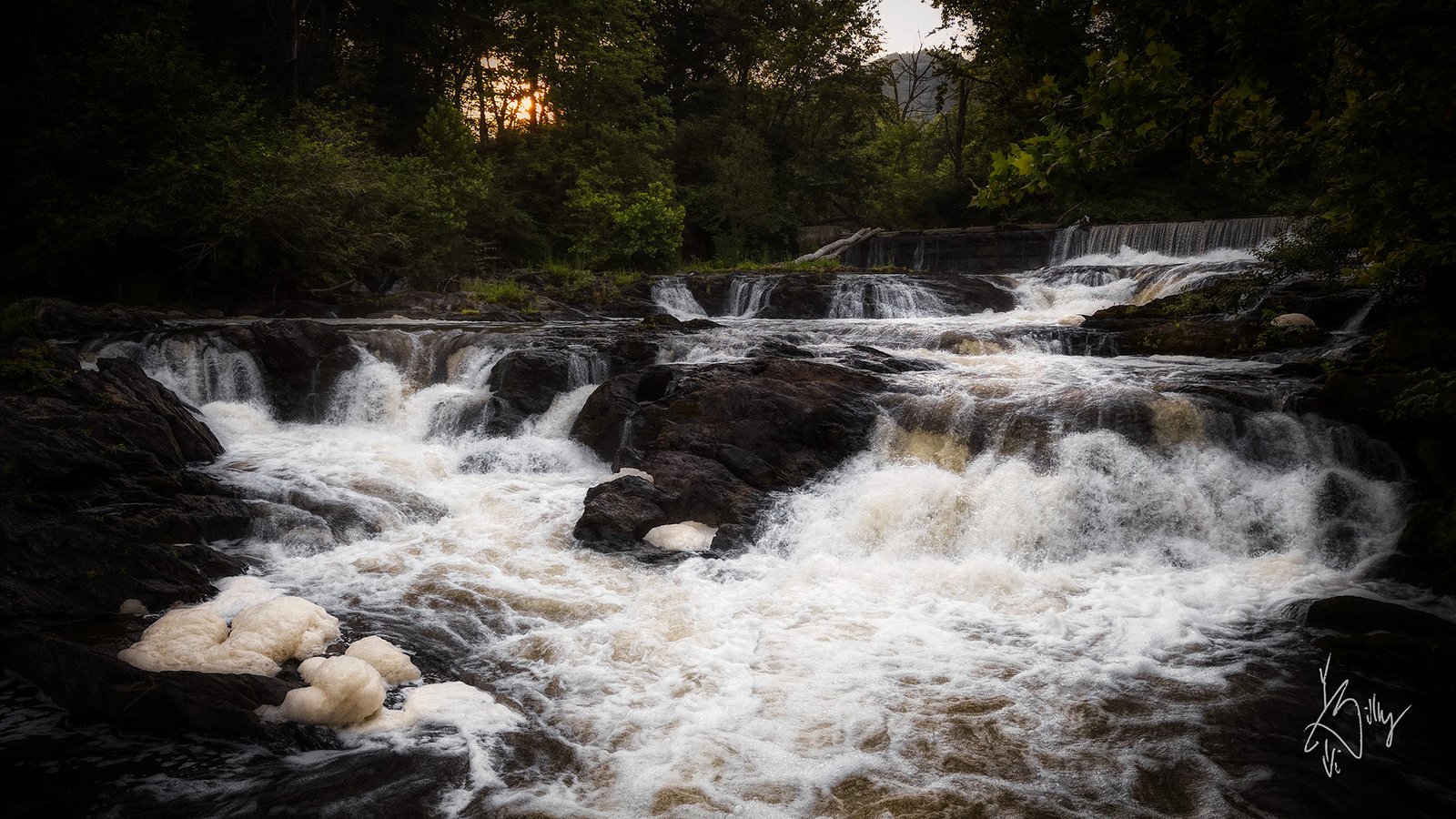
    Why are waterfalls white?

    Why are waterfalls white? If you had given the question just a moment of thought, “bubbles” might have popped in your mind, or floated, um, no pun intended, and you would be right.

    But why, you might ask, are bubbles white? Water, after all, is transparent.

    Because the bubble is shiny, light is reflected off its outer surface. Because the bubble is also transparent, some of the light enters the bubble where again, it is reflected off the shiny inner surface of the bubble. (Light also gets “refracted” as it enters the bubble but is not important for our purposes here.) In other words, light is bounced all around in and off the bubble. Put very many bubbles together and you get light scattering in all directions making the bubbles appear white.

    That is as much as I gleaned from my online research. But it still does not answer the question of why bubbles are white. Why not blue or green or maybe a light shade of magenta?

    White Clay Cliff Falls
    White Clay Cliff Falls

    The color white, they say, is the presence of all colors. (Black the absence.) Shine white light onto one side of a prism and out the other side comes all the colors of the rainbow (as different colors—or “wavelengths” in science-speak—inside the white light “refract”—another science-speak—at different angles). So there–white is the presence of all colors.

    From this I surmise that put very many bubbles together and with light of different colors bouncing off in all directions, the colors fuse or merge or blend together as they reach our eyes and so form the color white.

    Isn’t that neat?

    Anyways, how often do you see the color white in Nature? Coconut meat is white. So is pearl. And so are some flowers. But they’re small. In massive scales, you’d probably only see white in snowy countries. If you’re from the tropics like me, you’re out of luck. White is pretty much absent in Nature.

    Unless you go visit a waterfall.

    So thank Creation for the waterfall. A beauty in Nature resplendent that you can expect to find anywhere there is water—abundant in our blue ball planet—cascading down rocks. And when you visit a waterfall, think maybe not just of communing and reveling in Nature\’s powerful roar, but also of bathing in her shining white light.