Category: Travel

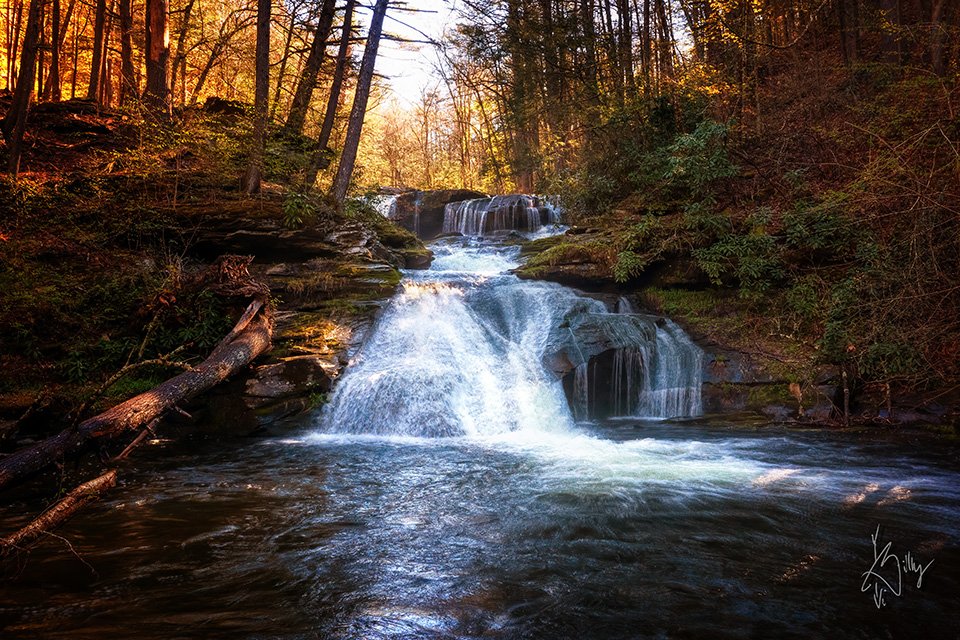
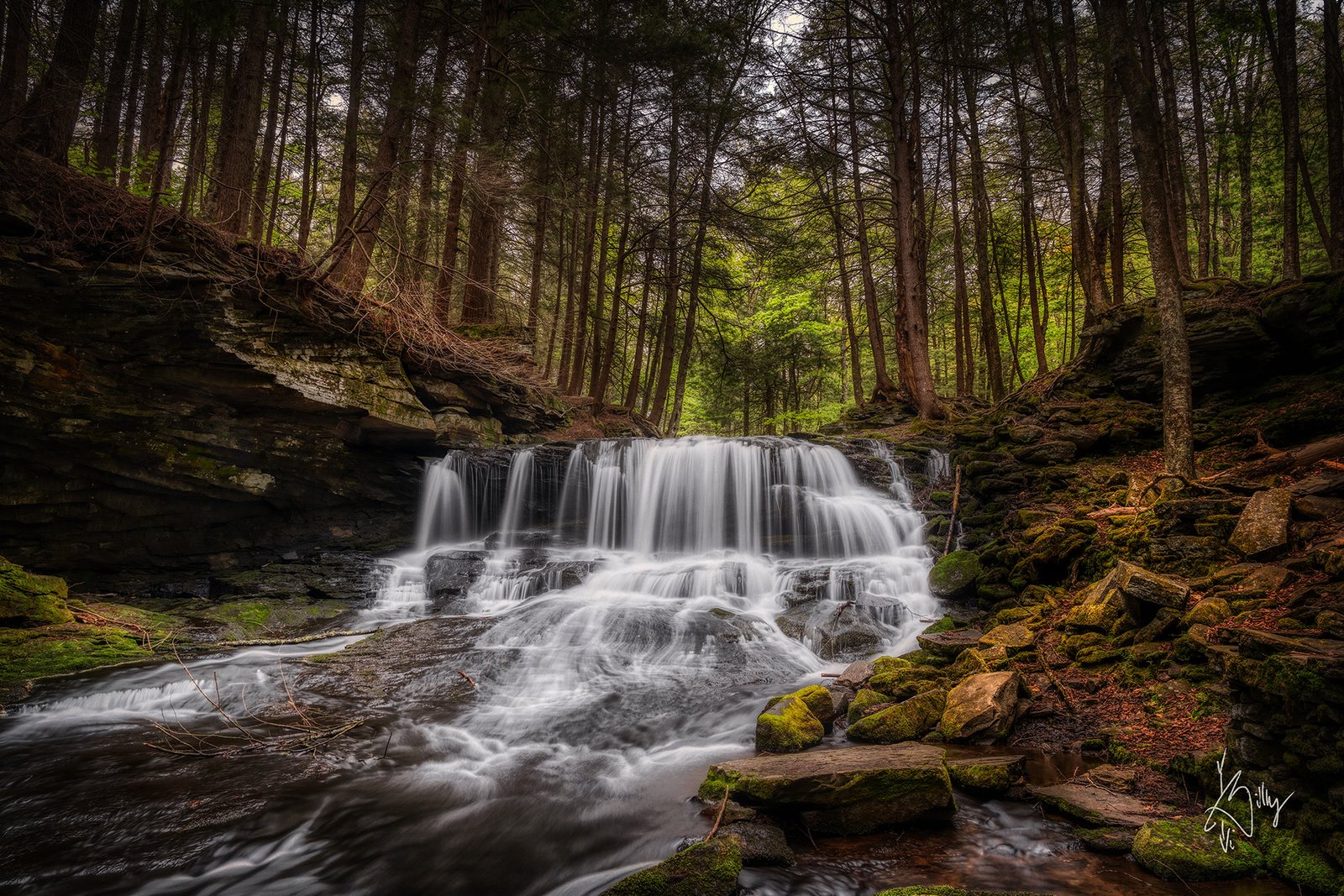
  • Frick Pond and Hunter Road Falls

    Frick Pond and Hunter Road Falls

    With a surprise tour guide in the Catskills!

    This video took three trips to the Catskills to film.

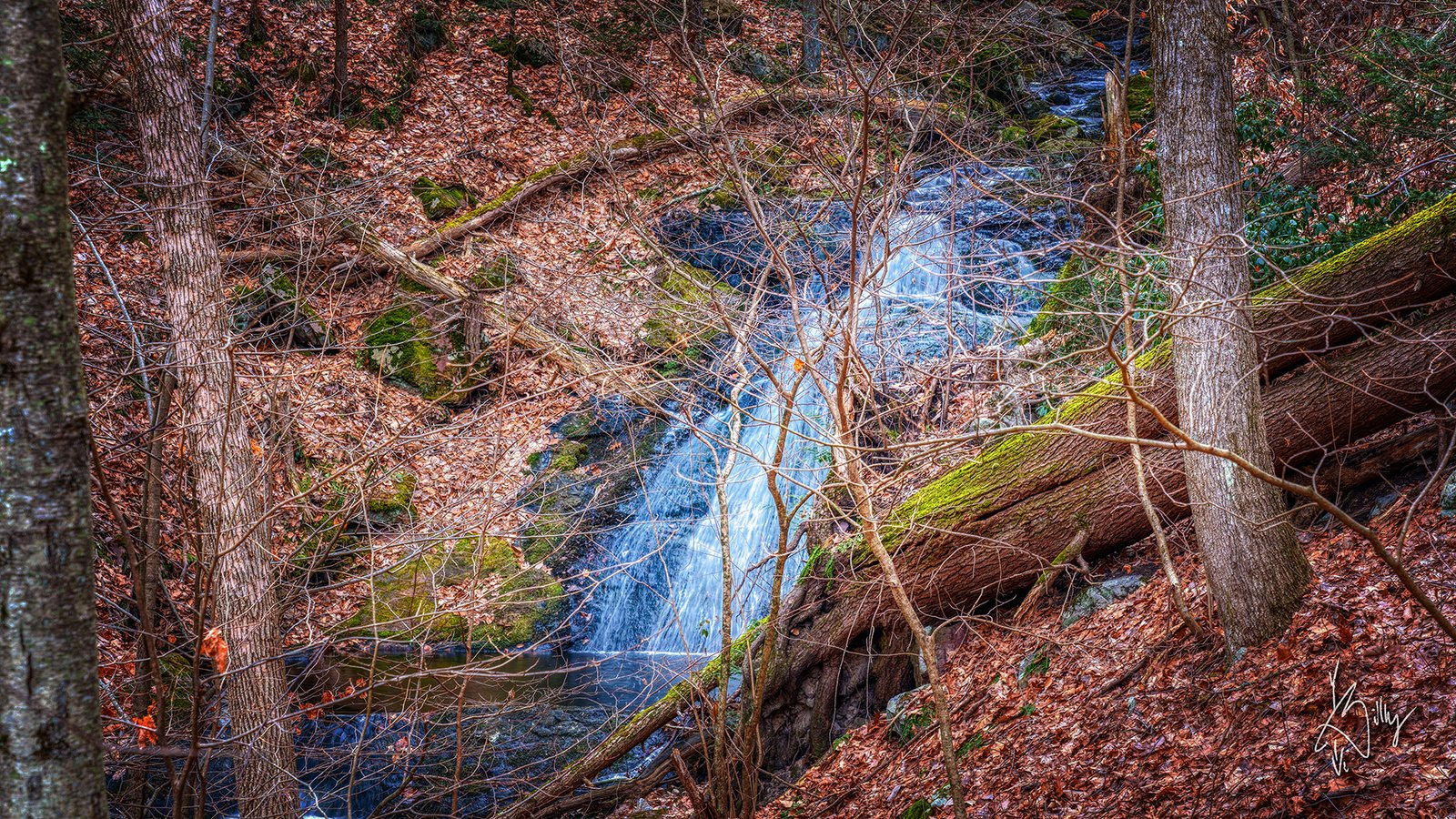
    First, I messed up completely. I came in early spring forgetting that the Catskills, being a mountainous region, was still covered with snow and ice that time of year. I could barely make progress on the treacherous trails looking for the waterfall on Hunter Road which no one on the Internet seemed to know where other than stumbling upon it by accident. Although I eventually found the waterfall, I could not risk injury hiking any further for a closer experience on the steep inclines toward the falls. Frick Pond Loop was the same, the trail was covered with packed snow and ice. I should have brought my crampons but did not.

    Then, on the next trip, after making sure that all the snow was gone, came a pleasant surprise. A friendly dog—somebody’s dog as he wore a collar around his neck—guided me the entire 2.2-mile hike around Frick Pond. Because I did not want the dog to wait too long while I flew the drone and perhaps spook him by the drone’s racket, I did not fly the drone.

    So, I had to come back a third time. I had to give you, my viewers, a bird’s-eye view of Frick Pond. This video simply would not be complete without some aerial footage.

    There. Frick Pond and Hunter Road Falls are an hour away so that’s 6 hours of driving just getting there and back for a 14-minute video. I hope you enjoy it.

    But regardless, and perhaps even more important, I enjoyed it.

    A big part of making these videos, as any YouTube vlogger will tell you, whether viewers loved them or not, is to make memories sweet and lasting that they can look back to in later years. If viewers found entertainment and value in them, then that was a welcome bonus. And with a too-friendly dog showing up out of nowhere, guiding me (he knew the turns at three different intersections or I might have gone on a much longer 8-mile hike), accompanying me for the entire duration of the 56-minute hike, and seeing that he was having as much fun with me as I was with him, the memories I garnered from this hike couldn’t have been any more lasting and any sweeter.

    Thank you, Dog. You made it very much worth the three trips!
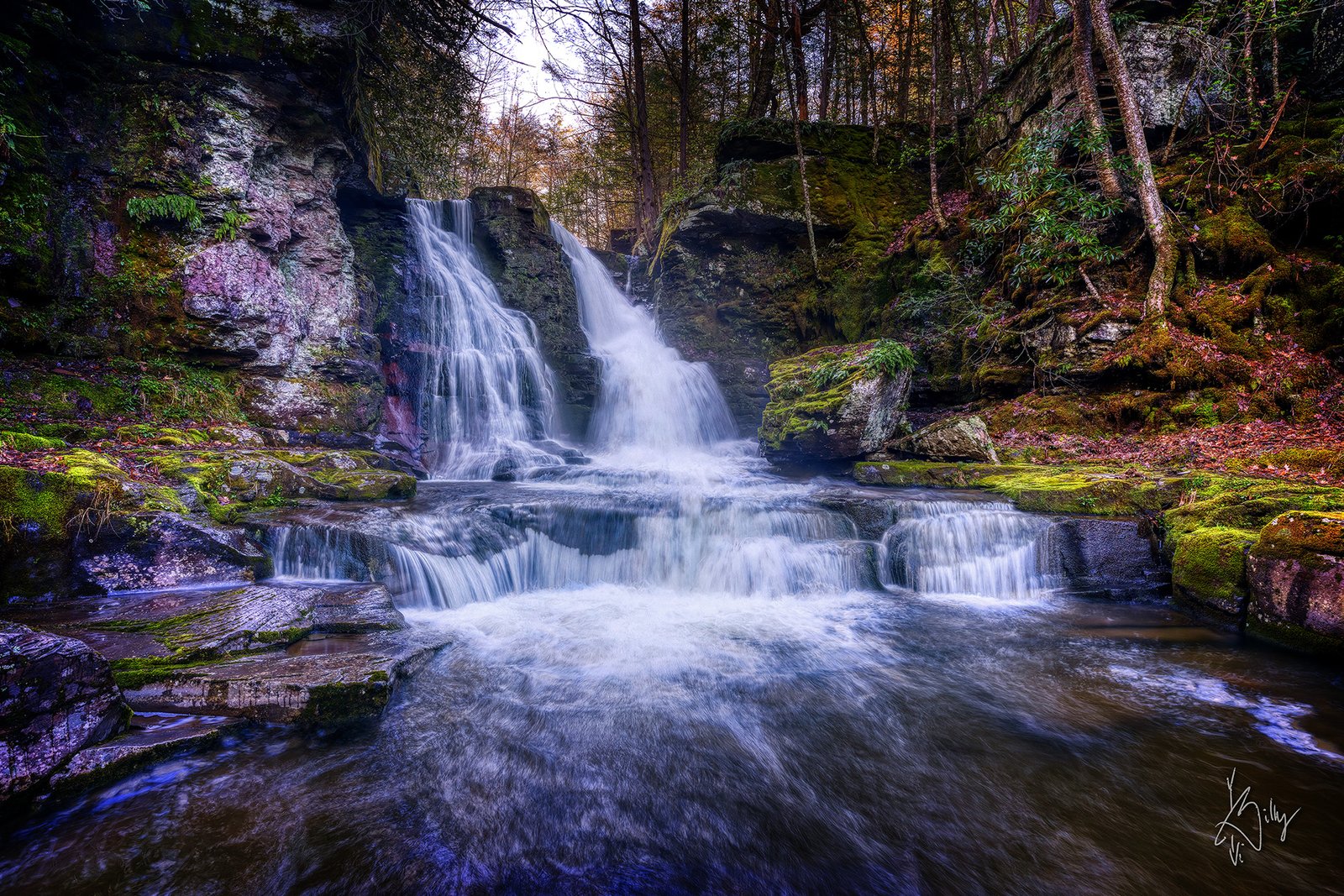
  • Sholam Falls and Frozen Balls Falls in Napanoch, NY

    Sholam Falls and Frozen Balls Falls in Napanoch, NY

    Two well-kept secrets in the Catskills

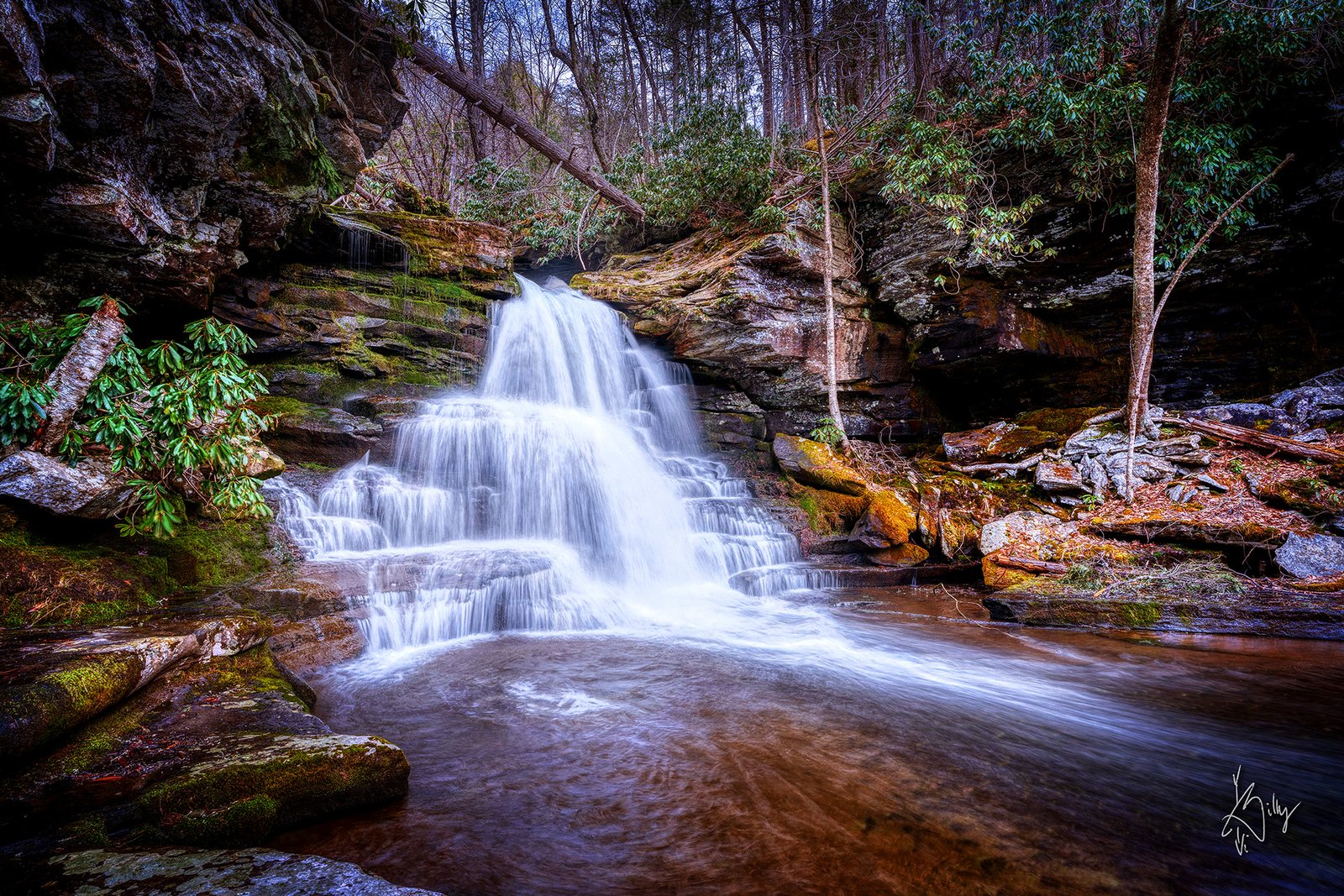
    Two waterfalls practically on top of each other. And a third waterfall not too far downstream. All three not very well known unless you\’re a local of Napanoch in the town of Wawarsing, NY. Now tell me you\’ve heard of either place. They\’re outside mainstream tourism so most likely not. Even searching online for \”top ten things to do\” in Napanoch, Wawarsing, or Ellenville will make no mention of these waterfalls. Those are testament right there that should you go visit, you will very much likely encounter no one and all three waterfalls on Trout Creek–their strength, grace, and glory–will be yours and yours alone for your eyes to feast on.

    But, alas, I would be remiss if I did not mention that–and perhaps this is all because of its pristine and relative obscurity–this time of year the area could be swarming with ticks. My wife and I found this out when–as excited as I was that I have found one waterfall, Shalom Falls, so easy to get to–I went back the next day this time taking my wife along right after lunch. We came back home shocked to discover 5 ticks crawling on our clothing. Fortunately, it was not too late, none bit — yet.

    There may be a way around the ticks, however. Sunrise.

    Frozen Balls Falls
    Frozen Balls Falls

    Ticks may be least active at sunrise that they\’re practically non-existent. There are websites that say ticks are active from 6am to 9pm, but I am convinced these are just estimates. I don\’t think ticks watch the clock. They probably look at the sunlight, temperature, humidity, and other natural signals. This is probably why ticks were never a problem in my previous hikes, because I always went at sunrise. For all I know, the other waterfalls I\’ve been to were just the same except that I came when ticks were \”asleep\”.

    So now, sunrise has one more item to add to my list of advantages over sunset, or any other time of day for that matter:

    • No crowd
    • I can fly my drone with no one complaining about the racket, privacy, hazards, and whatnot
    • I can take landscape photos without waiting for others to be done with their Instagramming
    • Sunrise photos are pretty indistinguishable from sunset photos
    • I can get lost in the trails without worrying about getting dark
    • Should anything happen to me, later hikers will soon find me
    • I can be home in time for breakfast with Dunkin rolls and coffee from the drive-thru in hand
    • No ticks

    There is one downside to shooting at sunrise, however, and this could be big for many (including yours truly on some days) — getting up early.

    If you\’re prone to waking up no earlier than, say, 10am, then you will have to deal with ticks some other way.

    But if you\’re an early-riser like me, then, Nature may not be all butterflies, streams, and rainbows for Nature has her gnats, wasps, and creepy crawlers, too, but at least you get to hike worry-free when it comes to the sneaky, insidious, and nowhere-near-visible-until-too-late ticks.

  • Yaegerville Falls in Napanoch, NY

    Yaegerville Falls in Napanoch, NY

    A hidden gem in the Catskills

    If I were to be completely honest, I will have to address the question of whether or not I will still go out on nature trips if it weren’t for the cool electronic gadgets I get to carry and use. Perhaps best understood by people of my generation, the generation that brought about the personal computer, I cannot shake the habitual thought that every initiative I embark on is centered around finding a problem for my computer—or in today’s more modern parlance, my actioncam, my drone, my tripod, and my mirrorless cam—to solve. I have the latest gadgets and gizmos, now let’s go find something they can be useful for. How about filming waterfalls…

    Indeed, the trails, after all, are often long, rarely flat, and with some even un-maintained. Literally, I have to sometimes hack my way through bushes, hop over dead logs, clamber on top of rocks, spend lots of time getting lost, and ford creeks to make my own path like I did when I hiked to Yeagerville Falls where the trail just plain disappeared about halfway in of the nearly mile-long trek. There are also ups-and-downs along the trails so even though, say, a trail is billed as a 200-foot ascent from the trailhead, the AllTrails app which uses the GPS on my smartphone (another cool gizmo) to track my movements will tell me that I actually gained the equivalent of a 500-foot climb. In short, it’s not an easy undertaking to even contemplate about as to get up early at dawn when my whole body would rather remain stuck in bed.

    So, is it the waterfall and its higher, spiritual consciousness as some would say, what I am really after? Or is it the desire to play around with my cool, new toys? Are my intents deceptive and not entirely good?

    In defense, I could say that over any of the myriad other types of photography—bird, wildlife, insects and miniatures, fashion, still-life, B&W, and architecture (which I also dabble in), I chose instead landscape. And not just landscapes, but ones with waterfalls in them. So maybe there is the naturalist lurking inside of me.

    But because we are still in the topic of complete honesty, I will have to say I do not have full faith in that argument. The cameras and other electronics I use are way too cool to be shoved aside and out of—um, no pun intended—the complete picture.

    So, to my original question, I do not know myself well enough to come up with an answer.

    However, I did have a revealing experience early this year.

    Coming to work one morning at the start of spring in my ultra-modern steel and glass building sitting on top of a hill in Blooming Grove, NY, surrounded by hills and nature, I backed my car into a vacant slot in the sprawling parking lot. When I opened my car’s door, I heard the rush of water coming from the huge fountain in front of the building that was for the first time this year turned on. Before even seeing and understanding where the sound was coming from, I instantly felt joy surge within me. Something really nice was just around the corner, it seemed to tell me. It was the same feeling I get whenever after a long and arduous hike I finally hear the sound of a waterfall.

    There is a reason why Nature is Mother.

    According to the book, “The Origins of Creativity” (2017) by Edward O. Wilson,

    “For almost all of the 100,000 years that humanity has existed, nature was our home. In our hearts, in our deepest fears and desires, we are still adapted to it. Ten thousand years after the invention of farms, villages, and empires, our spirits still dwell in the ecological motherland of the natural world … We are earth’s unruly children who left home to make it big in the city.”

    I will say, then, that my nature treks, however intentioned they may have been, have made a mark in my soul. They are, on some level, a coming home that in no way can be considered bad at all.

    No, not bad at all.

  • Schunemunk Mountain Waterfalls

    Schunemunk Mountain Waterfalls

    Two waterfalls in one short hike.

    When you see a mountain, are you drawn to climb it? Or paint it?

    I suppose an argument can be made that there are only two types of people on earth—those that bask in Creation, the extroverts, and those that partake in it, the introverts.

    I wouldn’t say I’m not drawn to climbing mountains—the view from up there surely must be good—but I would say I am more of the latter. I would rather paint—or in my case, photograph—a beautiful mountain and create something of it that would hopefully qualify as “art”, than expend the time and effort necessary to scale the cliff walls of a meteoric mountain.

    Schunemunk Mountain Falls 1
    Schunemunk Mountain Falls 1

    And that, my dear friends, is the story I’m clinging to for not daring to clamber up Schunemunk Mountain which I hear is gorgeously beautiful but which apart from the steep inclines near the top is also excruciatingly strenuous to climb—at least from the reviews I read—as to require the use of every bit of muscle found in the human body.

    Thank the holy heavens for waterfalls…

  • Lenape Ridge Trail at Huckleberry Ridge

    Lenape Ridge Trail at Huckleberry Ridge

    My most difficult hike

    In my chase for waterfalls in recent times, I somehow missed one that is relatively nearby, the waterfall at the end of the Lenape Ridge Trail straddling the towns of Port Jervis and Greenville in the western-most section of my county, Orange County, NY.

    And judging by the looks of the waterfall when I got there, although the waterfall is tall and nice as waterfalls go, it is difficult to get to since it is down a deep crevasse obscured by tree branches that not many hikers consider it much of a highlight as to post on social media.

    The waterfall is at the end of a 1.4-mile out-and-back trail (2.8 miles round-trip) with an 800-foot descent and so not many hikers descend down it knowing they will have to climb the same 800 feet back on the return hike. The waterfall is on one side of a railroad track and therefore is probably in an awkward spot for families to picnic, what with children running around in a fairly active commuter railway line and potentially inhaling a passing locomotive’s diesel fumes.

    On the other side of the tracks is a neighborhood concealed by a wall of trees. I imagine there has to be a secret passage or footpath in the woods from the neighborhood to the railroad tracks (and therefore the waterfall), but I’m not so sure about the legality of crossing the railroad tracks to get to the waterfall. (It is illegal, for example, to cross the railroad tracks on Schunemunk Mountain, a continuation of the same rail line at Lenape Ridge.) Still, the absence of litter is suggestive of there being no such secret passage or footpath as neighborhood teens I imagine would otherwise frequent the waterfall and leave marks of their presence there.

    So, in the end, I honestly do not know what to make of the waterfall. Should I invite others to go? It’s a rather steep climb for a waterfall that is barely visible…

    I realize I cannot fault anybody but if the railroad tracks weren’t built right where the waterfall was at, I’m sure volunteers will turn up chopping trees and cutting branches for a more enjoyable look at a waterfall that families can swim in after an easy stroll from the flat grounds of where the neighborhood decided to crop up …

  • Lone Dead Tree at Stewart State Forest

    Lone Dead Tree at Stewart State Forest

    Is it still there?

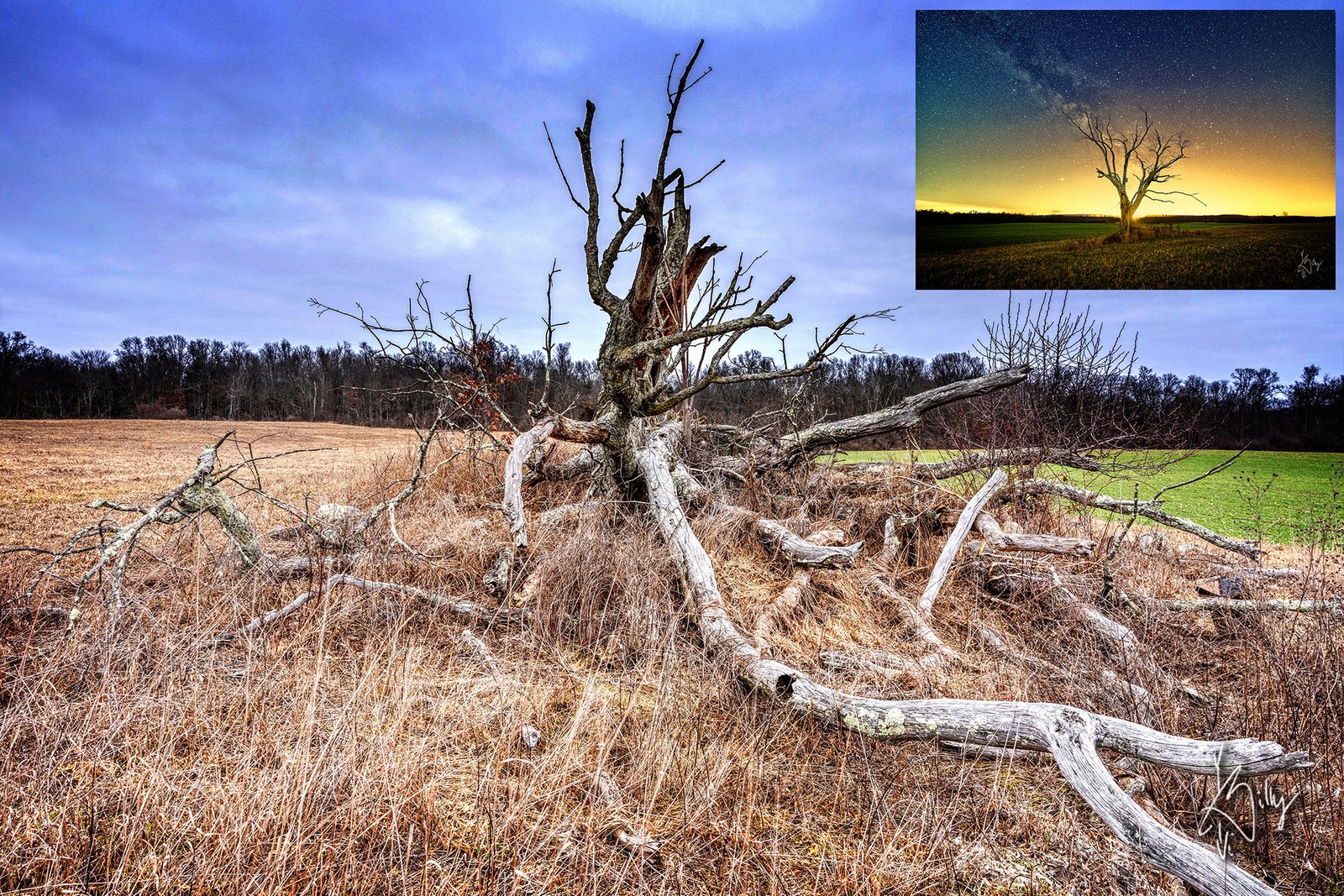
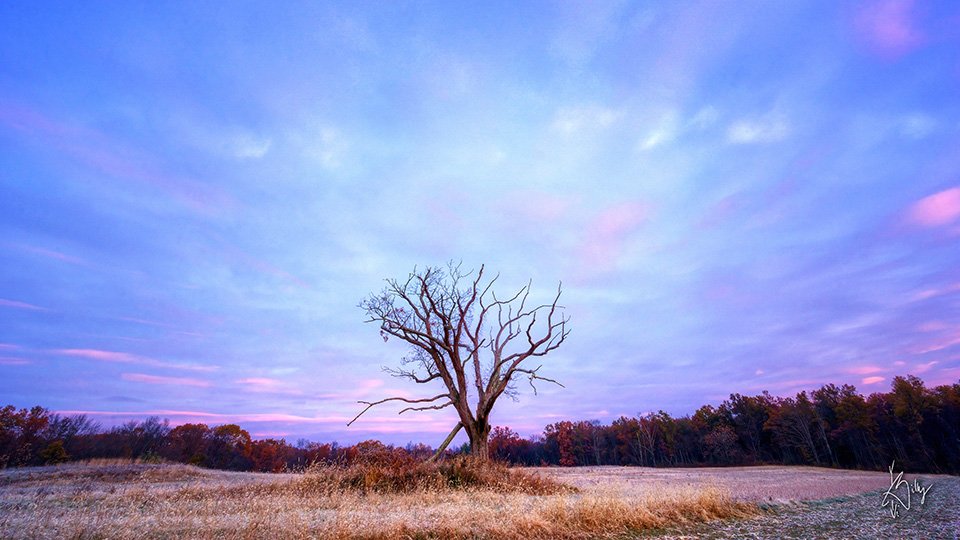
    I visited an old favorite photography subject of mine at Stewart State Forest, the lone dead tree standing in the middle of a vast and (at certain times of the year) empty cornfield. I’ve been there several times before to photograph it, including an attempt to photograph it at night with the Milky Way behind it, and this time I thought of filming the hike to give others an idea of what to expect should they decide go there. The lone dead tree was a truly stunning sight, in my opinion, even from a distance when driving along Route 208 in Montgomery, NY.

    But, alas, the tree has fallen. It was lying on its side when I arrived. It has been uprooted I suspect all on its own. The lone dead tree is now truly dead and it’s sad for me to think that I now have one less reason to go there.

    This reminds of another favorite photography subject of mine, a calm, narrow stream meandering on an open field separating a tree on one side and a patch of cornfield on the other with the rising sun behind a small hill in the distance and reflecting on the water’s surface along Slaughter Road in Middletown, NY. The land was developed and fenced by its owner soon after I took my photo. Gone was the idyllic scene that I was planning on visiting again and again.

    I suppose change is inevitable, if not by humans then by Nature, and glad tidings not meant to last could at least be immortalized if we\’re quick to discern them if not in our minds then, yes, in our computers, too.

    Stewart State Forest In The Fall
    Stewart State Forest before the fall
  • Elks-Brox Memorial Park

    Elks-Brox Memorial Park

    A view on three states

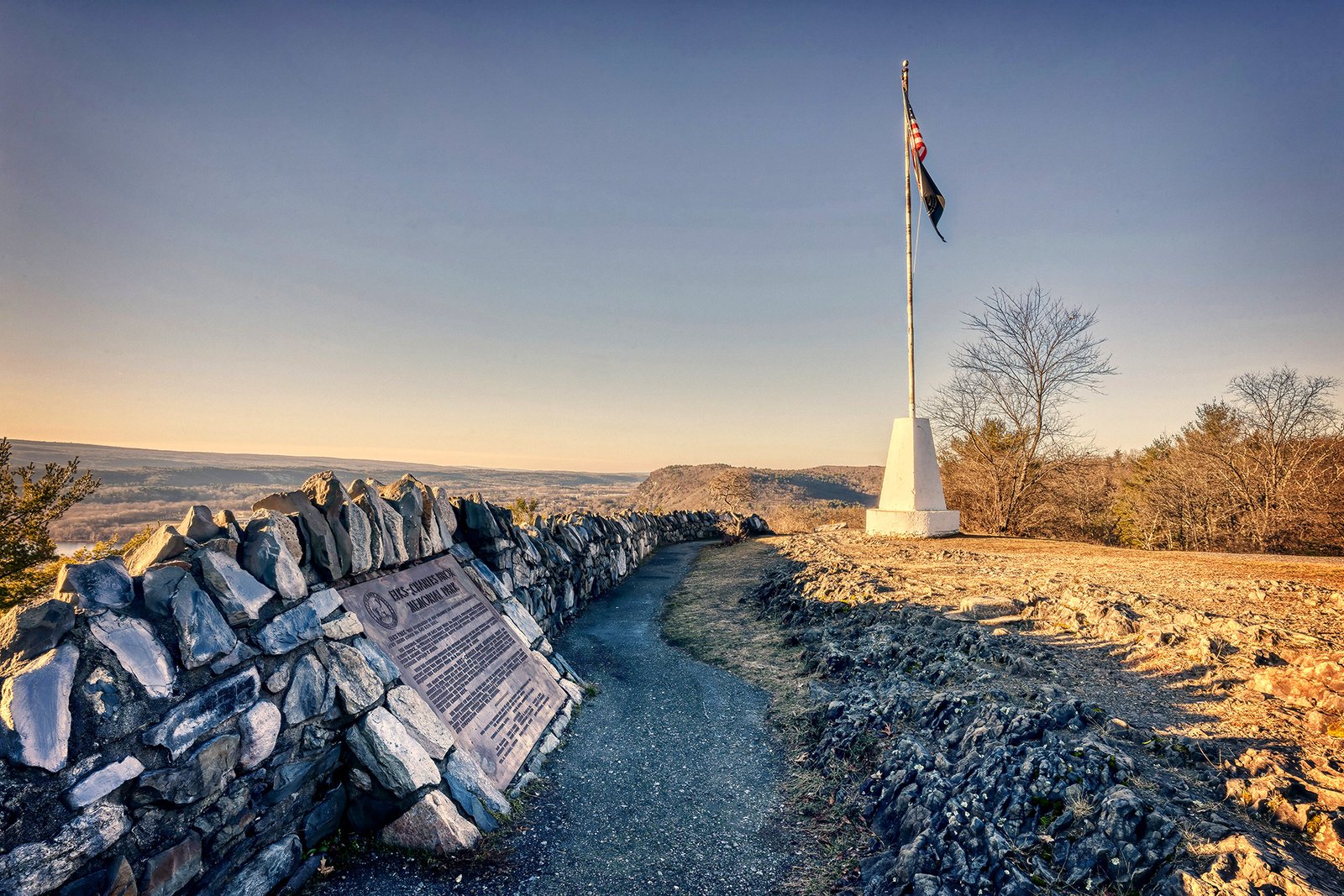
    The name Elks-Brox for a memorial park to me when I first heard it was confounding. I didn’t know what to make of it. I’ve visited the park on more than one occasion years ago but only now upon making this video came to learn that it stood for the fraternal order that was once exclusively-male and all-white, Elks Lodge, who originally bought the property in 1914, and a man’s last name, Charles Brox, who as far as I know had nothing to do with the park but whose sister-in-law—yes, no blood-relation, either—made a “substantial” donation toward this park in 1932.

    The park sits atop what was once known as the Twin Mountain Tract, or Point Peter and Mount William, an 800-foot mountain overlooking the town of Port Jervis. Clearly visible from the park across the Delaware River to the west is the state of Pennsylvania and to the south are New Jersey’s Kittatinny Mountains—a continuation of New York’s Shawangunk Mountains—with its 220-foot High Point obelisk piercing the sky, so to speak.

    Once you’ve driven to the park—yes, there is no need for hiking to reach the mountaintop unless one is so inclined—and witnessed this grand, majestic vista, I suppose the park’s name would be shoved far back into the recesses of one’s mind and not matter anymore. But as appreciation sinks in as I’m sure will happen at some point and one becomes curious as I did, one can look back to who made this possible and perhaps be moved by the realization that as undercurrent to the Elks-Brox beginnings as the open and public land that families enjoy today was a story of erosion along the lines of gender, race, and blood.

  • Waterfall and Abandoned House on Lundy Road

    Waterfall and Abandoned House on Lundy Road

    (or, a romanticist\’s take on Reality…)

    A waterfall and an abandoned house. What\’s one got to do with the other apart from being on the same road? Nothing, apparently. But it may not be too much of a stretch if we consider them rough approximations of birth and death strung on the same road-as-thread. And if I may stretch things a bit further, Quantum Mechanics would say, everything. Taken at its most extreme, Quantum Mechanics is saying all is one.

    QM, however, is riddled with contradictions. Indeed, its self-contradictions give QM its voice of authority. A particle is both here and there. A cat unobserved is both alive and dead. And matter at opposite ends of the universe can converse as if the space between them didn’t exist. Not all can be known even by God led to Einstein’s consternation on God creating the universe so God can play dice. That is, assuming there is a flow of time in which God had nothing in the beginning then the Universe a moment (or a week according to the Bible) later. But what does that make God if God only operates within the bounds of Time? God cannot be God if not omnipotent. So, God must be Time himself.

    Dsc8310 1024x682
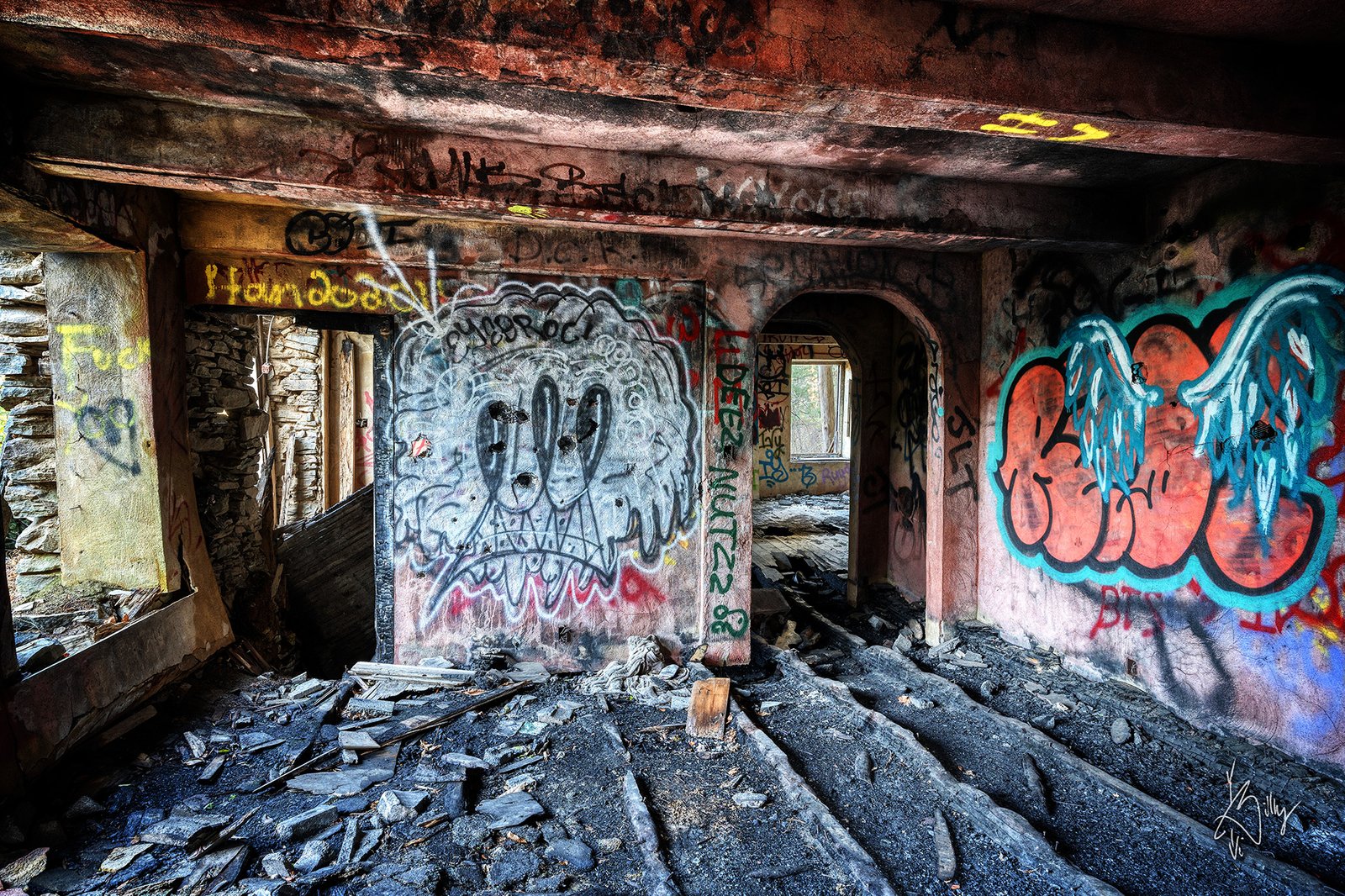
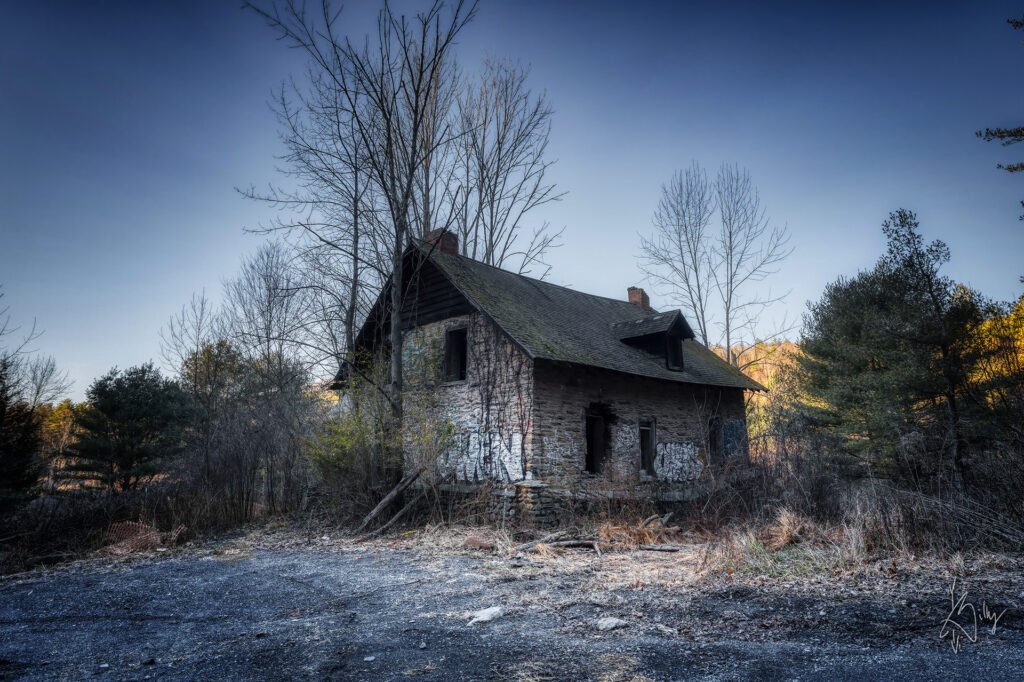
    Abandoned house on Lundy Road.

    But some thinkers say the passage of time is a construct our minds made up so we can make sense of experience. Time is an illusion. It does not exist outside of our minds. If Time does not exist, then so would God. Then, again, without Time there can be no music. Music is the progression of one note after another in a timed fashion. And music must play an important role in consciousness for how can it not when simply hearing certain tunes I get goosebumps? It is said that music is the language of the soul. So, for music to be real, Time must exist. Or, taking all these arguments we have so far, Time both exists and doesn\’t exist. We\’re back full circle to QM and its contradictions.

    Dsc00387 1024x682
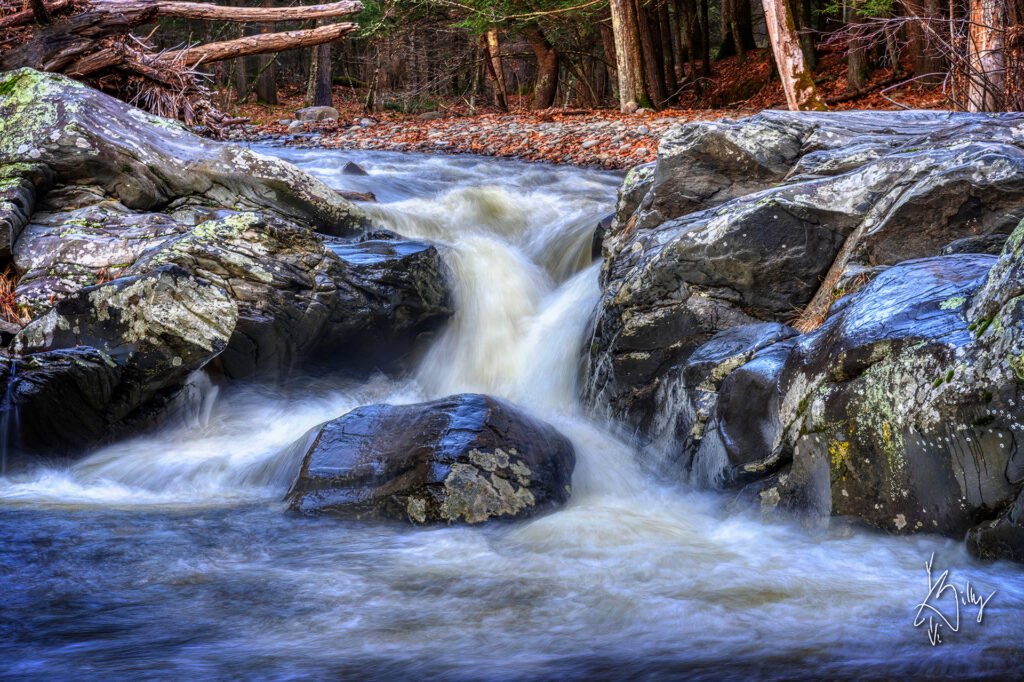
    Small waterfall on Lundy Road.

    But fret not for I say we are not condemned to an eternal state of confusion. Rather, we should embrace contradiction and rejoice in a beautiful reality where a glass half empty is also a glass half full, bad things happen even to us good people, and creation and destruction—our waterfall and our abandoned house in our rough approximation—are part of a greater whole. All is one. Just look at your most cherished someone whoever that may be, and I am confident you will agree that if not for his or her imperfections, however subtle or not, he or she would not have been so perfect.

  • Pottersville on Lundy Road

    Pottersville on Lundy Road

    Is it haunted? Is it even still there?

    Deep in the woods of the Vernooy Kill State Forest, just right outside the southern tip of the mountains collectively called the Catskills, is a richly beautiful area to hike, commune with nature in immersive isolation, and maybe even go for a swim in the summer in the crystal-clear waters of Vernooy Kill. Yet hardly anyone goes there—indeed, the neighboring townsfolk 6 miles away vigorously avoid it and the absence of human litter so common in all popular spots and detested by the avid nature lover could instead spook the intrepid hiker—save for the adventurous soul who has an insatiable taste for the macabre and the paranormal.

    Such is the setting one finds in Pottersville, a town built on the same pioneering spirit as the early New World settlers’, that is, on a hunch and a willingness to endure hardship in the hopes of striking it rich.

    Except that unlike other towns that found fame and fortune, for the small, fledgling, newly-emerging town of Pottersville, things went rather quickly awry.

    Back in the early 1900s, a man named Francis Potter built a lumber mill in the Vernooy Kill State Forest. Families who worked there soon began building homes and the small settlement around the mill acquired the name, “Pottersville”, after the mill’s founder.

    But the mill owner died, the mill closed, and having no other source of income, the families began moving out. A massive flood happened in 1927 followed by a fire which all but hastened the families’ departure. Not long after, Pottersville became a ghost town.

    Before it did, however, two horrific incidents would happen there that would make “Pottersville” synonymous with ghoulish activity in the woods in the minds of many from the neighboring towns.

    A man would murder his entire family then kill himself. A murderer would be caught there and hanged there. With such heavy concentration of murders, suicide, and a killing in such a small locale within a short period of time, word spread even to this day that ghosts roam Pottersville long after it was abandoned.

    So, who’s up for a haunted hike? A trip with Mother Nature that has a metaphysical component could be an experience like no other. Because for all you know, your professed love for the “natural” may just be a clever guise and a hair’s breadth away from devolving into the realm called the “supernatural”…

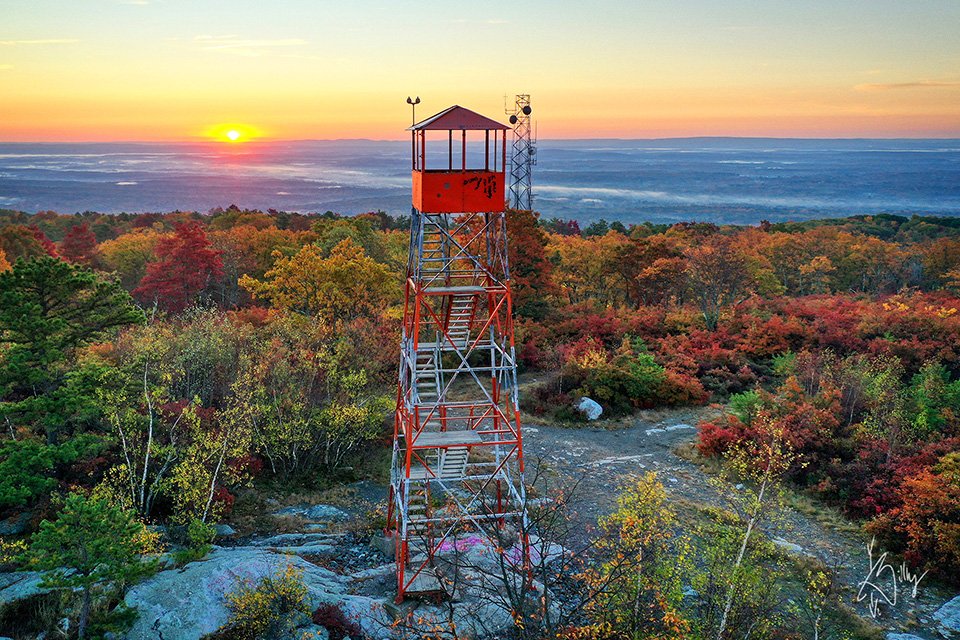
  • Fire Tower at Roosa Gap

    Fire Tower at Roosa Gap

    360 degrees of Fall foliage splendor.

    So, you say you want to see fall foliage before they’re gone. I say there’s no better way to do it than from inside a fire tower. A tall structure on top of a tall mountain, a fire tower offers grand vistas of the surrounding mountainous landscape for little to no hike at all. That’s 360 degrees of fall foliage splendor unobstructed for your eyes to feast on.

    Built from the early 1900s to aid rangers in spotting the telltale signs of forest fires, fire towers are today defunct and are either dismantled for safety reasons or repurposed for propping up radio antennas, solar panels, and other equipment what with the rising popularity of drones that are simply better suited at the job. Unless volunteer initiatives form to save the fire towers, they will likely disappear.

    And because they were originally built for forest rangers, fire towers can be easily reached simply by driving up to them. Think about it, getting to the top of most mountains requires a grueling, all-day hike. But if there is a fire tower, not only is the road paved for your driving pleasure all the way to the top but you are also offered additional elevation on a manmade structure when you get there on which to appreciate the beauty of Nature all around.

    So, just as you are rushing to witness nature’s spectacular display of fall colors before they disappear, so, too, must you rush to find yourself a fire tower before they, too, disappear–this one for good.